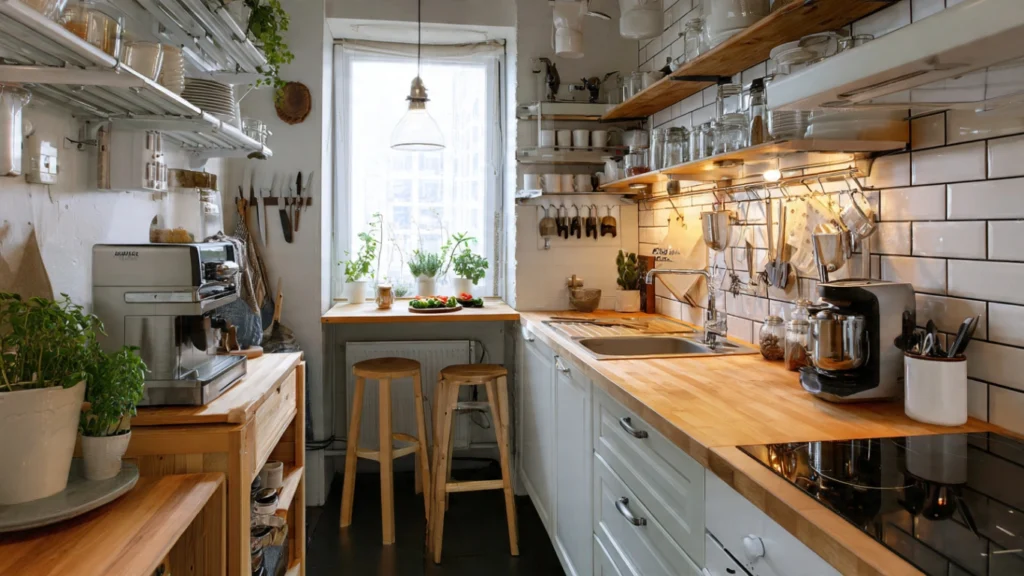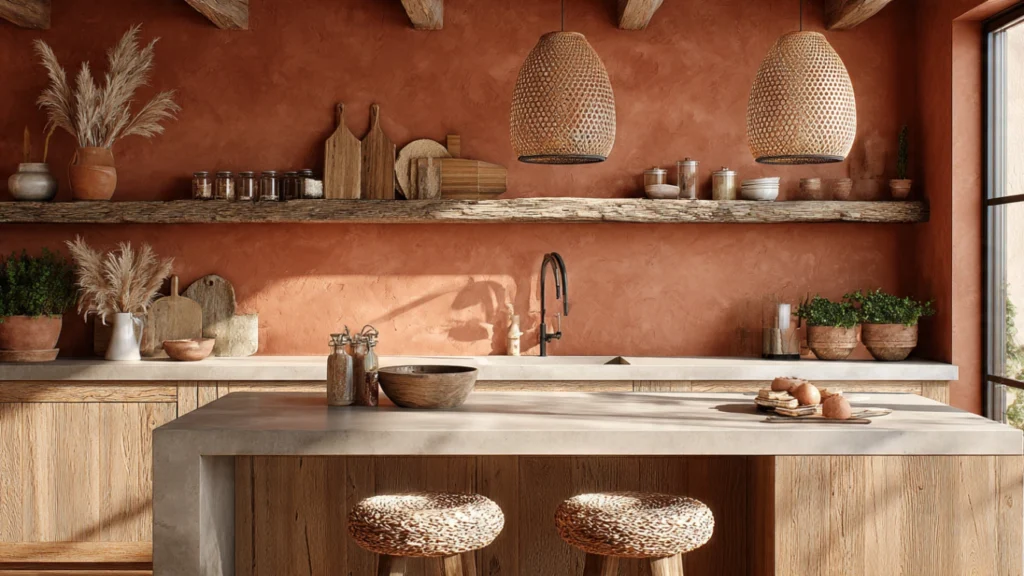
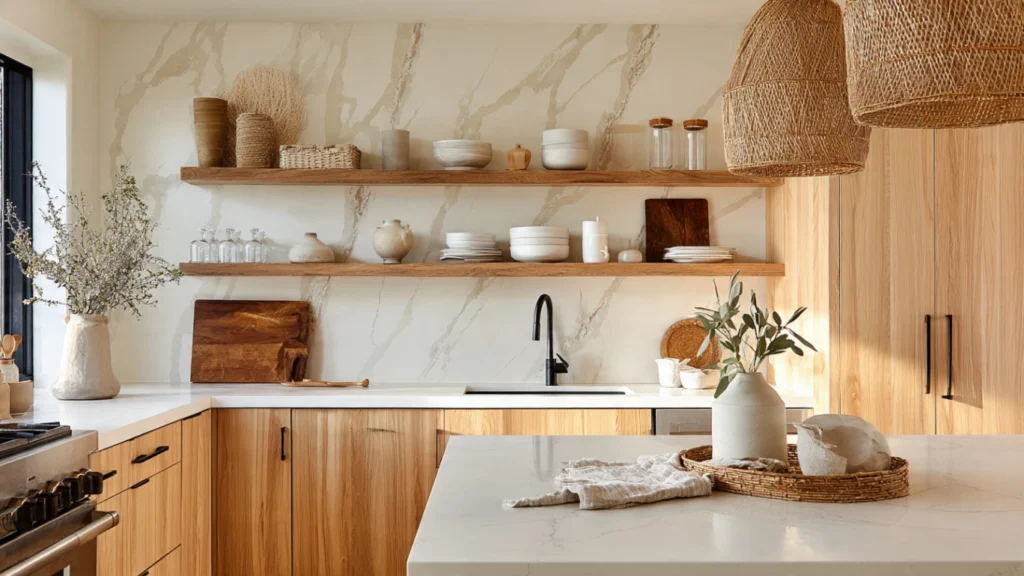
Sunlight streams through a window above your sink, illuminating white oak cabinets that feel warm to the touch. A single stem of eucalyptus rests in a handmade ceramic vase on your quartz countertop. Everything in view serves a purpose, yet nothing feels clinical or cold. Your cutting board is walnut, your dish towels are linen, your faucet is matte black. The space breathes with natural materials and clean lines—a perfect marriage of nature and modern design.
This is the essence of an organic modern kitchen: a style that celebrates natural materials, neutral color palettes, and minimalist aesthetics while maintaining warmth and livability. Unlike stark contemporary kitchens that can feel sterile, organic modern spaces invite you in with their tactile textures and earthy elements. And unlike rustic farmhouse kitchens heavy with distressed wood and vintage finds, organic modern design stays sleek and uncluttered. Whether you’re renovating a condo kitchen in Seattle, updating a rental apartment in Austin, or dreaming about your forever home in the suburbs, these organic modern kitchen ideas will help you create a space that’s both beautiful and timeless. Let’s explore how to bring this coveted aesthetic into your home.
1. Choose Natural Wood Cabinets with Clean Lines
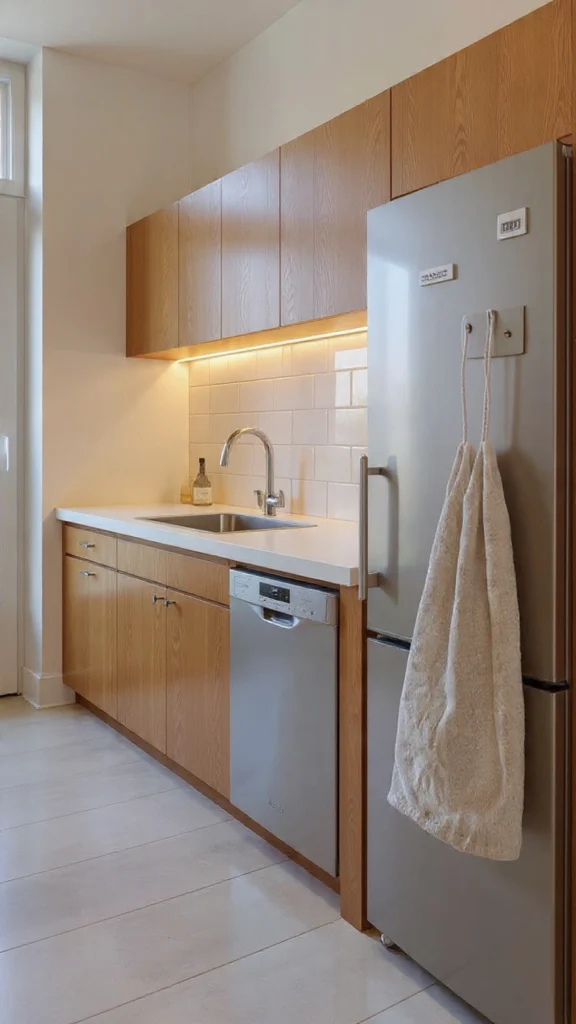
The foundation of any organic modern kitchen starts with cabinetry that balances warmth with simplicity. Natural wood cabinets in oak, walnut, or maple with visible grain patterns bring organic beauty while maintaining the clean, handleless silhouettes that define modern design. Skip ornate details, raised panels, or decorative molding in favor of flat-front doors.
Light wood tones like white oak or pale maple keep your kitchen feeling bright and airy—essential in smaller apartment kitchens or spaces with limited natural light. These lighter woods pair beautifully with white or cream walls and create a Scandinavian-inspired calm. Darker walnut cabinets make bolder statements and ground larger kitchens with dramatic sophistication.
If replacing cabinets isn’t in your budget, you can achieve the organic modern aesthetic through strategic updates. Remove existing cabinet doors and replace them with simple shaker-style fronts in natural wood, or install wood veneer panels over existing doors. These rental-friendly alternatives cost significantly less than full cabinet replacement while delivering similar visual impact.
Pro tip: Oil-finished wood cabinets showcase natural grain better than heavy stains or lacquers. The matte finish feels more organic and develops a beautiful patina over time as the wood ages naturally.
2. Install Warm Neutral Countertops
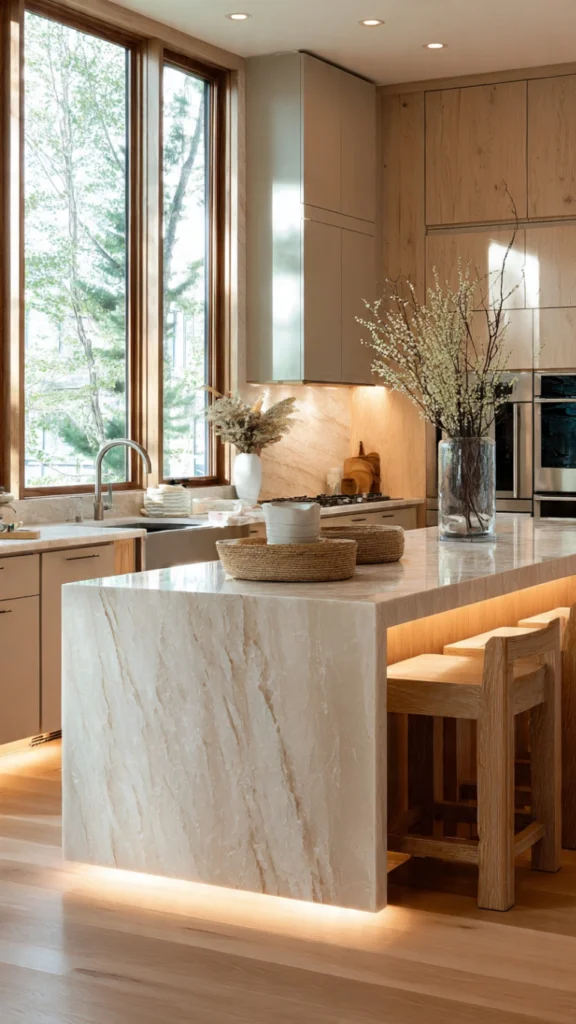
Countertops in organic modern kitchens should feel like natural extensions of your cabinetry, not stark contrasts. Warm neutrals—cream quartz, light concrete, pale marble, or butcher block—create cohesive flow while providing durable work surfaces. These materials bridge the gap between modern functionality and organic warmth.
Quartz in warm whites or soft beiges offers low-maintenance beauty with consistent patterning that won’t overwhelm your space. Concrete countertops provide industrial edge with organic texture variations. Marble brings timeless elegance with unique veining, though it requires more maintenance. Butcher block delivers pure warmth and develops gorgeous character as you use it.
Consider mixing materials for added interest—a quartz waterfall island paired with butcher block perimeter counters creates visual layers while designating different functional zones. This combination gives you indestructible surfaces where you need them and warm wood where you prep food.
Caution: Real marble stains and etches easily from acidic foods and liquids. If you love the look but live in your kitchen, choose marble-look quartz instead for worry-free beauty that mimics natural stone.
3. Embrace a Warm White and Neutral Color Palette
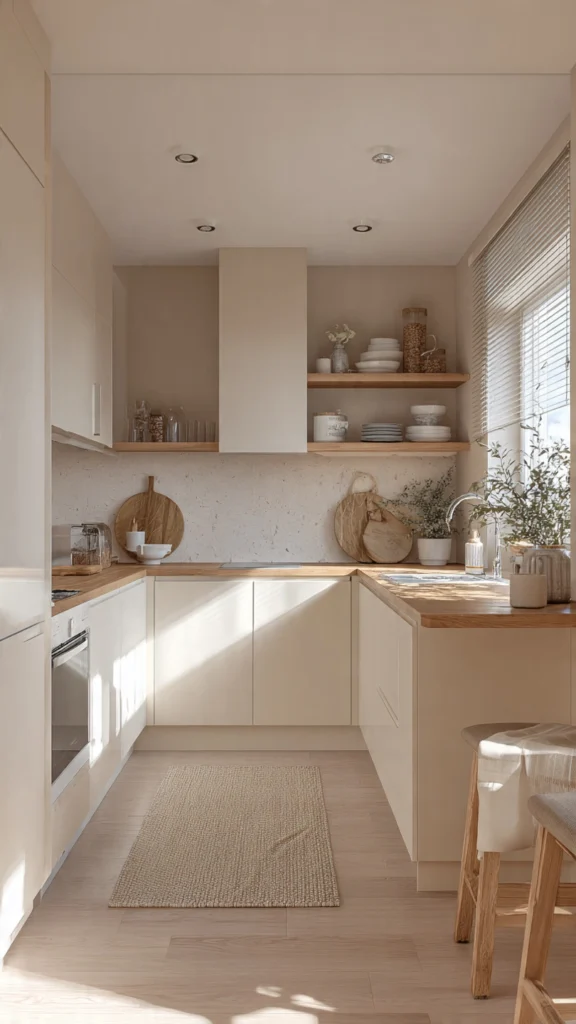
Color restraint defines organic modern kitchens. Build your palette around warm whites, creams, beiges, soft grays, and natural wood tones. These neutral foundations create serene environments that won’t feel dated in five years—crucial when kitchen updates represent significant investments.
Paint walls in warm white shades with subtle cream or beige undertones rather than stark, cool whites. Names like “Swiss Coffee,” “Alabaster,” or “White Dove” create softness that complements natural materials. Keep upper cabinets, walls, and ceilings in similar tones to create seamless flow that makes kitchens feel larger.
Introduce depth through varied neutrals rather than bold accent colors. A light oak cabinet paired with cream quartz counters, beige backsplash tile, and soft gray walls creates a layered, sophisticated palette without any jarring color moments. The restraint feels intentional and calming.
Pro tip: Use the 60-30-10 rule: 60% dominant neutral (walls/cabinets), 30% secondary neutral (counters/floors), 10% accent neutral (hardware/fixtures). This proportion creates balanced, professional-looking spaces.
4. Select Minimalist Hardware in Matte Finishes
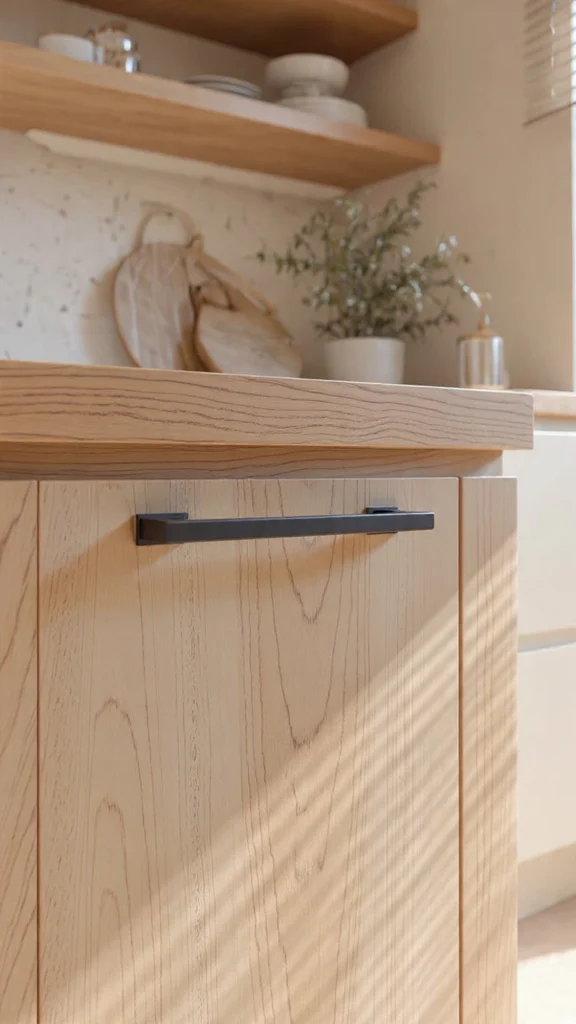
Hardware choices dramatically impact your kitchen’s overall aesthetic. Organic modern design favors simple, minimal hardware in matte finishes—matte black, brushed brass, or oil-rubbed bronze. These understated pieces provide necessary function without becoming focal points that compete with your natural materials.
Sleek horizontal pulls in matte black create crisp modern lines against light wood cabinets. Brushed brass or bronze adds warmth while maintaining minimalism. Consider integrated pulls—grooves cut directly into cabinet edges—for the ultimate handleless look that’s purely modern yet still functional.
Keep hardware consistent throughout your kitchen. Mixing finishes or styles disrupts the cohesive, calm aesthetic you’re cultivating. If you have multiple hardware pieces (cabinet pulls, drawer pulls, appliance handles), they should coordinate in finish and style.
Pro tip: For rental kitchens where you can’t replace existing hardware, spray paint shiny brass or chrome hardware with matte black or bronze appliance paint. This $15 update transforms the entire kitchen aesthetic.
5. Add Natural Stone or Ceramic Backsplash
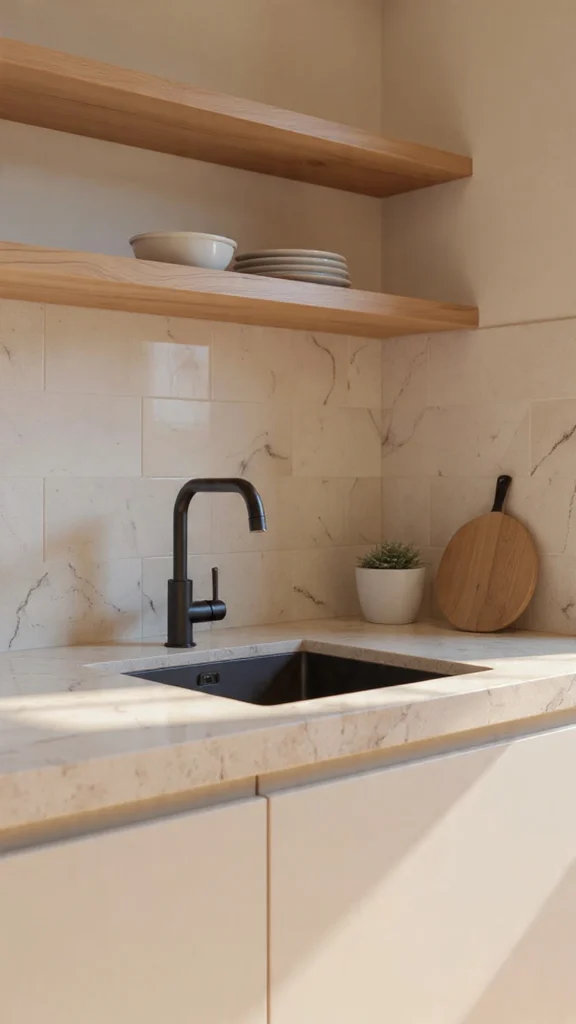
Backsplashes in organic modern kitchens should enhance rather than dominate. Natural stone, handmade ceramic tiles, or simple subway tiles in neutral tones create subtle texture without overwhelming your space. The goal is adding dimension while maintaining the calm, cohesive aesthetic.
Consider large-format tiles that minimize grout lines for a more modern, seamless look. Beige or cream stone tiles, white ceramic with subtle texture variations, or matte finish subway tiles all work beautifully. Arrange tiles in classic patterns—straight stack, horizontal subway, or simple grid—rather than busy herringbone or complex mosaics.
Natural stone like travertine or limestone brings organic texture variations that make your backsplash feel less manufactured. Each tile differs slightly from its neighbors, creating subtle visual interest that celebrates imperfection. These materials age gracefully, developing patina that adds character over time.
Caution: Seal natural stone backsplashes properly before use and reseal annually. Unsealed stone absorbs grease and stains, especially behind your cooktop where splatter is inevitable.
6. Incorporate Floating Shelves in Natural Wood
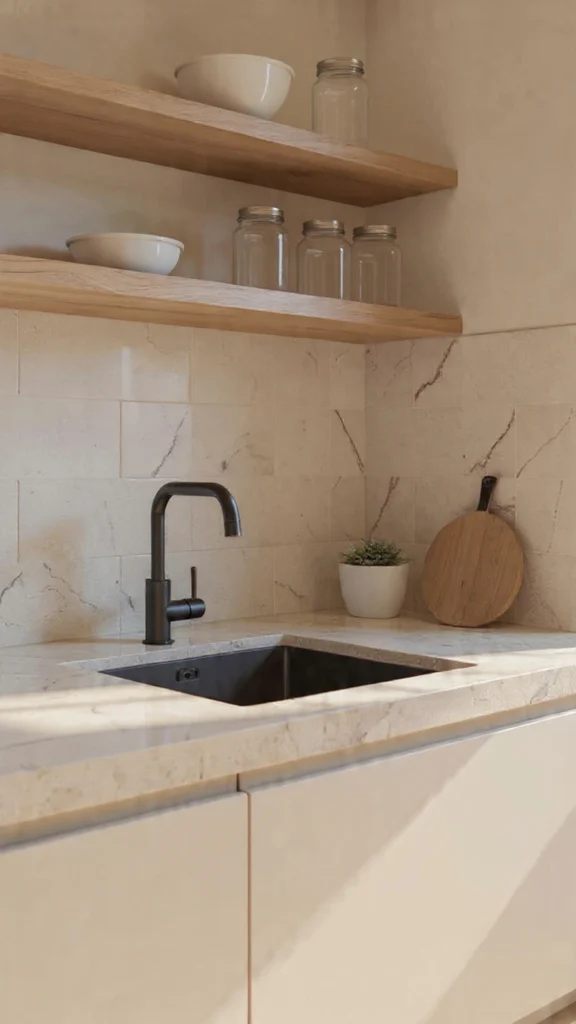
Open shelving is signature organic modern—it showcases beautiful dishware while keeping your kitchen feeling open and unencumbered. Thick wooden floating shelves in the same wood tone as your cabinets create cohesive storage that’s both practical and photogenic.
Style shelves with intention, displaying only items you actually use and love. White ceramic dishes, wooden cutting boards, glass storage jars, and small potted herbs all contribute to the organic aesthetic. Leave negative space between items—overcrowded shelves look cluttered, not curated.
Limit open shelving to one wall or a small section above your sink to avoid the stress of keeping everything perpetually organized. The rest of your storage can remain concealed behind cabinet doors, giving you the aesthetic benefits of open shelving without the maintenance burden.
Pro tip: Install shelving at varying depths—shallow shelves (8 inches) for glasses and spices, deeper shelves (12 inches) for dinner plates and bowls. This customization maximizes functionality while maintaining clean lines.
7. Choose Integrated or Panel-Ready Appliances
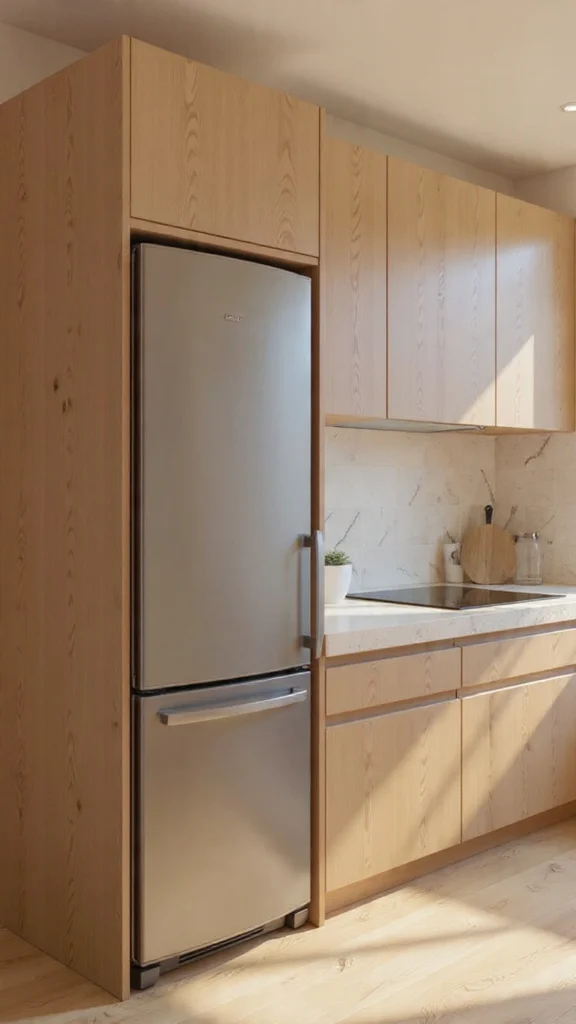
Visible stainless steel appliances disrupt the organic modern aesthetic with their reflective, industrial presence. Panel-ready or integrated appliances blend seamlessly into your cabinetry, maintaining the clean, cohesive look that defines this style. Your refrigerator, dishwasher, and even range can virtually disappear.
Panel-ready appliances accept custom cabinet fronts that match your existing cabinetry perfectly. Your refrigerator becomes just another set of cabinets, your dishwasher blends invisibly into your island. This integration creates sophisticated, streamlined kitchens that feel custom and intentional.
If panel-ready appliances exceed your budget, choose appliances in matte finishes rather than shiny stainless. Matte black, matte white, or even stainless steel with matte finish disrupts the space less than traditional gleaming appliances.
Caution: Panel-ready appliances cost 20-40% more than standard versions, and you’ll pay extra for custom panels. Budget accordingly or prioritize which appliances most benefit from integration—usually the refrigerator makes the biggest visual impact.
8. Install Statement Lighting with Natural Materials
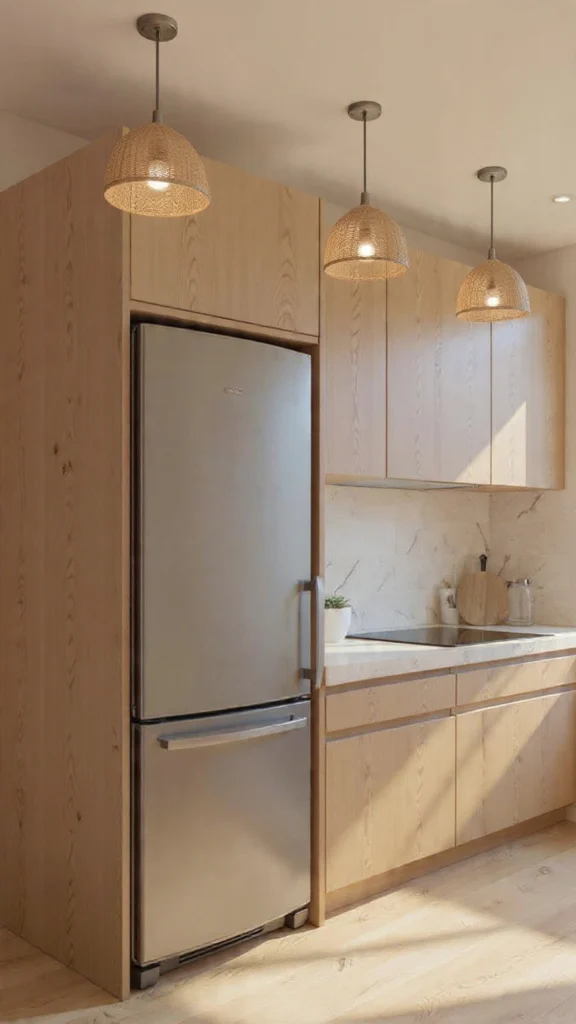
Lighting fixtures become sculptural moments in organic modern kitchens. Choose pendants or chandeliers in natural materials—woven rattan, bamboo, light wood, or ceramic—that complement your cabinet tones while providing visual interest overhead. These fixtures should feel organic yet refined.
Cluster two or three identical pendants above your kitchen island for balanced modern symmetry. Choose fixtures with clean silhouettes—simple globes, cylindrical drums, or geometric shapes—rather than ornate designs. Natural rattan or bamboo adds organic texture, while ceramic in cream or white maintains the neutral palette.
Consider the fixture finish carefully. Warm metals like brass or bronze complement wood tones better than chrome or polished nickel. Matte black fixtures create modern contrast while maintaining the understated aesthetic.
Pro tip: Hang pendant lights 30-36 inches above your island countertop for optimal task lighting without blocking sightlines. This height illuminates work surfaces while maintaining open visual flow.
9. Add Living Plants and Fresh Greenery
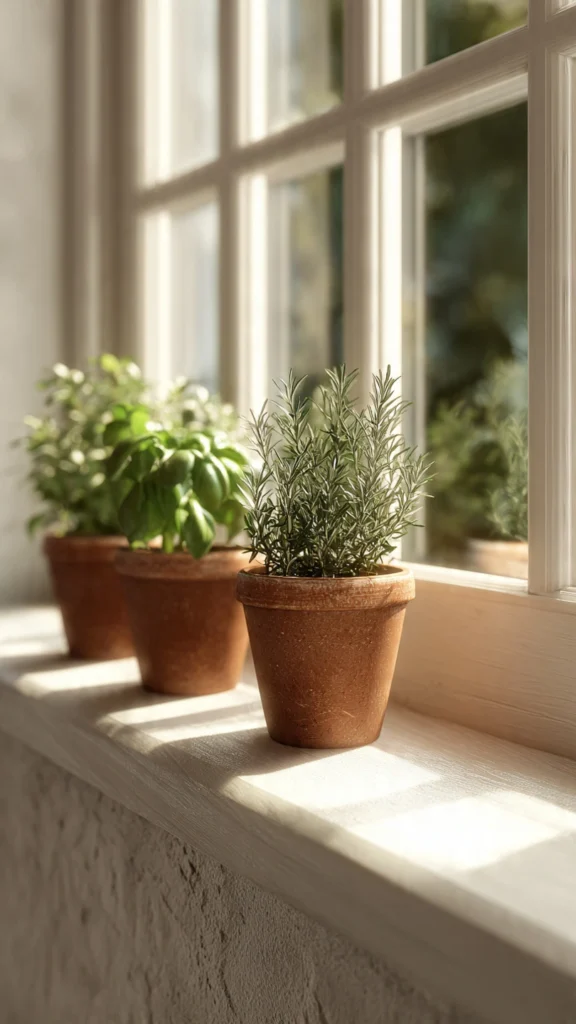
Nothing says “organic” quite like actual living things. Plants bring essential life, color, and air-purifying benefits to organic modern kitchens while softening the clean lines of modern design. Choose plants with sculptural forms—fiddle leaf figs, rubber plants, or simple potted herbs.
Display plants in natural containers—terracotta pots, ceramic planters in cream or white, woven baskets, or simple concrete vessels. The containers should feel organic and handmade rather than plastic or overly colorful. Group small herb pots on your windowsill for functional beauty you can actually cook with.
Consider a single statement plant in a corner rather than cluttering counters with multiple small plants. A tall fiddle leaf fig or dramatic monstera becomes living sculpture that commands attention without creating visual noise.
Pro tip: Pothos and snake plants thrive in low-light kitchen corners where other plants struggle. They’re nearly indestructible, making them perfect for busy kitchens where plant care sometimes gets forgotten.
10. Layer Natural Textiles Throughout
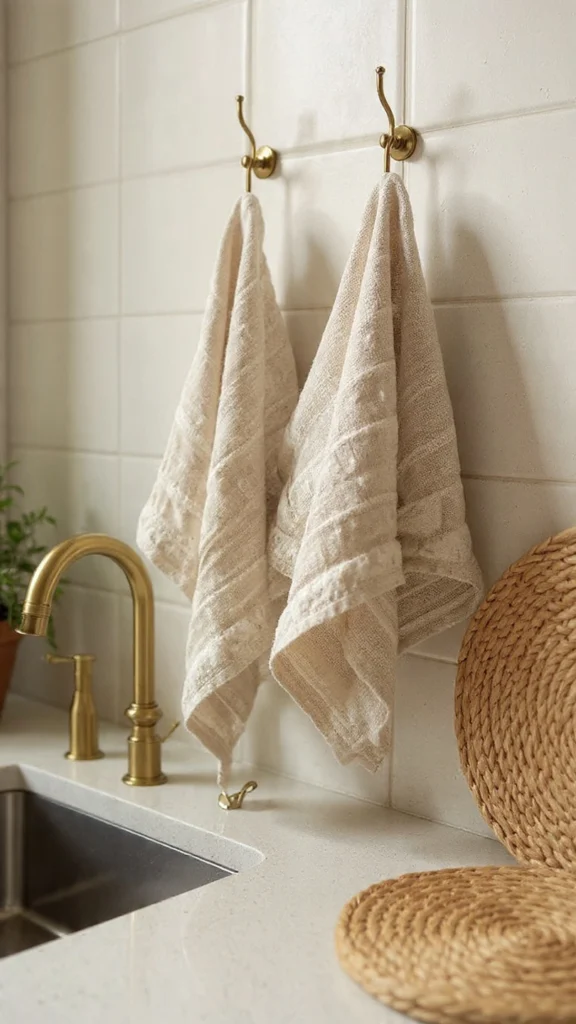
Textiles soften hard kitchen surfaces while introducing organic texture. Linen dish towels, cotton table runners, jute placemats, and woven trivets all contribute warmth and tactile interest. Choose textiles in your neutral palette—cream, beige, oatmeal, or soft gray.
Linen is the gold standard textile for organic modern design. It wrinkles naturally (that’s part of its charm), improves with age, and comes in beautiful neutral tones. Hang linen towels from brass hooks or drape them casually over your oven handle for that effortlessly styled look.
Layer textiles functionally too. A jute table runner down your island provides texture while protecting surfaces. Woven placemats at your breakfast bar define individual spaces. These practical items become decorative elements that enhance your organic aesthetic.
Caution: Avoid synthetic textiles like polyester dish towels—they look cheap and don’t absorb well. Natural fibers cost more initially but last longer and maintain the authentic organic aesthetic you’re building.
11. Incorporate Handmade Ceramic and Pottery
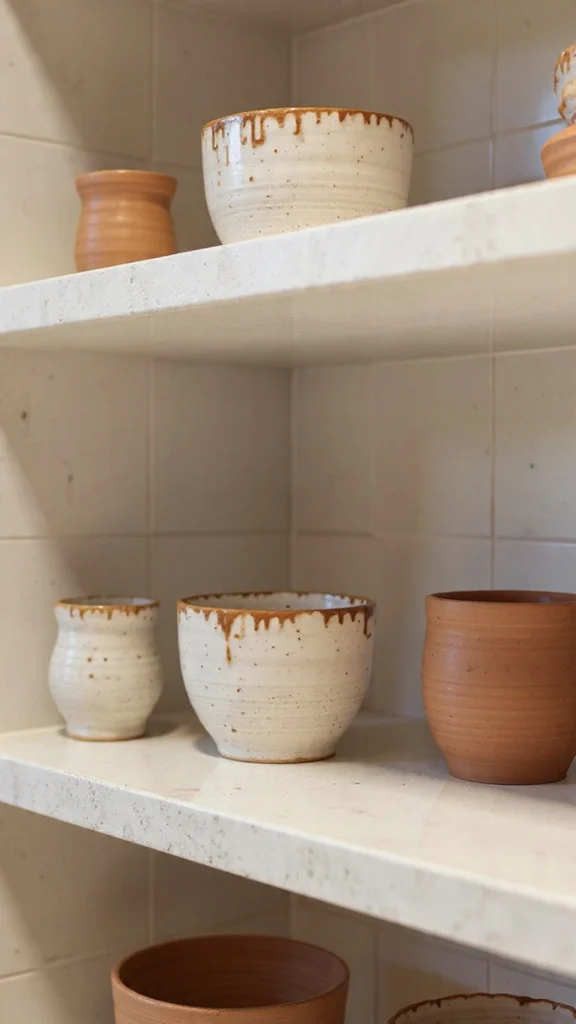
Handmade ceramics bring artisanal warmth to organic modern kitchens. Display hand-thrown pottery, ceramic vases, or stoneware dishes on open shelving or countertops. The irregular, handcrafted quality contrasts beautifully with the precise lines of modern cabinetry.
Choose ceramics in your neutral palette—cream, white, beige, or natural terracotta. The reactive glazes and slight imperfections celebrate the handmade process and add personality without clutter. A single statement vase holding dried pampas grass or a collection of handmade mugs create focal points.
Support local potters or small-batch ceramics makers on Etsy for one-of-a-kind pieces. These items give your kitchen authentic character that mass-produced decor can’t replicate. Each imperfection tells a story and makes your space uniquely yours.
Pro tip: Group ceramics in odd numbers (three or five pieces) for visual balance. This styling technique creates cohesive vignettes that look intentional rather than random.
12. Choose a Farmhouse Sink in Modern Materials
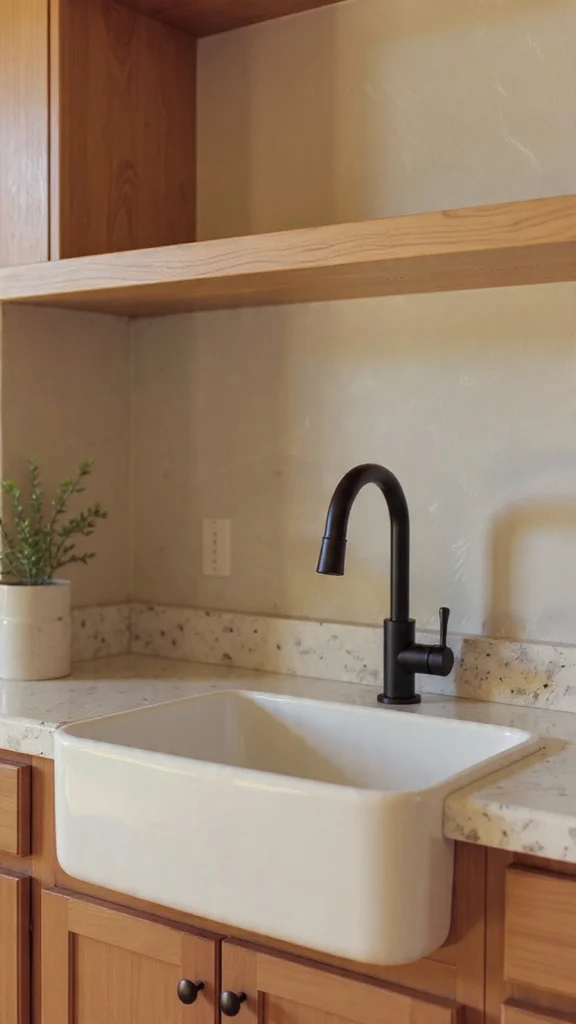
Farmhouse or apron-front sinks bridge the gap between rustic and modern beautifully. These large, deep sinks provide practical benefits while serving as architectural focal points. Choose versions in modern materials—white fireclay, concrete, or even matte black—to keep the organic modern aesthetic.
White fireclay sinks are classic for good reason. They’re durable, easy to clean, and their smooth, matte surface complements natural wood cabinetry perfectly. The generous basin accommodates large pots and baking sheets, making the sink both beautiful and functional.
Pair your sink with a minimalist faucet in matte black or brushed brass. Single-handle faucets with clean lines complement the sink’s simple geometry without competing for attention.
Caution: Farmhouse sinks require modified cabinet bases and specific installation. Confirm your existing cabinets can accommodate this sink style before purchasing, or budget for custom cabinetry if renovating.
13. Display Wooden Cutting Boards as Decor
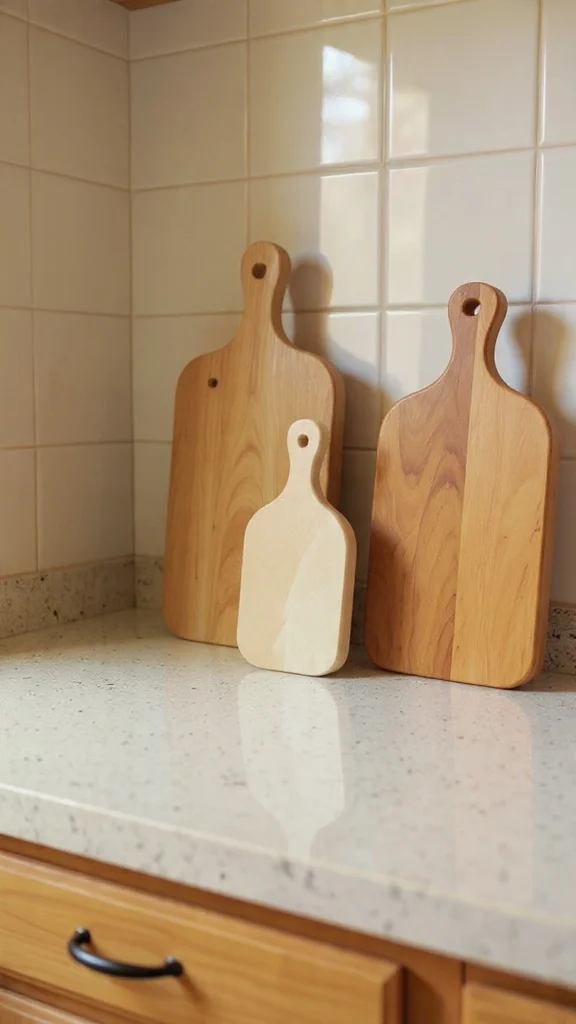
Wooden cutting boards serve double duty in organic modern kitchens—they’re essential tools and beautiful decorative objects. Lean them against your backsplash, hang them from leather straps, or stack them on open shelving to add warmth and organic texture.
Choose boards in various woods—walnut, maple, cherry, or acacia—for tonal variation. The natural wood grain creates visual interest while the functional nature keeps your kitchen from feeling overly styled or untouchable. These are tools you actually use, not just props.
Different shapes add interest too. Round boards soften all the rectangular lines in your kitchen, while long charcuterie boards create dramatic visual moments when propped vertically.
Pro tip: Oil your wooden cutting boards monthly with food-safe mineral oil or board cream. This maintenance keeps wood from drying out, prevents cracking, and maintains the rich color that makes them so beautiful.
14. Install Simple Bar Stools in Natural Materials
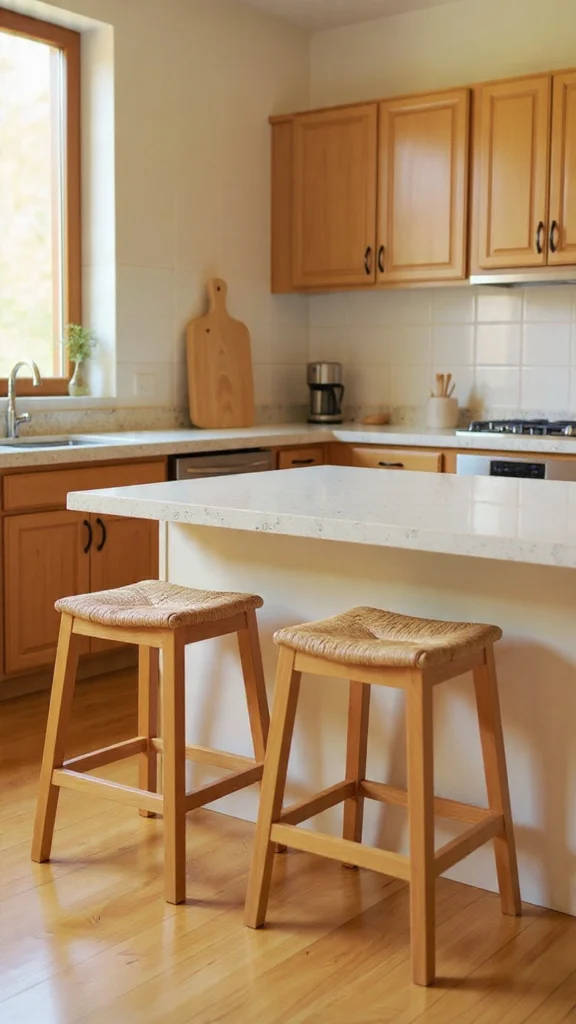
Bar stools at your kitchen island should complement your organic modern aesthetic, not fight it. Choose stools with clean lines in natural materials—wood frames, woven seats, or simple leather upholstery in neutral tones. Avoid ornate designs, bright colors, or overly industrial metal stools.
Backless stools tuck completely under your island, maintaining clean lines and open visual flow. If you prefer backs for comfort, choose low-profile designs that don’t block sightlines across your kitchen. Keep the silhouette simple and the materials natural.
Wood stools with woven or leather seats bring warmth while maintaining durability for daily use. Natural materials age beautifully, developing patina that adds character rather than looking worn and dated.
Pro tip: Choose stools 10-12 inches shorter than your counter height for comfortable seating. Standard counter height is 36 inches, requiring 24-26 inch stools; bar height is 42 inches, needing 30-32 inch stools.
15. Keep Countertops Clear and Minimal
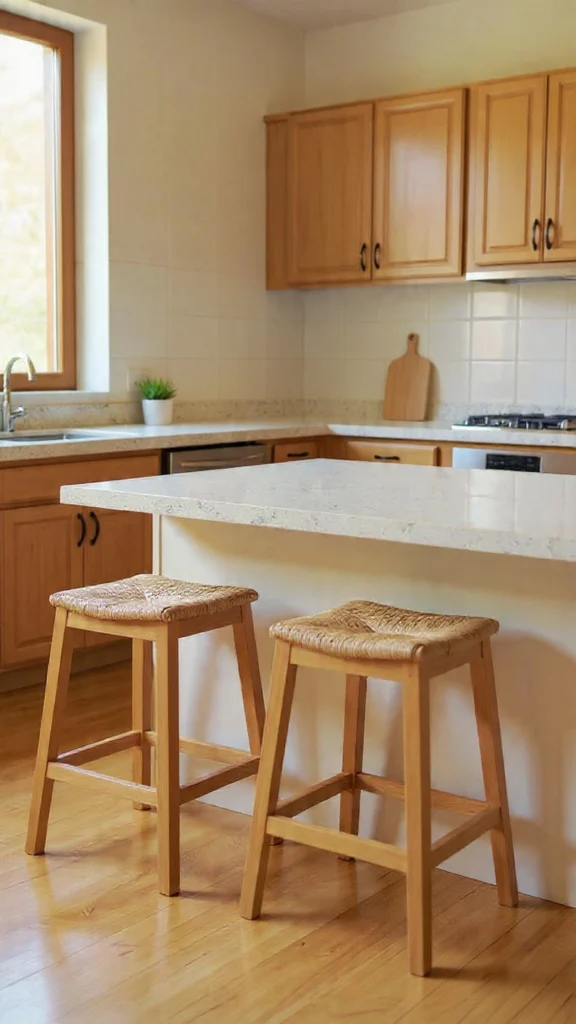
The final essential element of organic modern kitchens is restraint. Keep countertops as clear as possible, displaying only items that serve daily functions or provide genuine beauty. This minimalism allows your natural materials and clean lines to shine without visual competition.
Limit countertop items to absolute essentials: your coffee maker, a utensil crock, perhaps one beautiful cutting board and a small plant. Everything else should live in cabinets or drawers, maintaining the serene, uncluttered aesthetic.
This discipline is challenging but transformative. Clear counters make kitchens feel larger, more peaceful, and easier to clean. The visual calm reduces stress and lets you appreciate the beautiful materials and thoughtful design you’ve invested in.
Pro tip: Create a “landing zone” basket or drawer near your kitchen entrance for mail, keys, and daily clutter. This designated spot prevents countertop pile-up and maintains your carefully curated aesthetic.
Creating an organic modern kitchen isn’t about perfection or purchasing everything at once—it’s about making intentional choices that honor natural materials, celebrate simplicity, and create spaces that feel both beautiful and livable. Every wooden cabinet, every handmade ceramic piece, every moment of restraint brings you closer to a kitchen that nourishes both body and soul.
Start where it makes most sense for your space and budget. Maybe that’s swapping your hardware to matte black, adding floating shelves with beautiful dishware, or finally investing in those linen towels you’ve been eyeing. Small changes compound in organic modern design because the aesthetic relies on cohesion and restraint rather than dramatic focal points.
Remember that the most successful organic modern kitchens feel personal and lived-in, not sterile or untouchable. Your wooden cutting boards should show knife marks. Your ceramics should hold your morning coffee. Your plants should be real, growing things that occasionally need watering. This style celebrates the organic nature of daily life while framing it in modern beauty. Now go create your dream kitchen—one natural material, one clean line, one intentional choice at a time.