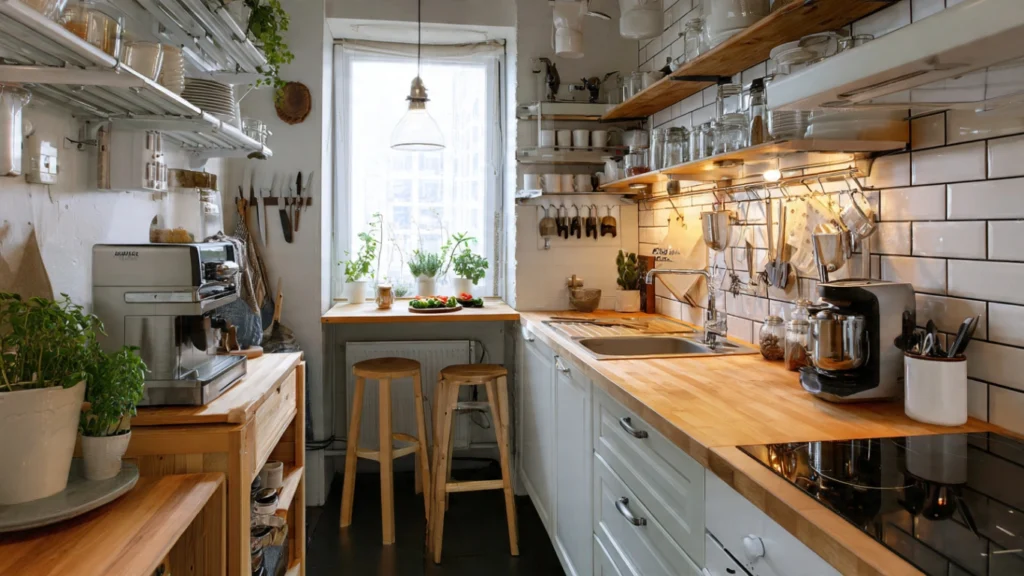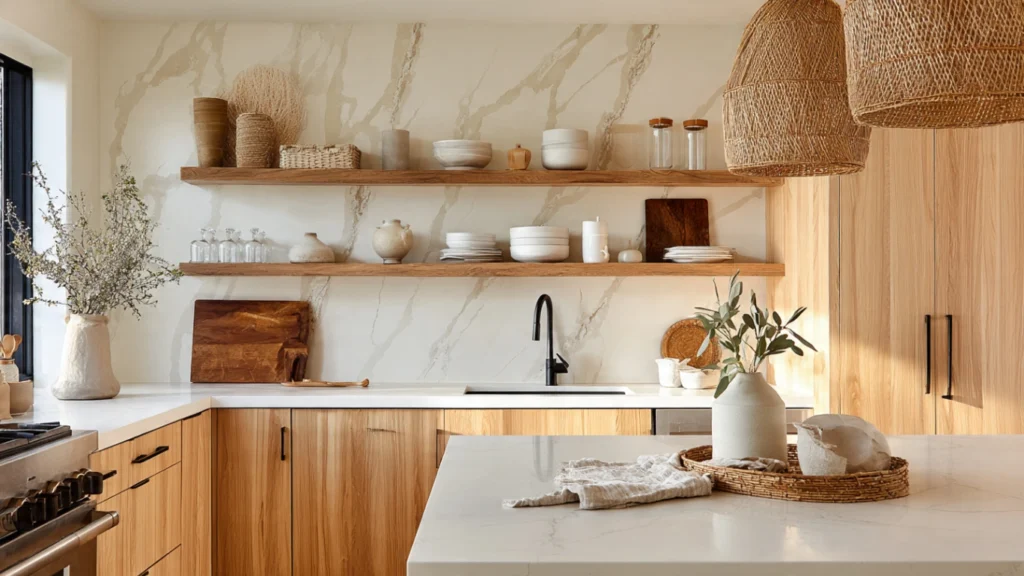
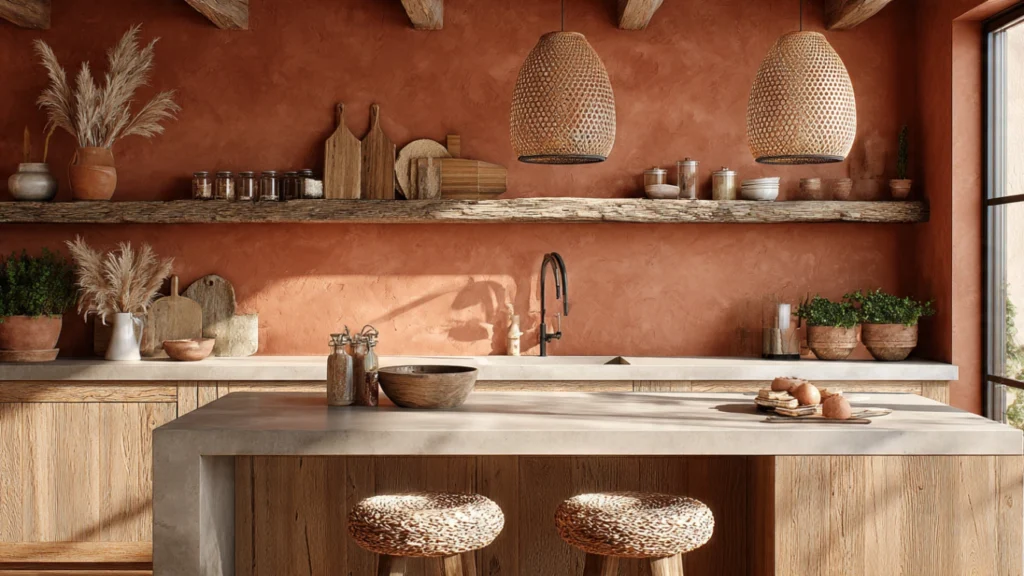
The scent of fresh rosemary mingles with morning coffee as sunlight catches the terracotta pot on your windowsill. Your hands rest on a warm wooden countertop, still bearing the natural grain patterns of the tree it came from. Above you, woven pendant lights cast gentle shadows on clay-colored walls. Every surface, every texture, every color in your kitchen whispers of nature—stone, wood, earth, and green growing things. This is what coming home should feel like.
An earthy kitchen embraces natural materials, warm neutral tones, and organic textures to create spaces that feel grounded, welcoming, and deeply connected to the natural world. Unlike trendy kitchen styles that feel cold or overly polished, earthy kitchens invite you to linger, to cook slowly, to gather with loved ones over simple meals. This timeless aesthetic works beautifully in American homes of all sizes—from compact apartment kitchens in Chicago to sprawling suburban spaces in Arizona. Whether you’re renovating, redecorating, or simply dreaming, these earthy kitchen ideas will help you create a space that nurtures both body and soul. Let’s bring the warmth of nature into the heart of your home.
1. Paint Walls in Warm Terracotta Tones
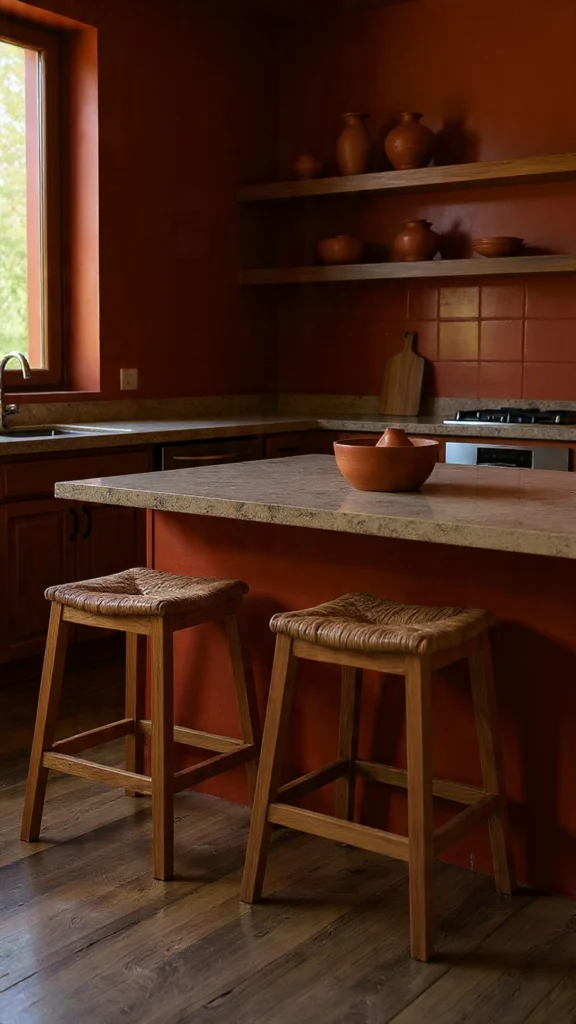
Terracotta wall colors immediately establish an earthy foundation that wraps your kitchen in warmth. These rich, clay-inspired hues range from soft peachy terracotta to deeper burnt orange, creating backdrops that feel sun-baked and Mediterranean. The color brings instant coziness while complementing natural wood and stone beautifully.
Choose lighter terracotta shades for smaller kitchens to maintain brightness while adding color. Deeper terracottas work wonderfully as accent walls behind open shelving or as a focal point behind your stove. The warm undertones make your kitchen feel inviting regardless of natural light levels.
Terracotta paint pairs gorgeously with cream cabinets, natural wood, and black or brass hardware. The color evokes Italian villas, Southwestern sunsets, and ancient pottery—all deeply earthy references that create kitchens with soul and character.
Pro tip: Test paint samples on multiple walls to see how natural light affects the color throughout the day. Terracotta can shift from peachy to orange depending on lighting conditions.
2. Install Natural Wood Cabinets with Visible Grain
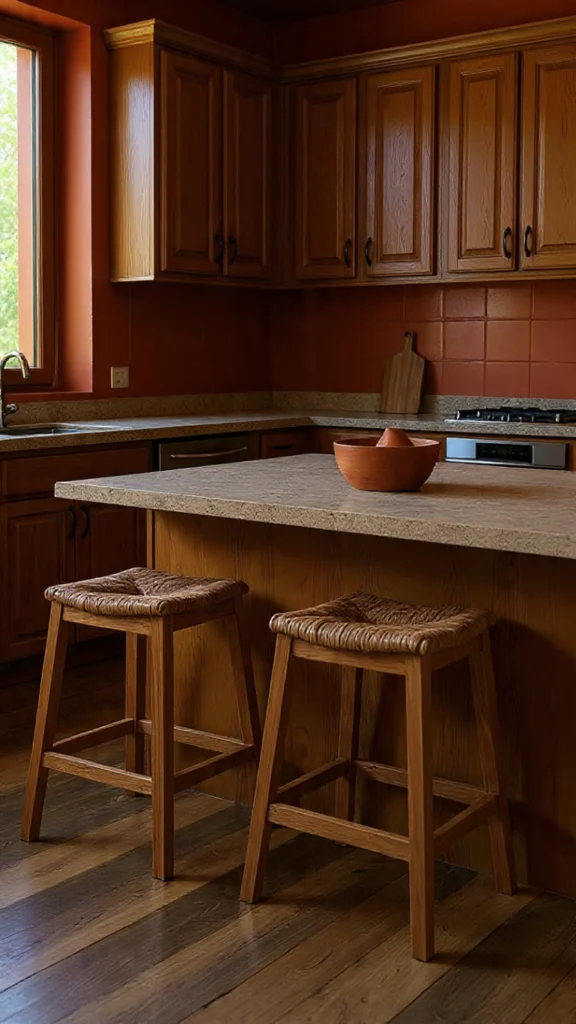
Wood cabinets form the backbone of earthy kitchen design. Choose cabinets in oak, walnut, cherry, or reclaimed wood with prominent grain patterns that celebrate the material’s organic origins. These natural wood tones bring warmth and texture that painted cabinets simply can’t match.
Light oak cabinets create bright, Scandinavian-inspired earthiness perfect for smaller spaces. Medium walnut offers richness without darkness. Reclaimed wood cabinets tell stories through their weathered surfaces, knots, and color variations—each imperfection adds character.
Opt for natural oil finishes or matte stains that enhance wood grain rather than hiding it under heavy lacquer. The tactile quality of real wood makes your kitchen feel handcrafted and intentional, connecting you to natural materials every time you open a cabinet door.
Caution: Real wood cabinets require more maintenance than painted versions. Be prepared to occasionally touch up finishes and address moisture damage if you choose natural wood near your sink.
3. Choose Stone or Concrete Countertops
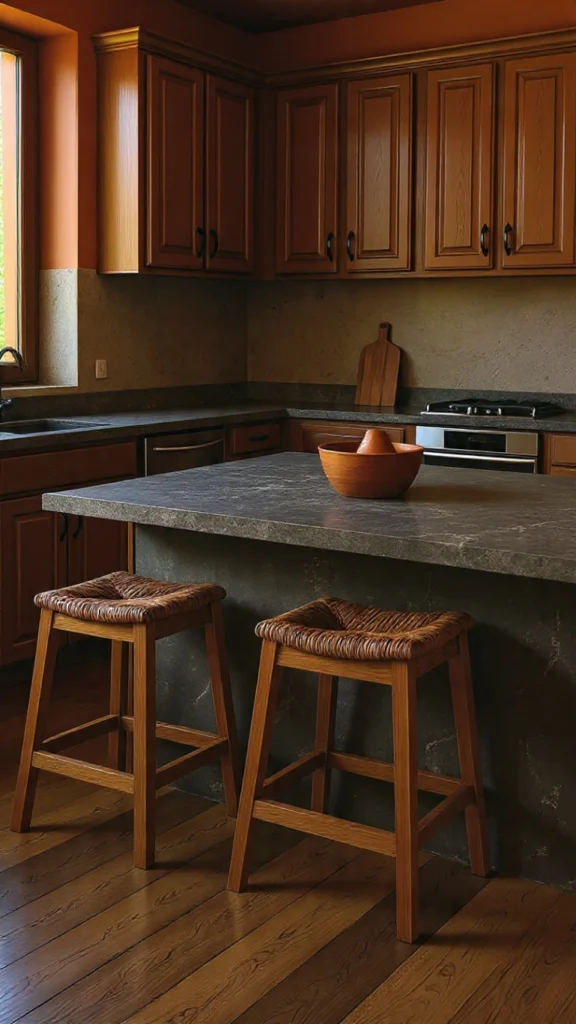
Countertops in earthy kitchens should feel like they came from the earth itself. Natural stone options like soapstone, limestone, or honed granite provide organic beauty with unique veining and color variations. Concrete countertops offer industrial-meets-earthy appeal with customizable tones and textures.
Soapstone develops a natural patina over time, darkening and becoming more beautiful with use and age. This living quality makes it perfect for earthy aesthetics that celebrate imperfection. Limestone in warm beiges or soft grays brings subtle elegance, while concrete can be tinted to match your exact color palette.
Unlike polished granite that feels formal and cold, honed or leathered finishes on stone countertops feel tactile and organic. These matte surfaces invite touch and develop character through daily use rather than showing every fingerprint or water spot.
Pro tip: Seal porous stone countertops properly before use and reseal annually. Natural stones absorb oils and acids, which can stain if left unprotected.
4. Display Terracotta Pots and Pottery
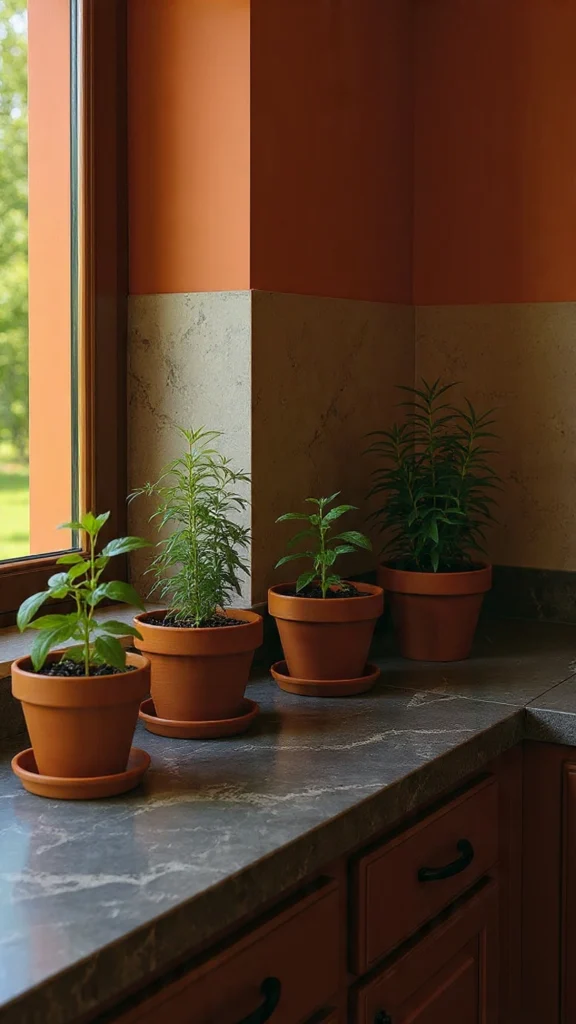
Terracotta pottery brings quintessential earthiness to kitchen spaces. These clay vessels in warm orange-red tones add color and texture while serving practical purposes. Use terracotta pots for windowsill herb gardens, as utensil holders, or simply as decorative accents throughout your kitchen.
The porous nature of terracotta makes it ideal for growing herbs—the clay breathes and prevents root rot better than plastic pots. Line up basil, rosemary, thyme, and oregano along your windowsill in matching terracotta pots for functional beauty that smells amazing.
Mix terracotta with other earthenware in cream, brown, and rust tones. Handmade pottery with irregular glazes and artisanal imperfections enhances the organic, collected aesthetic. These pieces make your earthy kitchen feel authentic rather than styled.
Pro tip: Place saucers under terracotta pots to protect windowsills and counters from water damage. Terracotta is porous and will seep moisture through the bottom.
5. Add Open Shelving in Natural Wood
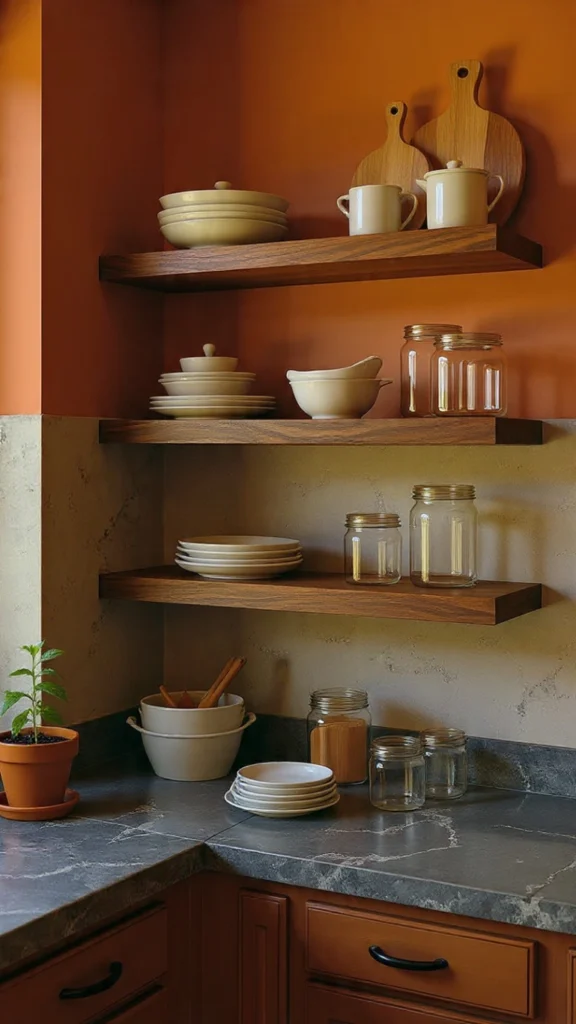
Open shelving showcases your beautiful dishware while adding horizontal lines that make kitchens feel larger. Choose thick wooden shelves in the same wood tone as your cabinets or opt for contrasting wood to create visual interest. The natural material feels organic and unpretentious.
Style shelves with earthenware dishes, wooden cutting boards, glass jars filled with grains and pasta, and small potted plants. The mix of functional items and decorative objects creates that lived-in, collected look that defines earthy design. Leave space between items to avoid clutter.
Floating shelves without visible brackets maintain clean lines while showcasing the wood’s beauty. The horizontal grain patterns create calm, grounding visual moments in your kitchen. These simple additions make huge impacts in establishing earthy character.
Caution: Open shelving requires consistent organization and cleaning. Items on display collect cooking grease and dust, so plan to wipe shelves weekly in active kitchens.
6. Incorporate Woven and Rattan Elements
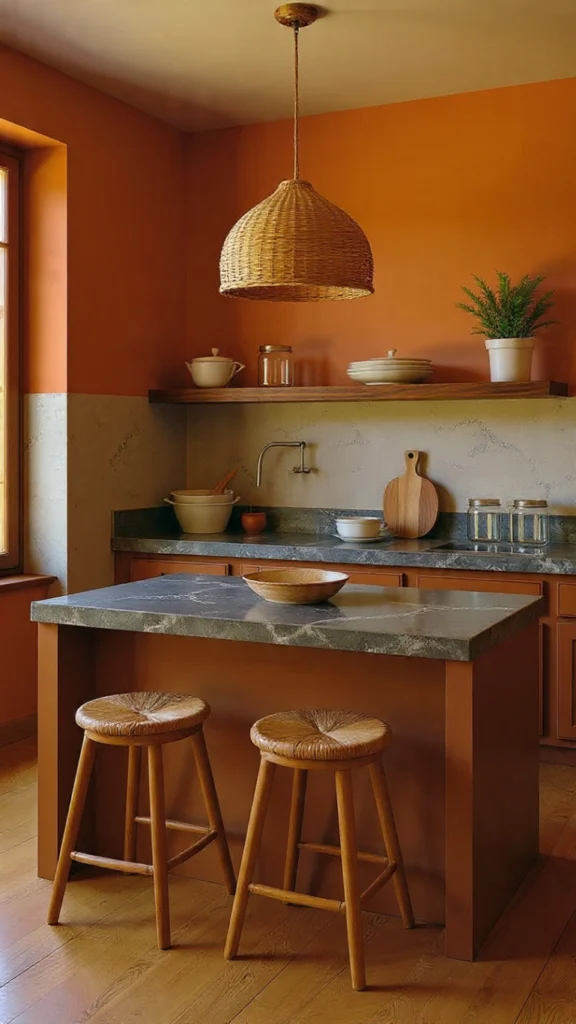
Woven materials bring organic texture to earthy kitchens through light fixtures, bar stools, and decorative baskets. Rattan, seagrass, jute, and wicker all add natural, handcrafted appeal that softens hard kitchen surfaces. These materials feel global and timeless.
Hang woven pendant lights above your island or dining table. The light filters through the weaving, creating beautiful shadow patterns while providing warm ambient glow. Rattan bar stools at your counter add seating with natural texture that’s both comfortable and beautiful.
Use woven baskets for storage—onions and garlic in a countertop basket, dish towels in a shelf basket, or produce in decorative woven bowls. These functional items double as decor, reducing clutter while enhancing your earthy aesthetic.
Pro tip: Natural woven materials can dry out and crack in very dry climates. Occasionally mist with water or use a humidifier to maintain flexibility and prevent splitting.
7. Install a Warm Neutral Tile Backsplash
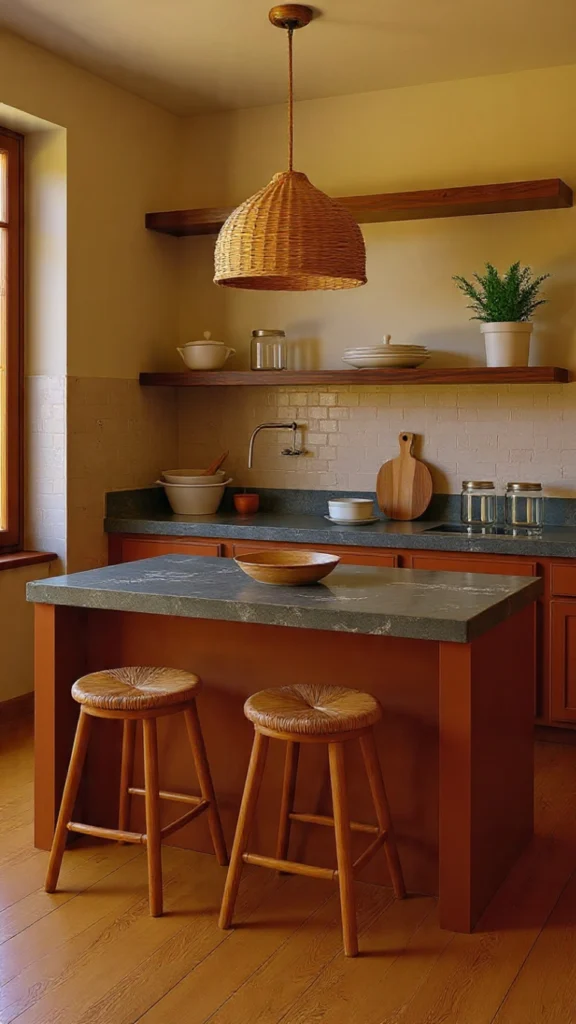
Backsplashes in earthy kitchens should add subtle texture without overwhelming your space. Choose tiles in warm neutrals—cream, beige, terracotta, sage green, or warm gray. Natural materials like travertine, limestone, or handmade ceramic tiles bring authentic earthiness.
Subway tiles in warm cream or beige create classic backgrounds that never feel dated. Zellige tiles—handmade Moroccan tiles with irregular surfaces and reactive glazes—add artisanal character. Terracotta tiles in simple patterns connect to your earthy color palette while adding Mediterranean warmth.
Consider texture over pattern. Tiles with subtle relief, hand-applied glazes, or natural stone variation create interest without busy patterns that might compete with other elements in your kitchen.
Pro tip: Mix matte and slightly glossy tiles in the same color family for depth. The varied light reflection creates subtle visual interest that photographs beautifully.
8. Choose Matte Black or Brass Hardware
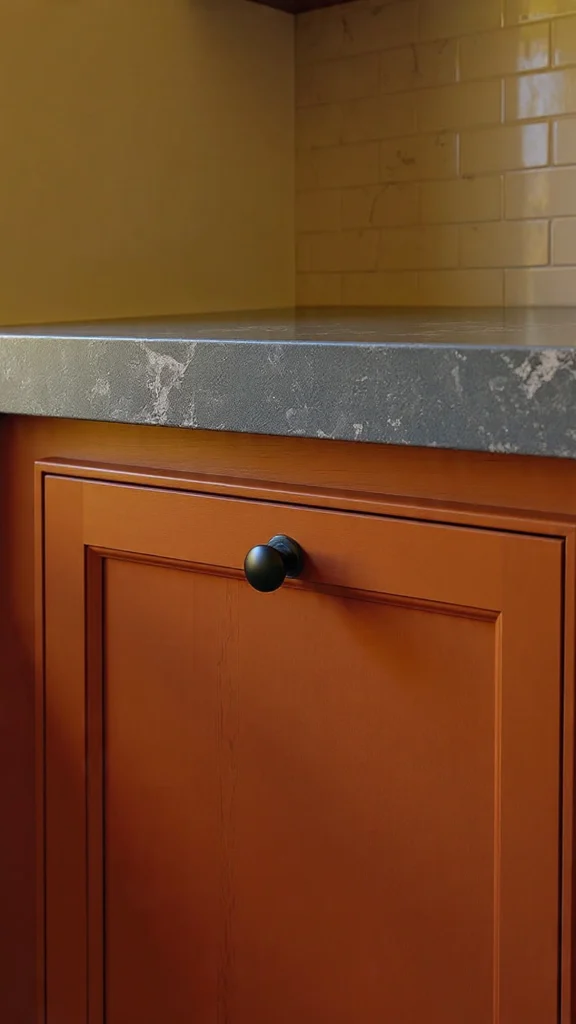
Hardware in earthy kitchens should feel substantial and handcrafted. Matte black provides modern contrast against warm wood tones, while aged brass or bronze offers warmth that harmonizes with natural materials. Both finishes feel organic and intentional rather than shiny and industrial.
Simple cup pulls, leather strap handles, or minimal bar pulls in these finishes complement earthy aesthetics without demanding attention. The understated hardware lets your natural materials remain the stars while providing necessary functionality.
Consistent hardware throughout your kitchen creates cohesion. Mixing finishes disrupts the calm, grounded feeling you’re cultivating. Choose one finish and use it for all cabinet pulls, drawer handles, and faucets.
Pro tip: Matte black hardware shows fingerprints less than polished finishes. Clean with simple soap and water—avoid abrasive cleaners that can damage the matte coating.
9. Add Living Plants Throughout
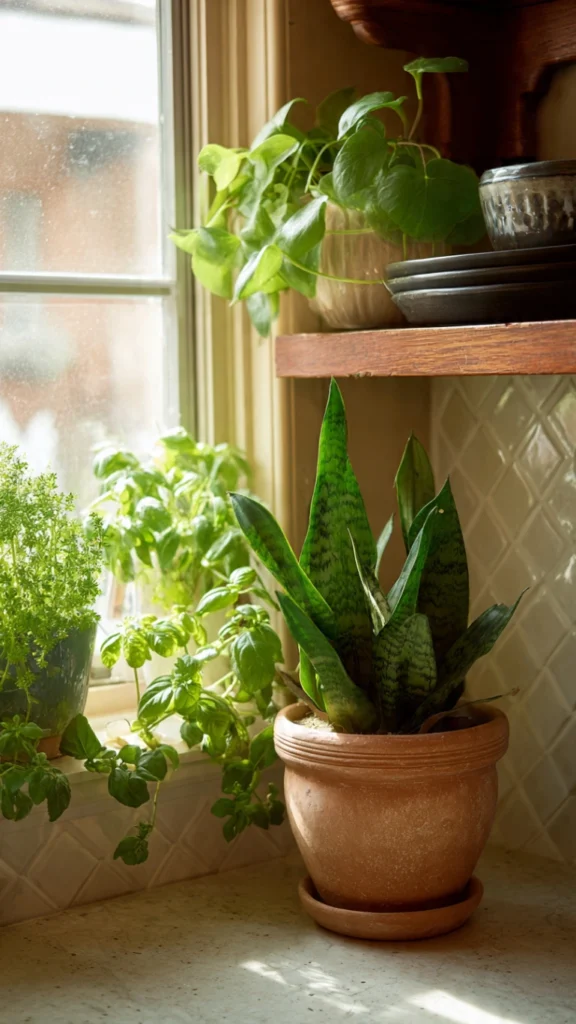
Plants bring literal earthiness to kitchens—actual growing things that connect your indoor space to nature. Herbs in terracotta pots, trailing pothos hanging from shelves, or a statement fiddle leaf fig in the corner all add life and air-purifying benefits.
Choose plants suited to kitchen conditions. Pothos tolerates varying light and occasional neglect. Snake plants thrive in corners with minimal natural light. Herbs like basil, mint, and rosemary love sunny windowsills and provide fresh flavors for cooking.
Display plants in containers that enhance your earthy aesthetic—terracotta, ceramic in neutral glazes, woven baskets, or simple concrete pots. The vessels become part of your decor, so choose thoughtfully.
Caution: Keep plants away from stove heat and grease splatter. Most houseplants don’t tolerate the temperature fluctuations and oil buildup common near cooktops.
10. Use Natural Fiber Textiles
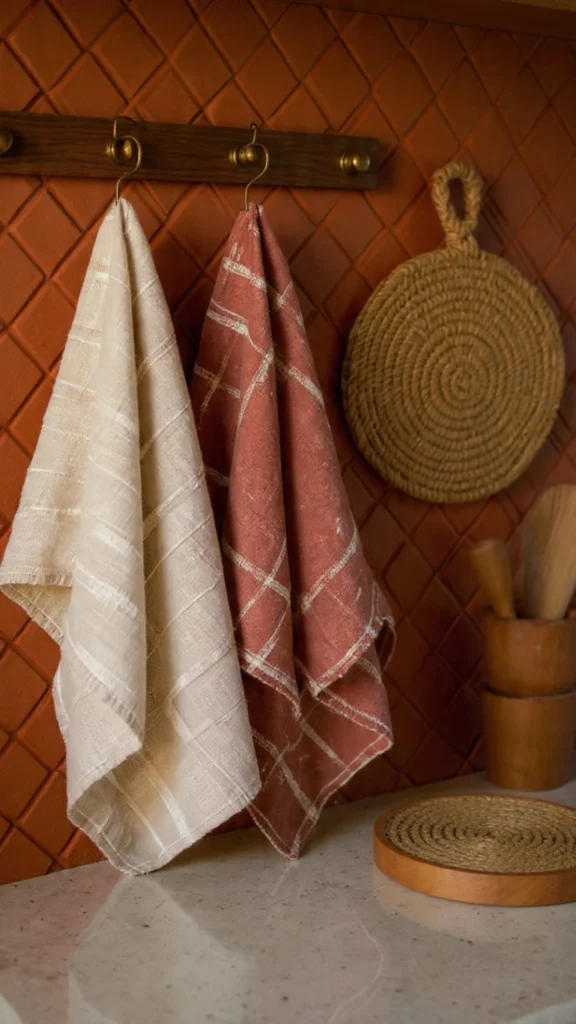
Textiles soften hard kitchen surfaces while adding organic texture. Linen dish towels, cotton table runners, jute placemats, and woven pot holders all contribute earthy warmth. Choose textiles in natural, undyed tones—oatmeal linen, natural cotton, or beige jute.
Linen is the gold standard for earthy kitchens. It wrinkles beautifully (embrace it!), becomes softer with each wash, and comes in gorgeous neutral tones. Drape linen towels over your oven handle or hang from brass hooks for that casually elegant look.
Layer textiles functionally. A jute table runner protects your island while adding texture. Cotton dish towels in cream and terracotta tones coordinate with your color palette. These practical items become decorative elements that enhance your aesthetic.
Pro tip: Wash linen in cool water and line dry to prevent excessive shrinkage. The natural wrinkles are part of linen’s charm—don’t fight them with heavy ironing.
11. Install Warm Wood or Stone Flooring
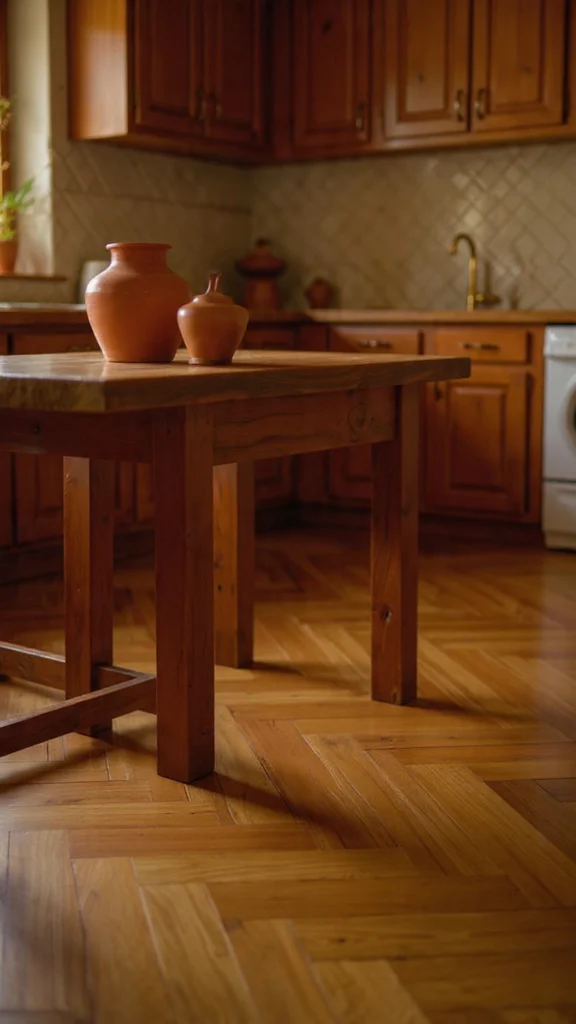
Floors anchor your entire earthy kitchen aesthetic. Natural materials like hardwood, terracotta tile, or natural stone in warm tones create foundations that feel grounded and organic. These durable surfaces develop character through daily use.
Wide-plank oak or walnut floors in natural or lightly stained finishes bring warmth underfoot. Terracotta tile in large formats creates Mediterranean earthiness that’s especially beautiful in Southwestern or California homes. Travertine or limestone in beige or tan tones offers timeless elegance.
If replacing flooring isn’t possible, layer large natural fiber rugs—jute, sisal, or seagrass—over existing floors. These affordable alternatives add earthy texture and warmth while protecting floors in rental kitchens.
Pro tip: Protect wood floors near sinks with waterproof mats in natural colors. Constant water exposure will damage even sealed wood flooring over time.
12. Display Wooden Cutting Boards and Utensils
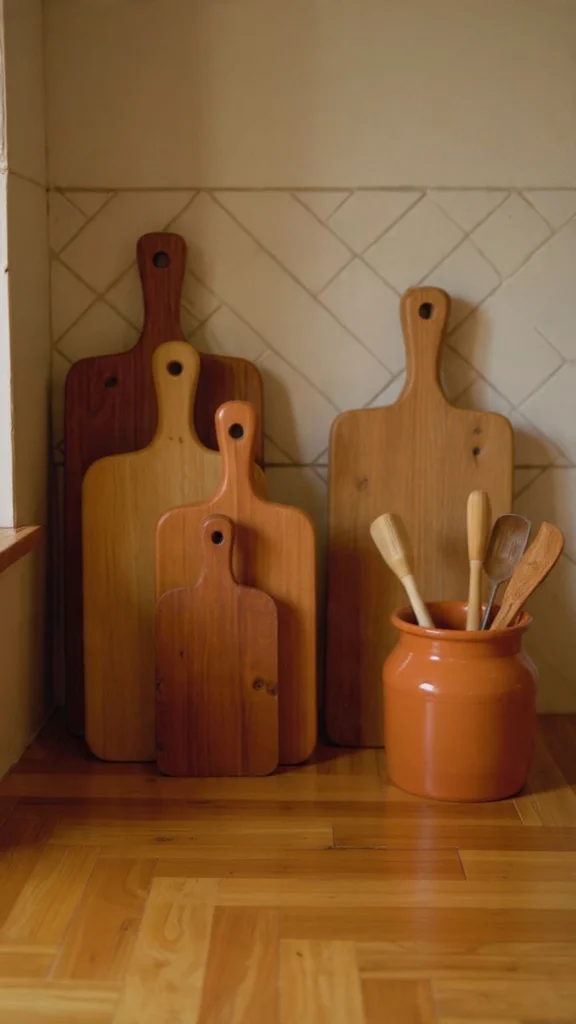
Wooden kitchen tools serve dual purposes—they’re functional necessities and beautiful decorative objects. Cutting boards, spoons, spatulas, and serving bowls in various wood tones add warmth and organic texture when displayed openly.
Lean cutting boards against your backsplash, store wooden utensils in ceramic crocks, or hang wooden spoons from brass hooks. These everyday tools become part of your earthy decor rather than hiding in drawers. The variety of wood grains and tones creates visual interest.
Choose boards and utensils in different woods—walnut, maple, cherry, teak—for tonal variation. The natural materials age beautifully, developing patinas that add character. Unlike plastic tools, wooden items become more beautiful with use.
Pro tip: Oil wooden cutting boards and utensils monthly with food-safe mineral oil or board cream to prevent drying, cracking, and maintain rich color.
13. Choose a Farmhouse Sink in Natural Materials
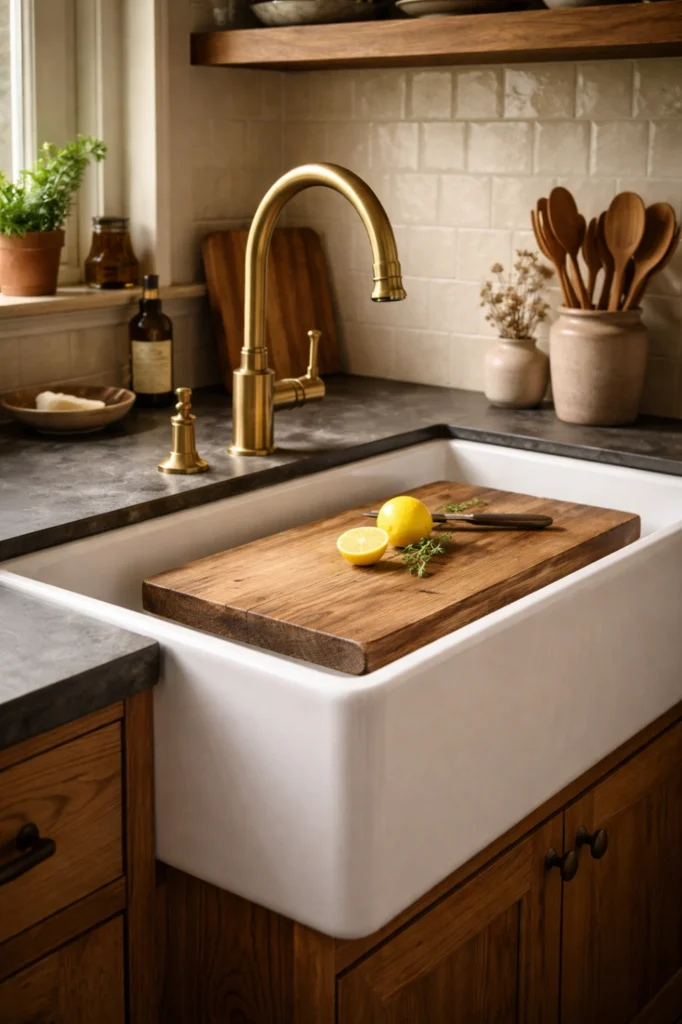
Farmhouse sinks in natural materials become sculptural focal points in earthy kitchens. White fireclay offers classic beauty, while concrete or natural stone versions create more dramatic earthiness. These deep, wide basins provide practical benefits alongside aesthetic impact.
Concrete farmhouse sinks can be custom-tinted to match your exact color palette—warm beige, soft gray, or even terracotta tones. Natural stone sinks in soapstone or granite feel carved from earth itself. White fireclay provides timeless simplicity that never goes out of style.
Pair your sink with a brass or matte black faucet in simple, unfussy designs. The combination of natural sink material and minimal hardware creates cohesive earthy beauty that functions beautifully for daily cooking and cleaning.
Caution: Stone and concrete sinks require sealing to prevent stains. Follow manufacturer guidelines for maintenance to keep your natural sink looking beautiful.
14. Incorporate Dried Florals and Grasses
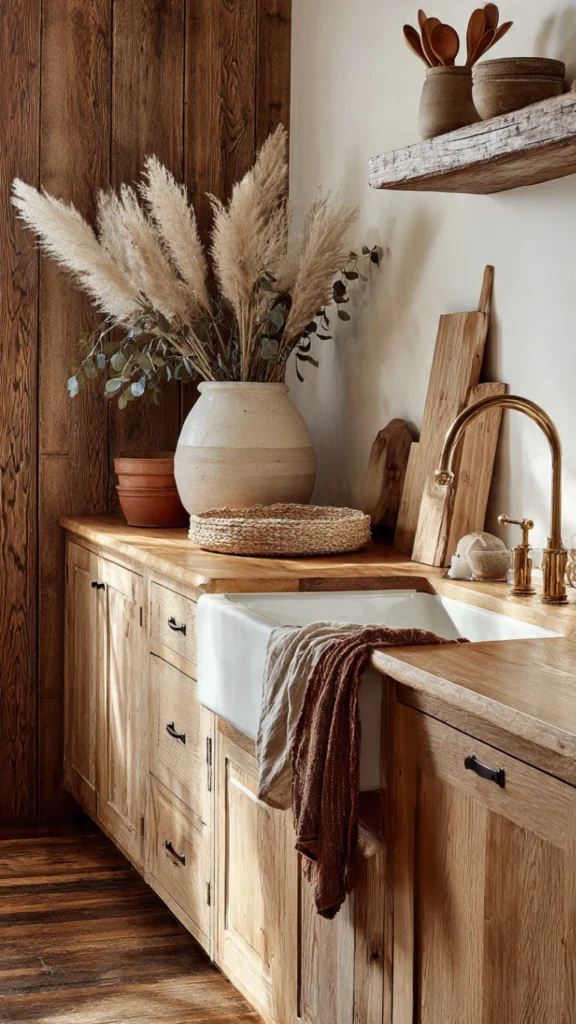
Dried botanicals bring nature indoors without the maintenance of fresh flowers. Pampas grass, dried eucalyptus, wheat stalks, and preserved palm fronds add organic shapes and neutral tones perfect for earthy kitchens. These arrangements last months or even years.
Display dried elements in ceramic vases, terracotta pots, or simple glass containers. A tall arrangement of pampas grass in a corner adds drama and softness. Smaller bundles of eucalyptus or wheat on shelves provide subtle organic touches.
The neutral tones of dried botanicals—cream, beige, brown, soft green—coordinate perfectly with earthy color palettes. The sculptural organic forms create visual interest without demanding attention or clashing with your materials.
Pro tip: Avoid placing dried florals near cooking areas where grease can accumulate. The delicate dried materials are difficult to clean once soiled.
15. Add Exposed Ceiling Beams or Wood Accents
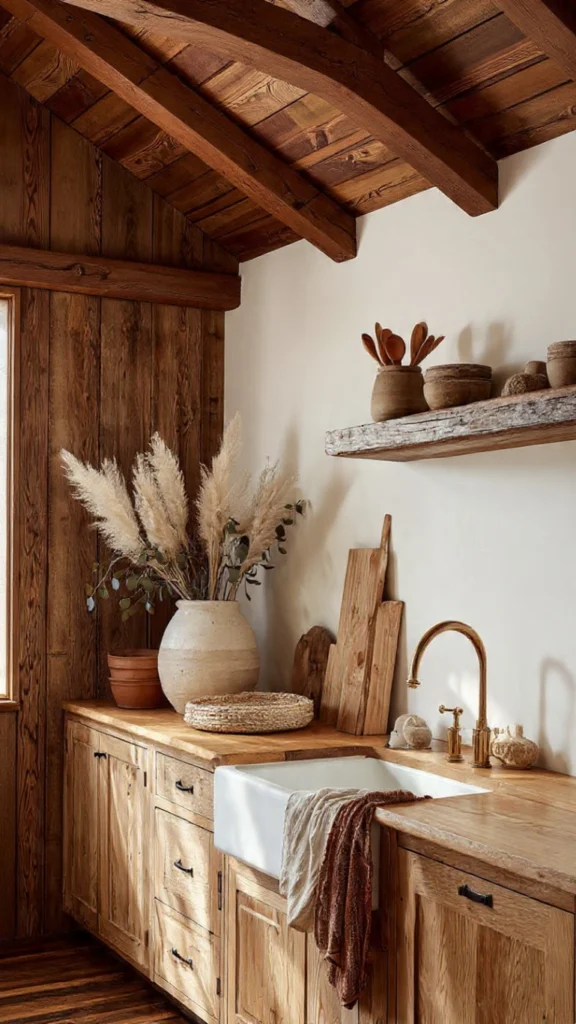
Exposed wood beams bring architectural earthiness to kitchens by showcasing structural elements. Natural or stained beams create horizontal lines that make ceilings feel interesting and grounded. Even faux beams add this organic architectural detail affordably.
If your kitchen lacks actual beams, add wood accents through trim work, a wood plank ceiling, or decorative wood shelving. These additions bring warmth overhead, balancing stone and tile surfaces below. The variety of wood locations creates layered natural texture.
Beams work especially beautifully in kitchens with high or vaulted ceilings, adding visual weight that brings proportions back to human scale. The rustic quality enhances earthy aesthetics without requiring full farmhouse commitment.
Pro tip: Paint ceiling white even with wood beams to maintain brightness. Dark ceilings can make kitchens feel cave-like rather than cozy.
16. Style with Copper and Brass Accents
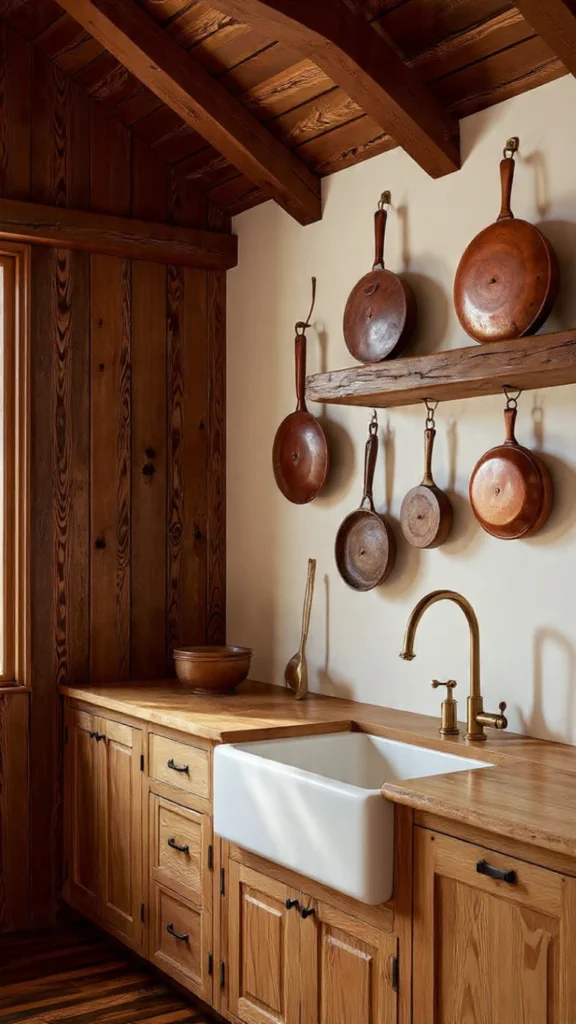
Warm metals bring earthy shimmer to kitchens without the coldness of stainless steel or chrome. Copper pots hanging from racks, brass faucets, and bronze hardware all provide warm metallic accents that complement natural materials gorgeously.
Copper develops natural patina over time, changing from bright penny tones to deeper browns and even greenish hues. This living quality makes copper perfect for earthy spaces that celebrate aging and imperfection. Display copper pots, kettles, or canisters as functional art.
Brass hardware and fixtures offer warm gold tones that harmonize with wood, terracotta, and natural stone. Choose aged or unlacquered brass that will develop patina rather than maintaining shiny gold forever.
Caution: Polishing copper and brass regularly prevents patina development. If you love the aged look, embrace the natural tarnishing rather than fighting it with constant cleaning.
17. Include Natural Stone or Clay Dishware
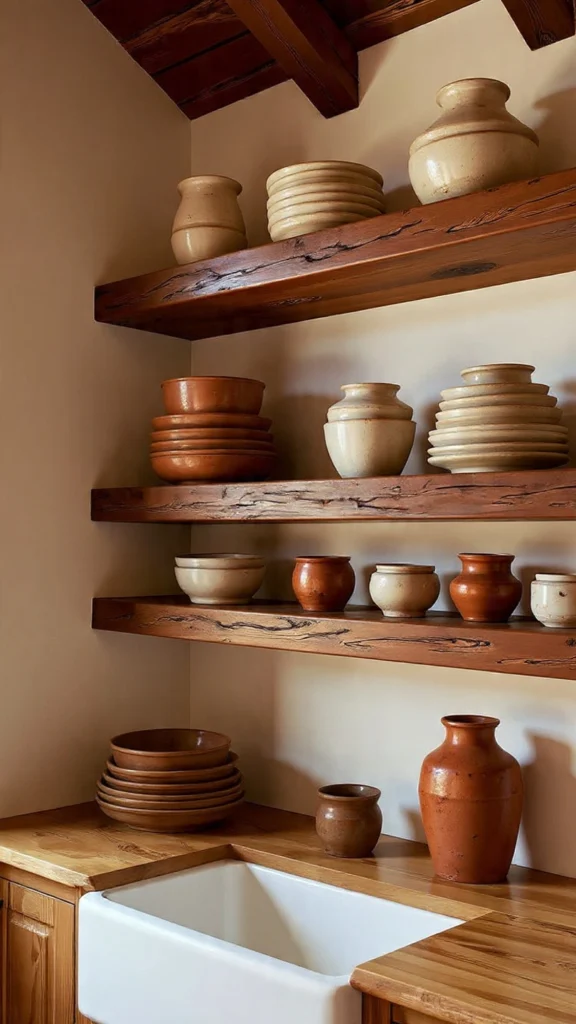
Your everyday dishes contribute to earthy kitchen aesthetics when chosen thoughtfully. Stoneware, earthenware, and handmade ceramics in cream, beige, terracotta, and natural clay tones look beautiful displayed on open shelving or stored in glass-front cabinets.
Choose dishes with reactive glazes, natural color variations, and slightly irregular shapes that celebrate handcrafted qualities. Perfect, mass-produced dishware feels sterile; artisanal pieces with unique characteristics enhance earthy authenticity.
Mix pieces in complementary neutral tones rather than matching sets. The collected, accumulated look feels more organic and personal than coordinated dinnerware. Each piece adds character and tells its own story.
Pro tip: Support local potters or small ceramic studios for unique pieces. Handmade dishware costs more but creates kitchens with genuine personality and supports artisan makers.
18. Create a Coffee Station with Natural Elements
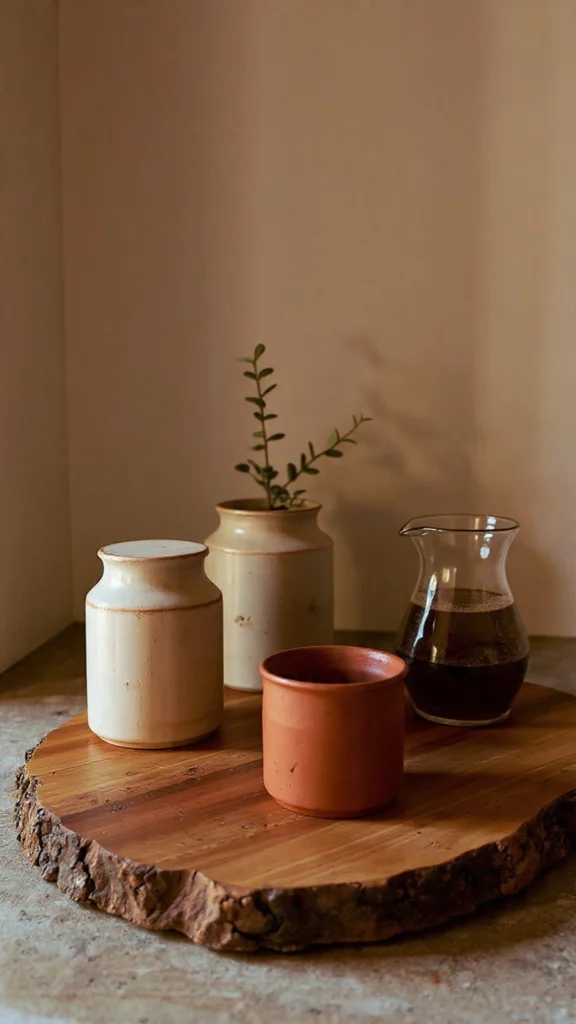
A dedicated coffee station brings morning ritual into your earthy aesthetic. Use a wooden tray or cutting board to corral your coffee maker, mugs, and supplies. Add small plants, a ceramic sugar bowl, and wooden spoons for an organized, beautiful setup.
Choose coffee storage in natural materials—ceramic canisters, glass jars with wood lids, or simple terracotta vessels. Display your favorite mugs in earthy glazes on a small shelf or hooks. The contained station keeps coffee supplies organized while creating a mini vignette.
Natural materials make even utilitarian coffee equipment feel intentional. A copper French press, ceramic pour-over, or simple glass carafe all work better than plastic in earthy kitchens.
Pro tip: Use a vintage wooden tray from thrift stores as your coffee station base. The weathered wood adds instant character and corrals items neatly.
19. Install Pendant Lights in Natural Materials
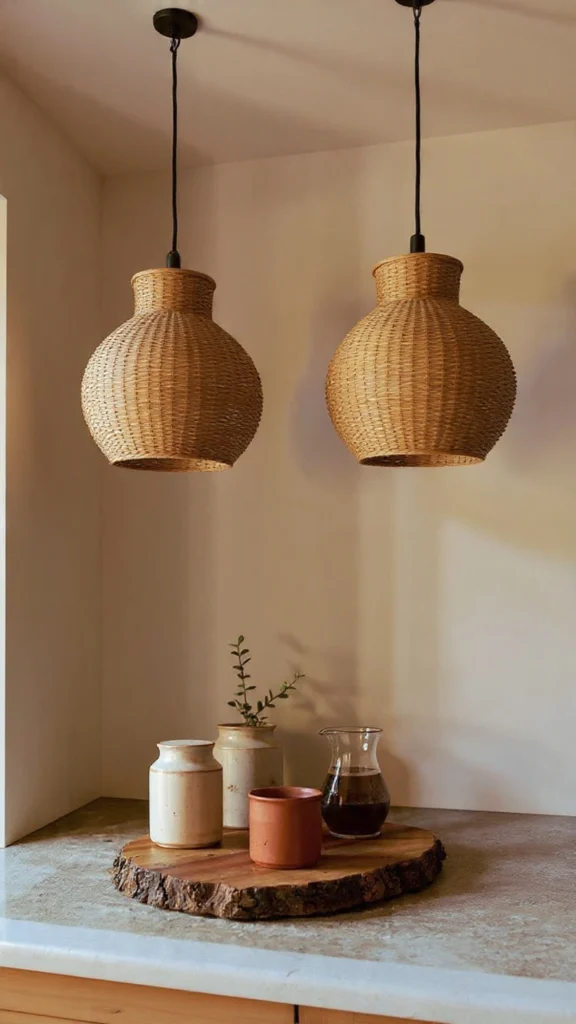
Lighting fixtures become sculptural moments overhead in earthy kitchens. Choose pendants in natural materials—woven rattan, bamboo, ceramic, or even wood—that diffuse light warmly. These organic fixtures add texture and visual interest at eye level.
Cluster two or three matching pendants above your island for symmetrical modern appeal with earthy warmth. The natural materials soften the light, creating ambient glow rather than harsh illumination. Choose fixtures with simple, unfussy shapes.
Ceramic pendants in cream, terracotta, or reactive glazes bring color and handmade quality. Woven pendants in natural rattan filter light beautifully while adding organic texture. Both options feel substantially more earthy than metal or glass fixtures.
Pro tip: Hang pendants 30-36 inches above island counters for optimal task lighting without blocking sightlines across your kitchen.
20. Keep Counters Minimal with Natural Accents
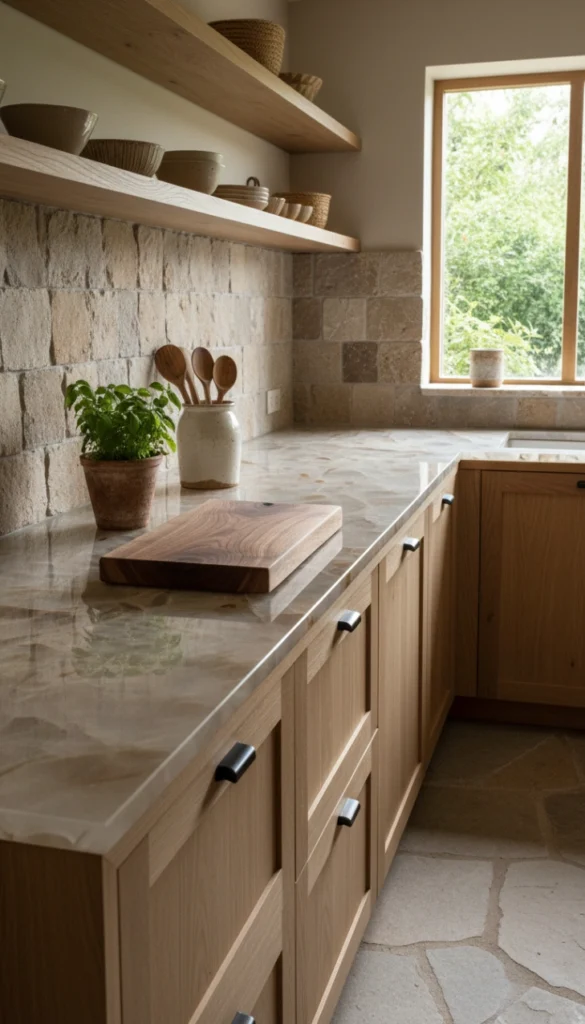
Earthy kitchens balance abundance of texture with restraint in clutter. Keep countertops relatively clear, displaying only beautiful functional items—a wooden cutting board, ceramic utensil crock, potted herb, or fruit bowl. This minimalism lets your natural materials breathe.
Choose items that serve daily purposes and enhance your aesthetic. A wooden dough bowl filled with lemons adds color and accessibility. A marble mortar and pestle provides function while looking sculptural. Everything on display should earn its spot through beauty or utility.
Clear counters make kitchens feel more spacious and peaceful. The visual calm allows appreciation of your beautiful materials—the stone counters, wood cabinets, and natural backsplash all get their moment rather than competing with clutter.
Pro tip: Create a landing zone basket or drawer for daily mail and keys so these items don’t pile on kitchen counters and disrupt your carefully curated earthy aesthetic.
Creating an earthy kitchen is about more than following design trends—it’s about building a space that connects you to natural rhythms and materials that have grounded humans for millennia. Wood, stone, clay, and fiber aren’t just beautiful; they’re the materials our ancestors cooked with, ate from, and built with. Bringing them into your modern kitchen creates continuity with that ancient wisdom.
Start your earthy kitchen transformation wherever it feels most natural. Maybe it’s swapping your dish towels for linen, adding terracotta pots to your windowsill, or finally painting that accent wall the terracotta color you’ve been pinning. Each natural element you introduce brings you closer to a kitchen that feels like coming home to earth itself.
Remember that the most beautiful earthy kitchens aren’t perfect—they’re alive with use, showing the wear patterns of daily cooking, the patina of aging wood and metal, the chips in handmade pottery. These imperfections aren’t flaws; they’re proof of a kitchen that’s truly lived in and loved. Your earthy kitchen should nourish your body with good food and your soul with natural beauty. Now go create your grounded, gorgeous sanctuary—one natural material, one warm tone, one organic texture at a time.