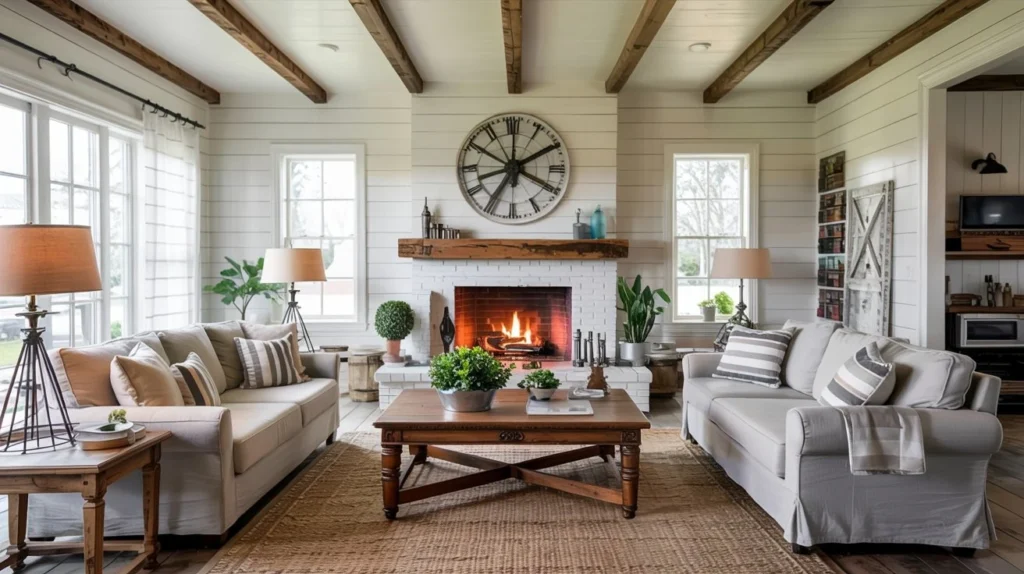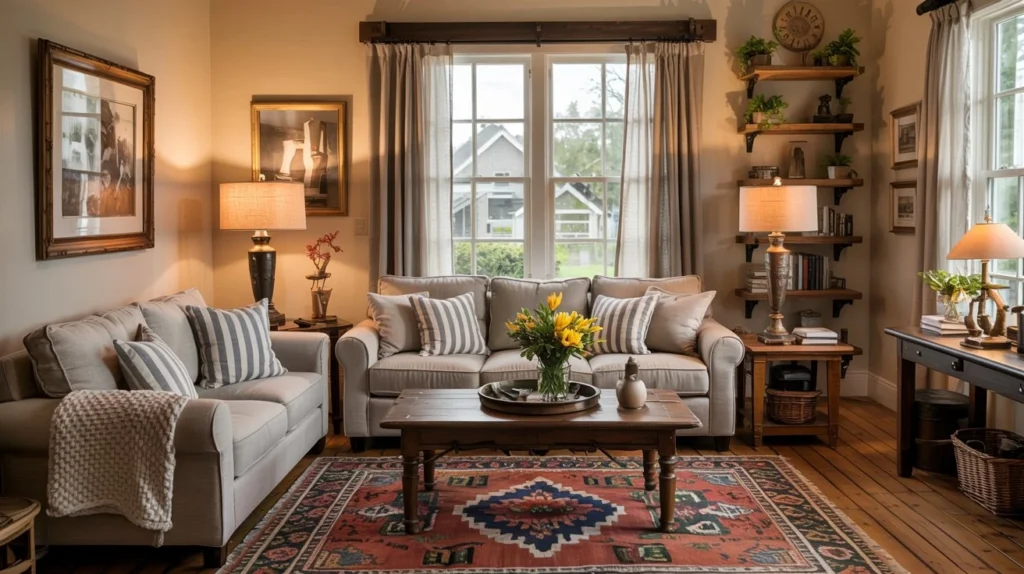
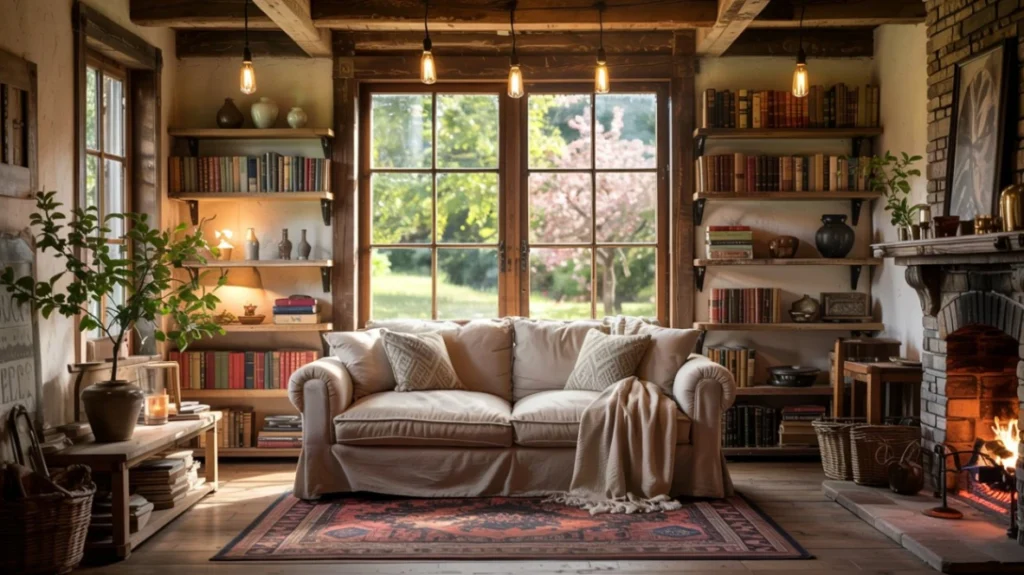
There’s something magical about stepping into a living room that feels like a warm hug. You know the kind—where natural textures meet soft neutrals, where every corner whispers calm instead of chaos. That’s the beauty of an earthy living room, and it’s exactly what your home has been craving.
Imagine sinking into a linen sofa surrounded by terracotta pots, woven baskets, and that perfect vintage wood coffee table you scored at the flea market. The afternoon light filters through gauzy curtains, highlighting the grain in your reclaimed shelving. This isn’t just decor—it’s a lifestyle shift toward something slower, warmer, and infinitely more grounded.
Whether you’re working with a cozy studio apartment or a sprawling suburban space, creating an earthy aesthetic doesn’t require a complete overhaul or designer budget. It’s about bringing the outside in, choosing materials that age beautifully, and curating a space that feels lived-in from day one. Ready to transform your living room into an organic sanctuary? Let’s dig in.
1. Layer Natural Textures Like a Pro
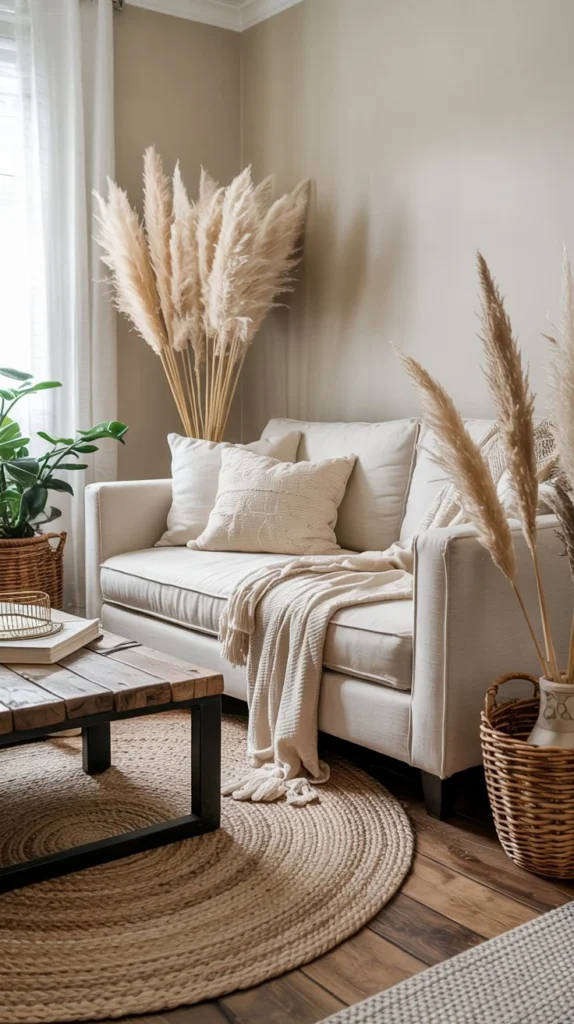
The secret to nailing that earthy living room vibe? Texture, texture, texture. Think chunky knit throws draped over smooth leather, jute rugs anchoring sleek wooden furniture, and linen pillows mingling with rougher burlap accents.
Start by mixing at least three different natural materials in your space. A woven rattan chair paired with a velvet ottoman and a wool throw creates visual interest without feeling chaotic. The key is staying within your neutral color palette while varying the tactile experience.
Don’t be afraid to go bold with your textural choices. A macramé wall hanging, sheepskin rug, or even a chunky rope basket adds dimension that flat surfaces simply can’t achieve. These organic elements create shadows and depth that make your space feel curated rather than catalog-ordered.
Pro tip: Avoid mixing too many competing patterns—let the textures do the talking. Stick to mostly solids and subtle weaves to keep that serene, grounded feeling intact.
2. Embrace the Power of Warm Neutrals
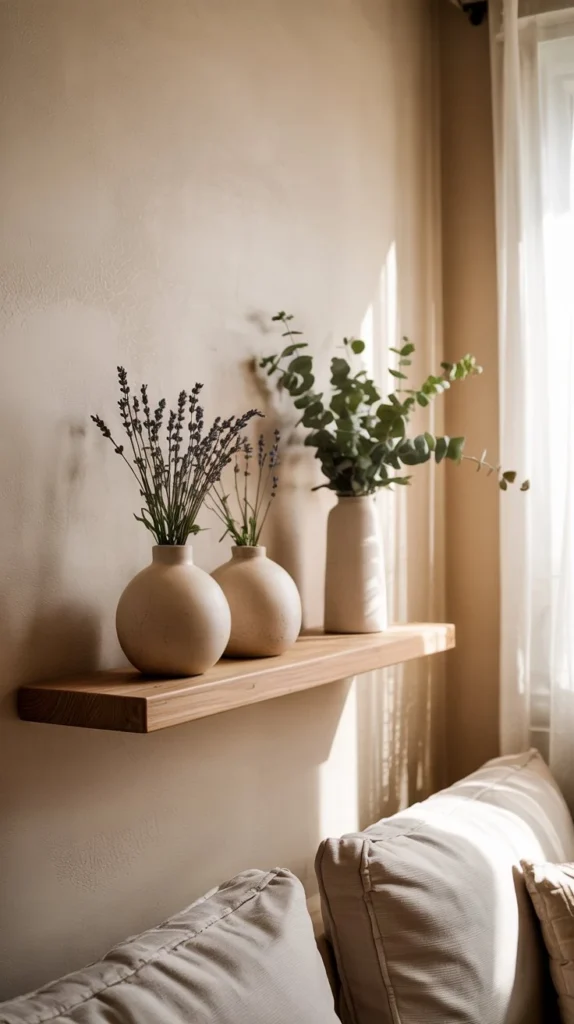
Forget stark white walls and cold grays. An authentic earthy living room lives in the realm of warm neutrals—think creamy beiges, soft taupes, warm grays with brown undertones, and those gorgeous greige shades that can’t decide what they want to be.
These colors create a cocoon-like atmosphere that makes you actually want to spend time in your living room. They’re forgiving with natural light throughout the day, shifting from cozy in the morning to downright romantic by evening. Plus, they’re the perfect backdrop for bringing in natural wood tones and greenery.
Paint isn’t your only option here. Consider a textured plaster finish, limewash paint, or even natural clay walls if you’re feeling adventurous. These finishes add organic imperfection that aligns perfectly with the earthy aesthetic.
Caution: Test paint samples in different lighting conditions before committing. What looks like perfect latte in the store might read as dingy dishwater in your north-facing apartment.
3. Bring in Statement Wood Furniture
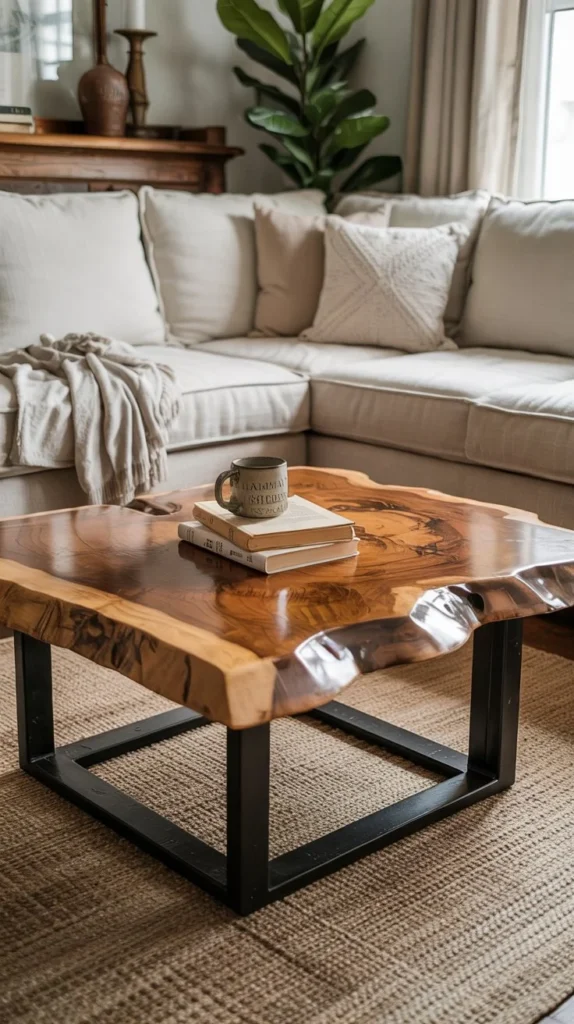
Nothing anchors an earthy living room quite like substantial wood furniture. We’re talking live-edge coffee tables, chunky reclaimed wood media consoles, and rustic wooden benches that look like they’ve lived a thousand lives.
The beauty of wood furniture is its versatility across price points. You can score incredible vintage pieces at estate sales and thrift stores, invest in artisan-crafted statement items, or DIY your own using reclaimed materials. Each piece brings its own story and character to your space.
Look for furniture with visible grain, knots, and natural imperfections. A perfectly smooth, uniformly stained piece won’t give you that organic, grounded feeling. Instead, seek out wood that celebrates its origins—burls, live edges, and varied tones all add to the earthy appeal.
Pro tip: Mix wood tones confidently. A walnut coffee table can absolutely live harmoniously with oak shelving and a teak side table. The variety adds richness and prevents your space from feeling like a showroom.
4. Create a Gallery Wall with Natural Elements
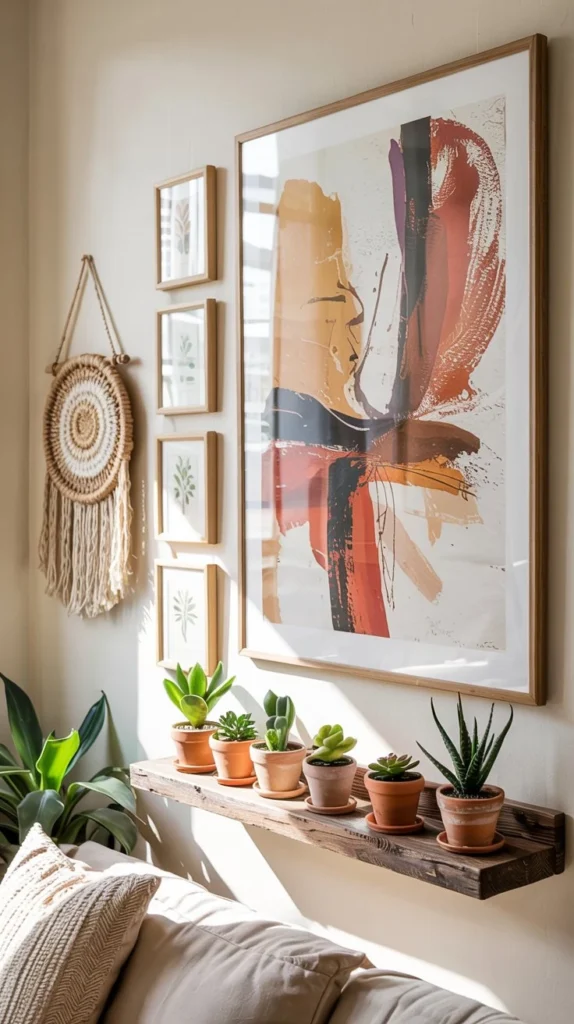
Forget traditional framed prints for a moment. An earthy living room deserves artwork that nods to nature—abstract landscapes in muted tones, botanical prints, woven fiber art, or even framed pressed leaves and flowers.
The magic happens when you mix mediums. Combine a large-scale abstract piece in earthy tones with smaller framed vintage botanicals and a woven wall hanging. Add a natural wood floating shelf to display ceramic pieces or small potted plants, turning your gallery wall into a three-dimensional experience.
Keep your frames simple and cohesive. Natural wood, black metal, or no frames at all (hello, canvas wraps and tapestries) maintain that organic, unfussy vibe. The art should feel collected over time rather than purchased in a matching set.
Pro tip: Leave breathing room between pieces. An overcrowded gallery wall can feel chaotic, which contradicts the calm, grounded energy you’re cultivating.
5. Layer Your Lighting for Ambiance
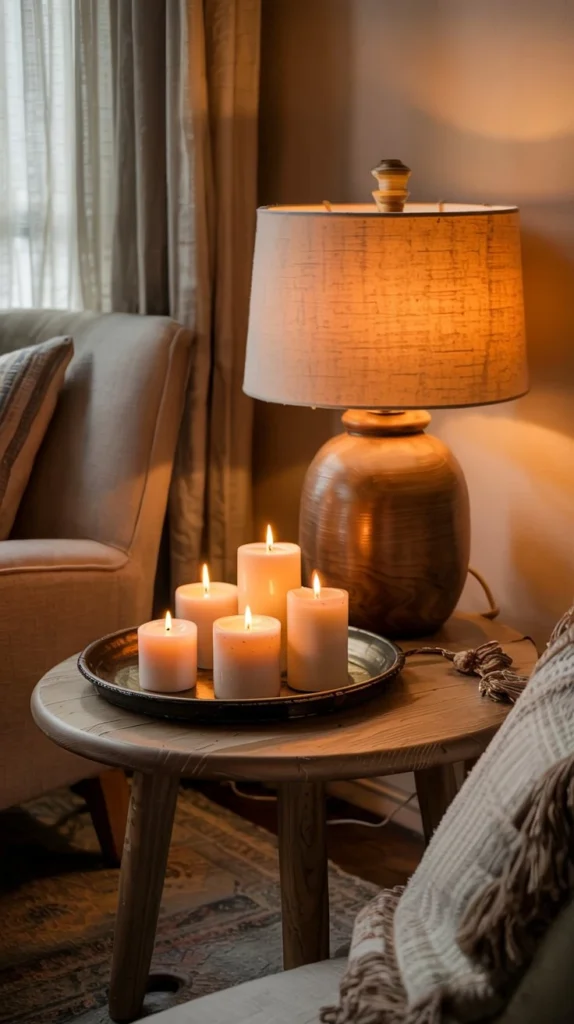
Harsh overhead lighting is the enemy of cozy. An earthy living room needs layered lighting that mimics the gentle glow of natural light throughout the day—think warm floor lamps, table lamps with linen shades, and the soft flicker of candles.
Invest in dimmable fixtures so you can adjust the mood from energizing morning brightness to evening wind-down mode. Paper lanterns, woven pendant lights, and ceramic-based lamps all reinforce that natural, organic aesthetic while providing functional illumination.
Don’t underestimate the power of candles and flameless LED options. Clustered on a wooden tray or tucked into a fireplace, they add instant warmth and that coveted hygge feeling. Opt for unscented or naturally scented options in ceramic or wooden vessels.
Caution: Avoid overly modern or industrial light fixtures that clash with your earthy vibe. Even if you love that geometric brass pendant, it might fight against the organic flow you’re creating.
6. Integrate Living Greenery Thoughtfully
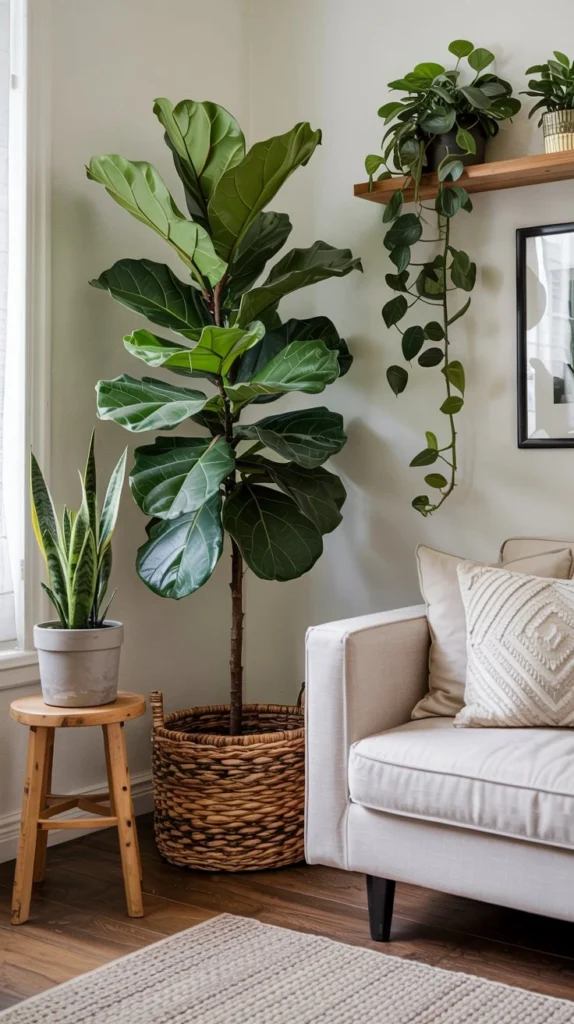
Plants aren’t just accessories in an earthy living room—they’re essential cast members. Large potted fiddle leaf figs, trailing pothos cascading from shelves, snake plants standing guard in corners—greenery literally brings life into your space.
Choose pots that align with your aesthetic: terracotta, ceramic in muted glazes, woven baskets, or simple concrete planters. Group plants in odd numbers and vary their heights for visual interest. A tall floor plant paired with medium tabletop greenery and trailing shelf plants creates that lush, layered look.
If you’re working with limited natural light or travel frequently, don’t stress. Hearty options like pothos, snake plants, and ZZ plants thrive on neglect. For truly low-maintenance living, high-quality faux plants have come a long way and can supplement your living greenery.
Pro tip: Use plants to fill awkward corners and empty vertical space. A tall plant instantly makes any room feel more complete and purposeful.
7. Incorporate Vintage and Secondhand Finds
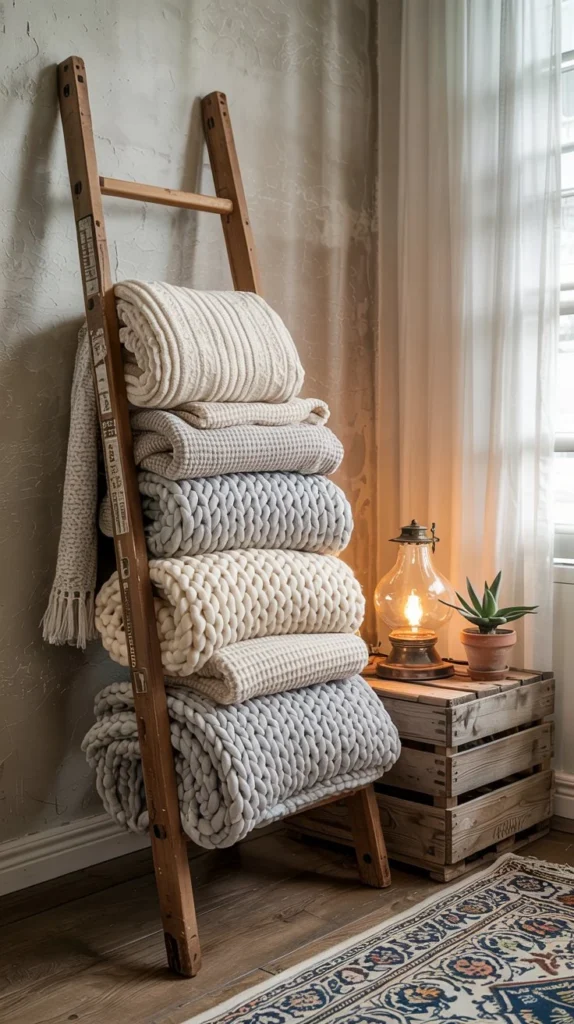
There’s an irreplaceable soul in vintage pieces that new furniture simply can’t replicate. Scour estate sales, thrift stores, and online marketplaces for wooden ladders to use as blanket storage, vintage ceramic lamps, antique wooden bowls, or weathered picture frames.
The imperfections in vintage items—the worn finish on a wooden tray, the slight chip in a ceramic vase—tell stories and add character to your earthy living room. They prevent your space from feeling too precious or staged, inviting actual living and relaxation.
Mixing old and new creates the collected-over-time aesthetic that makes spaces feel genuinely personal. That brand-new linen sofa looks even better flanked by a vintage wooden side table and your grandmother’s ceramic lamp.
Pro tip: Don’t overthink the “matching” aspect. In earthy design, cohesion comes from color palette and material, not from everything being the same era or style.
8. Choose Organic Shapes Over Hard Lines
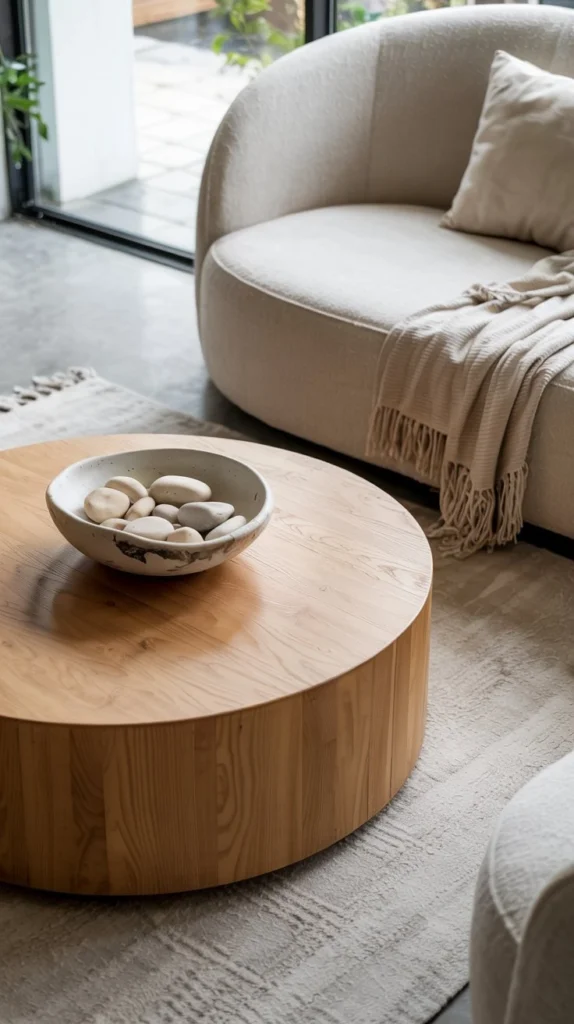
Soften your space by incorporating furniture and decor with organic, curved shapes. Round coffee tables, oval mirrors, curved sofas, and flowing ceramics all contribute to that earthy, natural feeling that straight lines and sharp angles can’t achieve.
Look for pieces inspired by nature’s forms—a bowl that mimics a river stone, a mirror shaped like a pebble, cushions with gentle curves instead of rigid squares. These subtle shape choices make your living room feel more inviting and less formal.
Even small adjustments make a difference. Swap your rectangular throw pillows for round ones, replace a square mirror with an arched or circular option, or choose a rounded ottoman instead of a standard coffee table.
Caution: You can absolutely mix some angular pieces with organic shapes—just let the curves be the dominant visual language to maintain that soft, grounded vibe.
9. Curate Meaningful Decor Displays
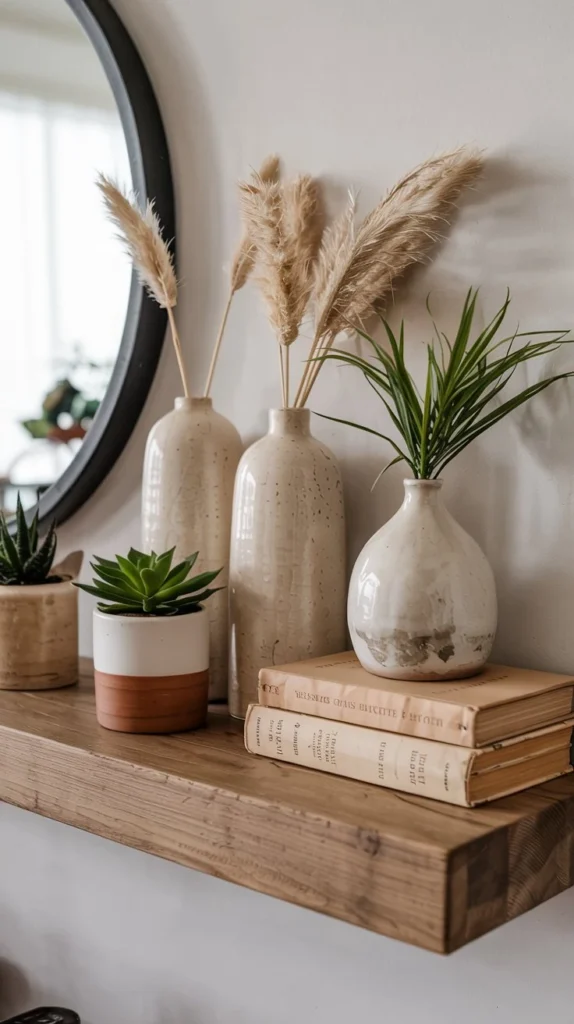
An earthy living room isn’t about filling every surface—it’s about thoughtful curation. Create small vignettes that tell a story: a stack of well-loved books topped with a vintage ceramic dish, a wooden tray holding candles and a small plant, or a collection of natural found objects.
Choose decor items made from natural materials: wooden beads in a bowl, a collection of stones or driftwood, woven baskets of varying sizes, ceramic vessels in muted glazes. These pieces should feel like treasures you’ve collected rather than items purchased in a single shopping trip.
Embrace negative space. A single beautiful object on a shelf often makes more impact than five mediocre ones crowded together. Let your pieces breathe and give the eye places to rest.
Pro tip: Edit ruthlessly. If something doesn’t feel authentic to your space or bring you genuine joy, it’s just visual clutter working against the peaceful atmosphere you’re creating.
10. Add Warmth with Natural Fiber Rugs
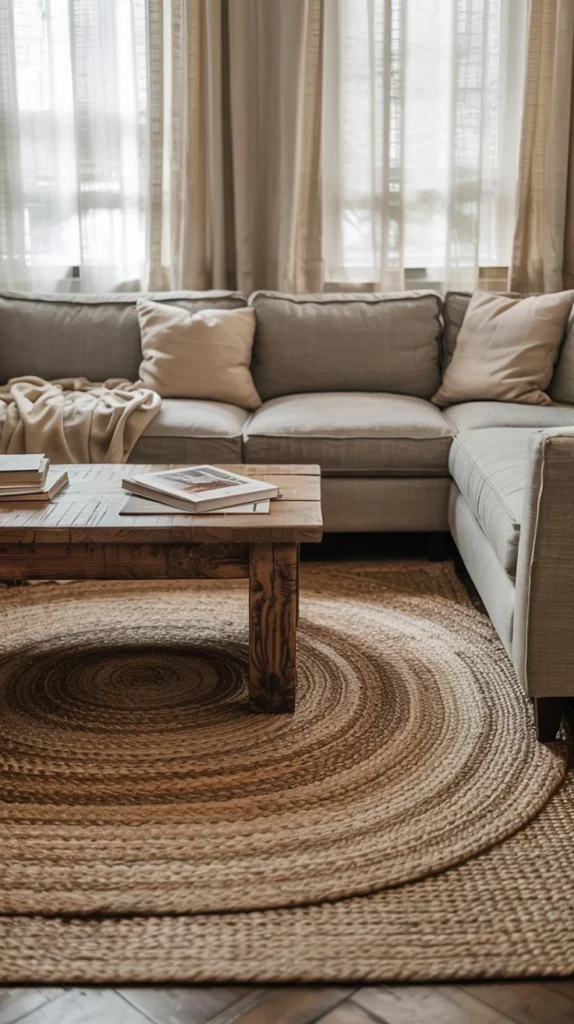
The foundation of any great earthy living room starts from the ground up. Natural fiber rugs—jute, sisal, seagrass, or wool—instantly ground your space while adding crucial texture and warmth underfoot.
Layering rugs creates even more visual interest and flexibility, especially in rentals where you can’t change existing flooring. Try a large jute rug as your base with a smaller vintage wool rug layered on top, or a neutral sisal anchoring a cozy sheepskin near the sofa.
These rugs are workhorses, too. They hide imperfections in less-than-perfect flooring, define seating areas in open-concept spaces, and provide sound absorption that makes your room feel cozier and more intimate.
Caution: Natural fiber rugs can be rough on bare feet. If comfort is a priority, choose softer options like wool or layer with plush sheepskin or cotton rugs in high-traffic areas.
Image description: Large natural jute area rug with woven texture anchoring seating area, layered with smaller cream wool rug underneath modern sofa, wooden coffee table centered on rug with visible natural fiber texture
Your Earthy Sanctuary Awaits
Creating an earthy living room isn’t about following rigid rules or buying everything new. It’s about thoughtfully choosing natural materials, warm colors, and pieces that resonate with you personally. It’s permission to slow down, to value imperfection, and to build a space that feels like an exhale after a long day.
Start small if you need to—maybe it’s just swapping out synthetic pillows for linen ones, or finally bringing home that gorgeous piece of driftwood from your last beach trip. Add a plant. Paint a wall. Hunt for that perfect vintage wooden bowl.
Your living room should be a reflection of the natural world and a sanctuary from the chaos outside. With each organic texture, each warm neutral, each living plant, you’re not just decorating—you’re creating a home that truly grounds you. And in 2026, that’s exactly the kind of space we all need.
Ready to start your earthy living room transformation? Begin with whichever idea spoke to you most, and trust the process. Your perfectly imperfect, beautifully grounded space is waiting to unfold.