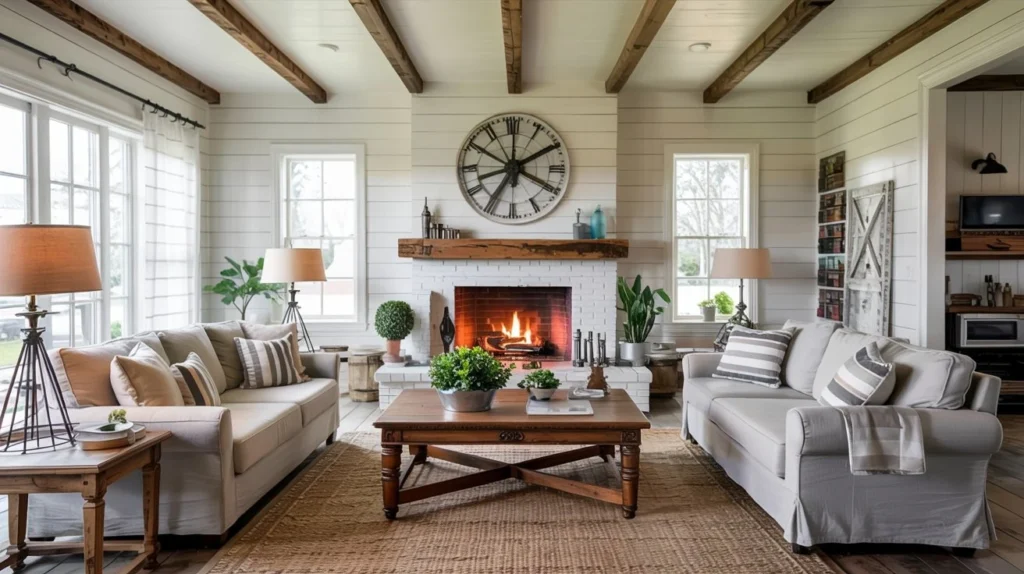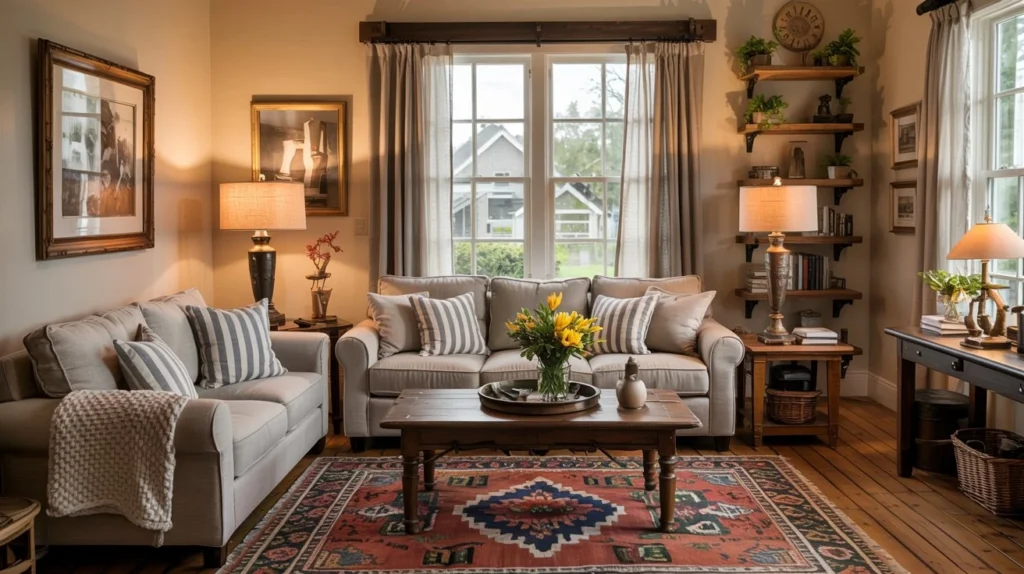
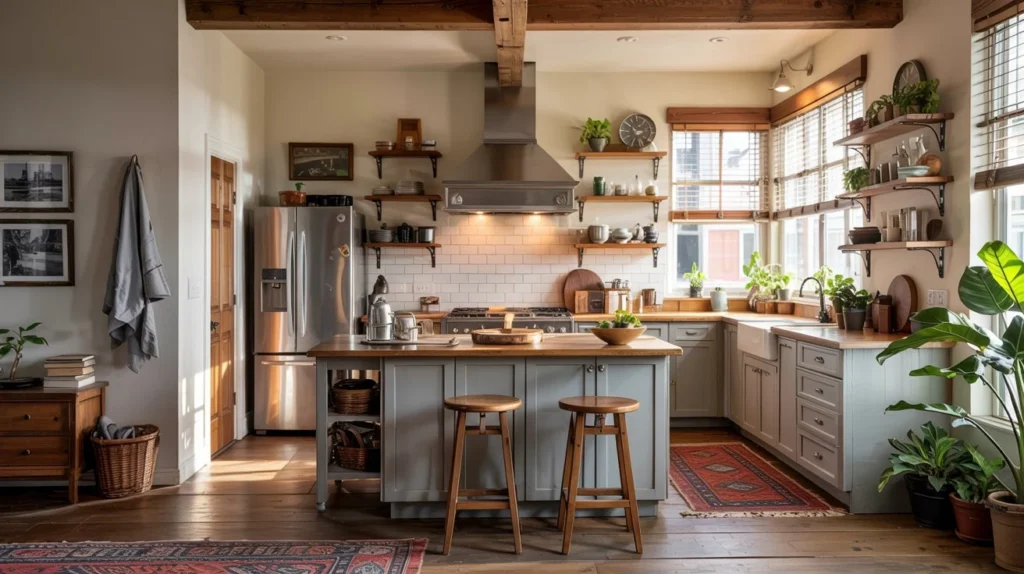
you walk through your front door after a long day, and instead of feeling divided between spaces, you’re welcomed into one warm, flowing sanctuary. The scent of coffee lingers near reclaimed wood shelves, while evening sunlight streams across both your cooking space and your favourite reading nook. This is the magic of a rustic kitchen and living room combo—a design trend that’s transforming American homes into cozy, connected havens.
Whether you’re working with a studio apartment in Brooklyn, a ranch-style home in Texas, or a renovated condo in Portland, creating a seamless rustic open-concept space doesn’t require a massive budget or a complete renovation. It’s about choosing the right textures, honouring natural materials, and letting warmth guide every decision.
Let’s explore ten beautiful ways to bring rustic charm into your combined kitchen and living area this year.
1. Exposed Wooden Beams That Tell a Story
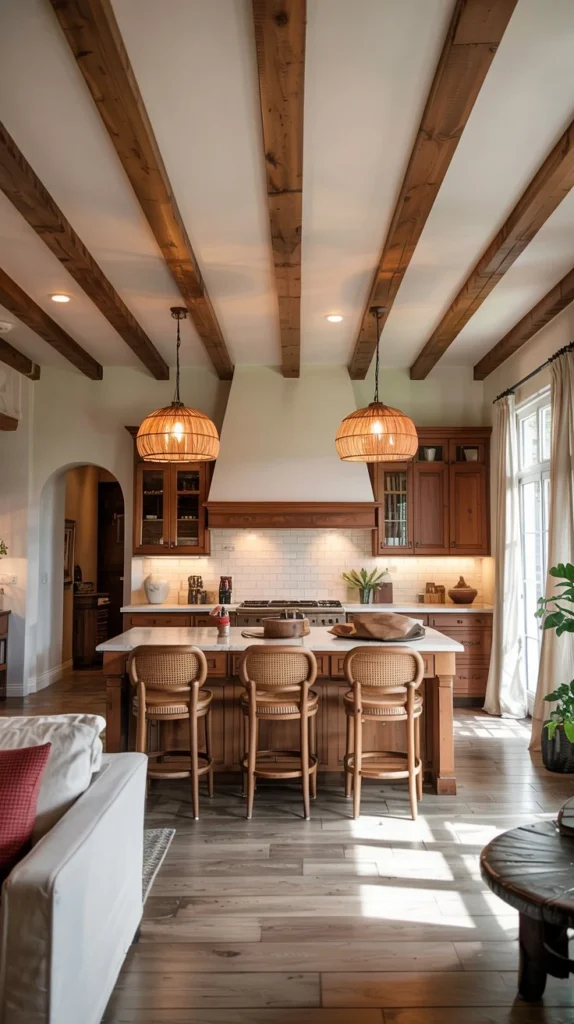
There’s something deeply grounding about looking up and seeing raw wooden beams stretching across your ceiling. These architectural elements instantly unite your kitchen and living spaces under one rustic canopy, creating visual continuity that feels both intentional and effortless.
If your home already has ceiling beams, consider leaving them in their natural state or applying a weathered stain that highlights the wood grain. For apartments and condos without structural beams, faux wood beams offer an incredibly convincing alternative that won’t compromise your lease agreement.
The beauty of beams lies in their ability to draw the eye upward, making even modest spaces feel more expansive. They work especially well in homes with vaulted or higher ceilings, but can also add character to standard eight-foot ceilings when installed strategically.
Pro tip: Keep beam color within two shades of your existing wood tones throughout the space to maintain a cohesive rustic kitchen and living room combo without overwhelming the eye.
2. A Farmhouse Sink as Your Anchor Point
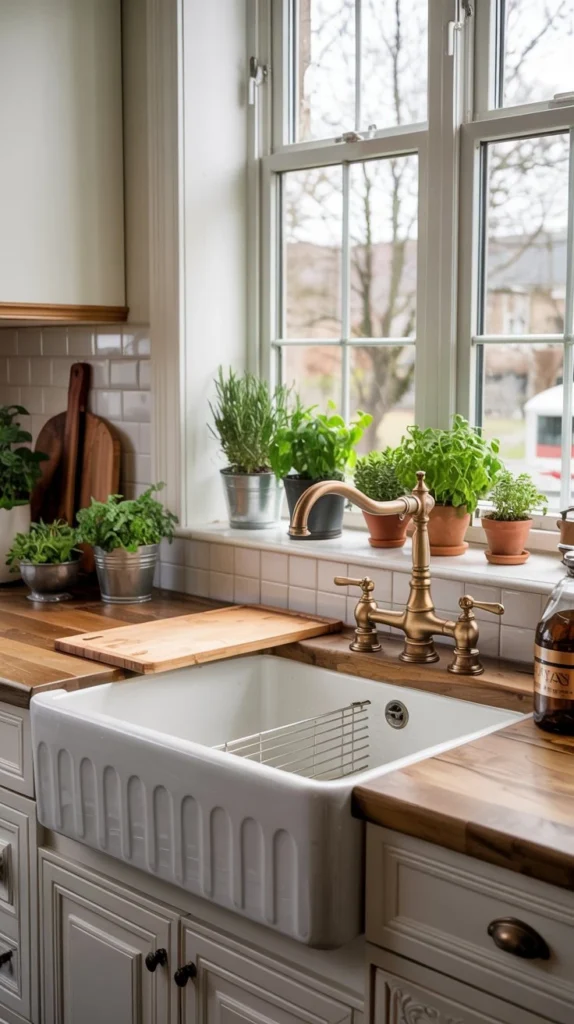
Nothing says rustic kitchen quite like a deep, apron-front farmhouse sink. This statement piece becomes a natural focal point that grounds your cooking area while complementing the relaxed atmosphere of your adjacent living space.
Choose from classic white fireclay for that Pinterest-perfect cottage feel, or opt for copper or stainless steel versions that age beautifully over time. The generous basin isn’t just aesthetically pleasing—it’s genuinely practical for washing large pots, baking sheets, and even muddy boots after a rainy day.
Position your farmhouse sink beneath a window if possible, creating a pleasant view while you wash dishes and a natural division between your work zone and relaxation area. Pair it with oil-rubbed bronze or matte black fixtures that echo throughout both spaces for consistency.
Caution: Farmhouse sinks are heavier than standard undermount options, so verify your cabinetry can support the weight, especially in rental situations where modifications may be limited.
3. Reclaimed Wood Accent Walls That Create Zones
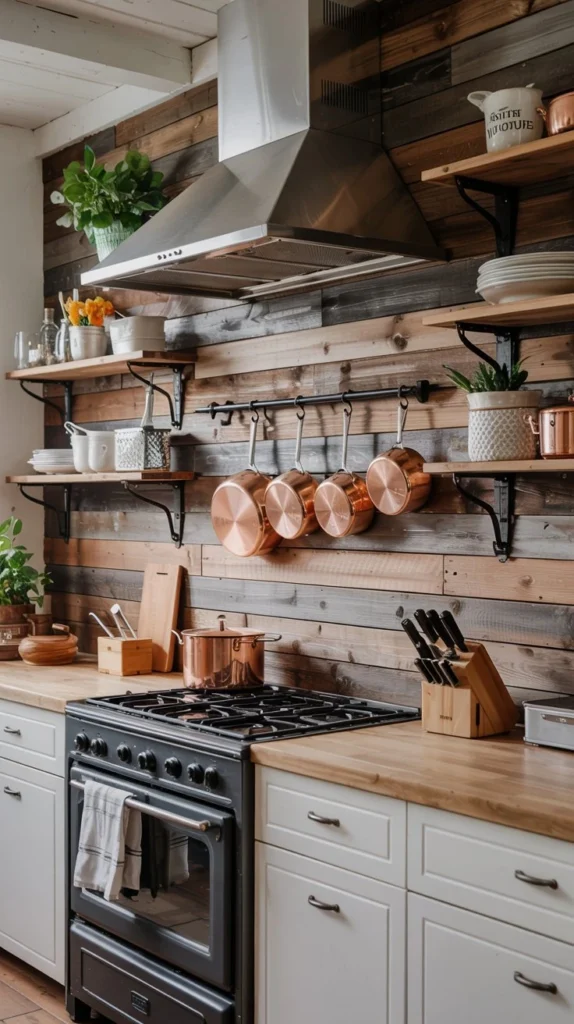
Want to define your kitchen without building actual walls? A reclaimed wood accent wall works like architectural magic, creating visual separation while maintaining the open, airy feel that makes combined spaces so appealing.
Install planks horizontally behind your stove or vertically behind your sofa to establish distinct zones within your rustic kitchen and living room combo. The varied tones and textures in reclaimed wood add instant character that new materials simply can’t replicate, and each plank carries its own history.
This approach works beautifully in rentals too—many reclaimed wood panels now come in peel-and-stick versions that install in hours and remove without damaging walls. Look for barnwood, weathered pine, or whitewashed options depending on your color palette.
Pro tip: Balance a darker wood accent wall with lighter furniture and plenty of natural light to prevent the space from feeling too heavy or cave-like.
4. Open Shelving That Invites Connection
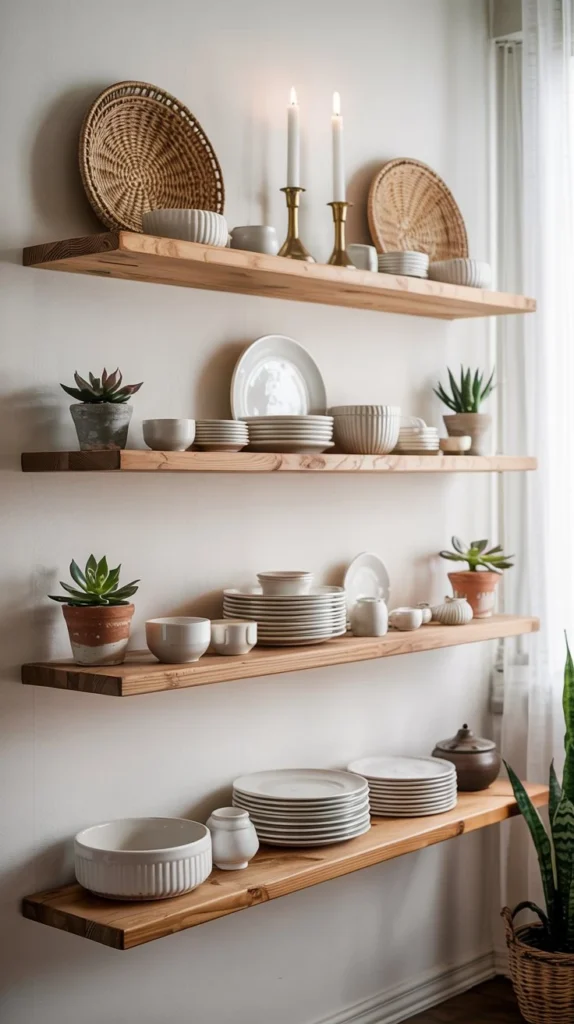
Ditch the upper cabinets that create visual barriers, and embrace open wooden shelving that lets your kitchen breathe into your living area. This design choice makes smaller spaces feel significantly larger while showcasing your favorite dishes, cookbooks, and decorative pieces.
Floating shelves made from thick wood slabs or iron bracket shelves with reclaimed boards both capture that rustic aesthetic perfectly. Style them with a mix of practical items and personal touches—ceramic bowls, vintage glassware, small plants, and woven baskets create an inviting display that feels lived-in rather than staged.
The transparency of open shelving also encourages you to keep things tidy and curated, which benefits the entire open-concept space. It’s a beautiful accountability system disguised as décor.
Caution: Open shelving requires more maintenance than closed cabinets, as dishes and items will collect dust and grease from cooking. Plan for regular cleaning to keep your rustic kitchen and living room combo looking fresh.
5. A Statement Range Hood in Natural Materials
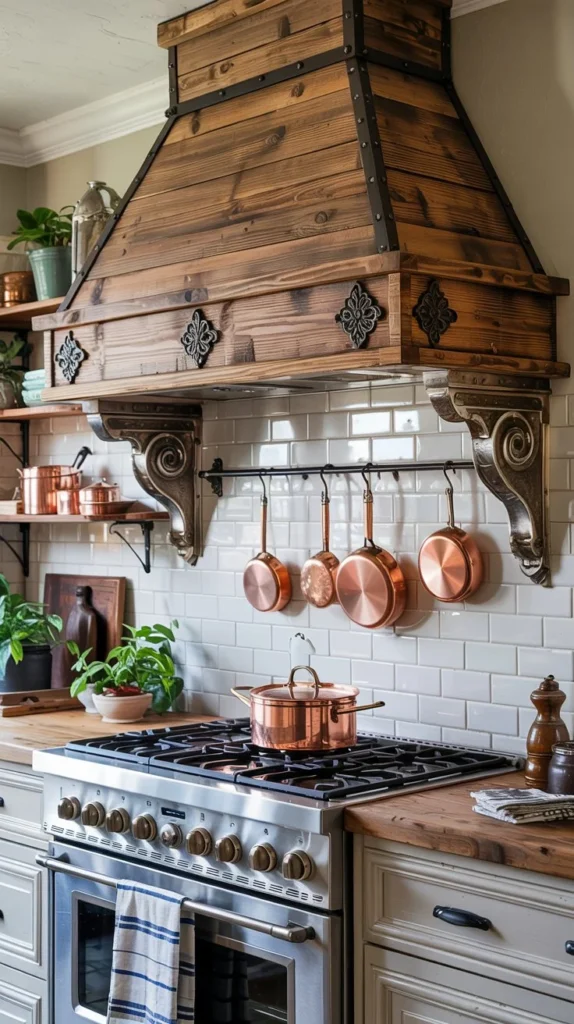
Your range hood doesn’t have to be a utilitarian afterthought—it can be the showstopping centerpiece that anchors your entire rustic kitchen design. A custom wood hood, copper hood, or stone-clad hood creates dramatic visual interest that’s visible from your living area.
Wooden range hoods with corbel details echo traditional farmhouse kitchens while feeling fresh and current. Copper develops a rich patina over time, adding warmth and character with each passing season. Stone or brick hoods bring in natural texture that connects beautifully with other rustic elements throughout the space.
This substantial design element helps define the kitchen zone without closing it off, creating a focal point that organizes the room’s energy and flow. It’s especially effective in homes where the kitchen occupies one end of a long, rectangular combined space.
Pro tip: Ensure your range hood is properly vented to the exterior, not just recirculating, to prevent cooking odors and moisture from affecting your living room furniture and fabrics.
6. A Cohesive Colour Palette Rooted in Nature
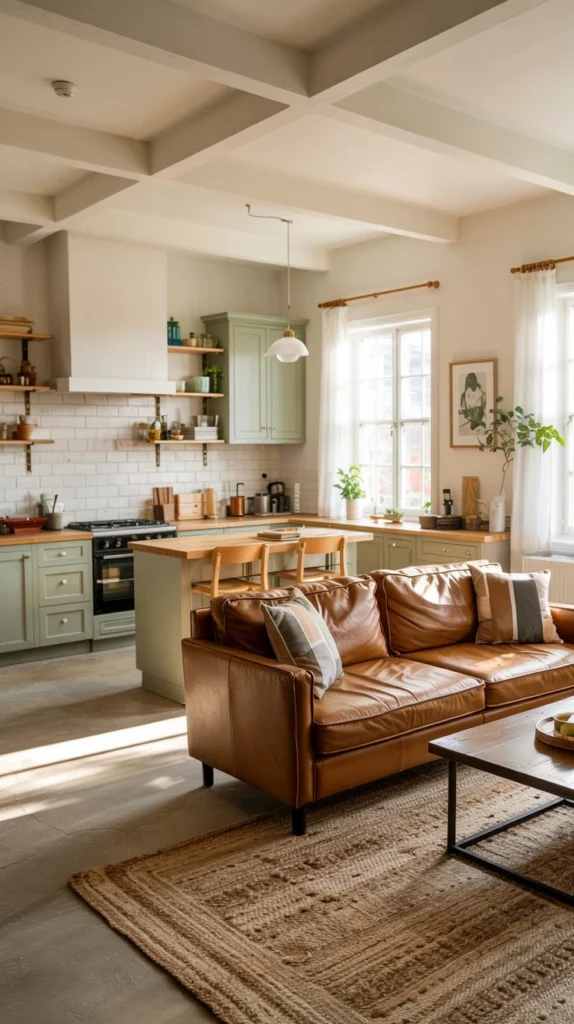
The secret to a successful rustic kitchen and living room combo lies in a thoughtful color scheme that flows seamlessly between functional and leisure spaces. Draw inspiration from the natural world—warm creams, soft grays, sage greens, and various wood tones create a foundation that feels both calming and sophisticated.
Start with a neutral base on walls and larger furniture pieces, then layer in deeper rustic tones through accent pieces, textiles, and décor. Think terracotta pottery, worn leather, linen curtains, and woolen throws. These natural materials age beautifully and develop character over time rather than simply wearing out.
Avoid stark white or ultra-modern color schemes that fight against rustic warmth. Instead, embrace off-whites with cream or beige undertones, which photograph beautifully and create that sought-after cozy atmosphere.
Pro tip: Paint your kitchen cabinets and living room trim in the same or closely related colors to unify the space—sage green cabinets with sage green built-ins create stunning continuity.
7. A Large Wooden Kitchen Island That Doubles as Gathering Space
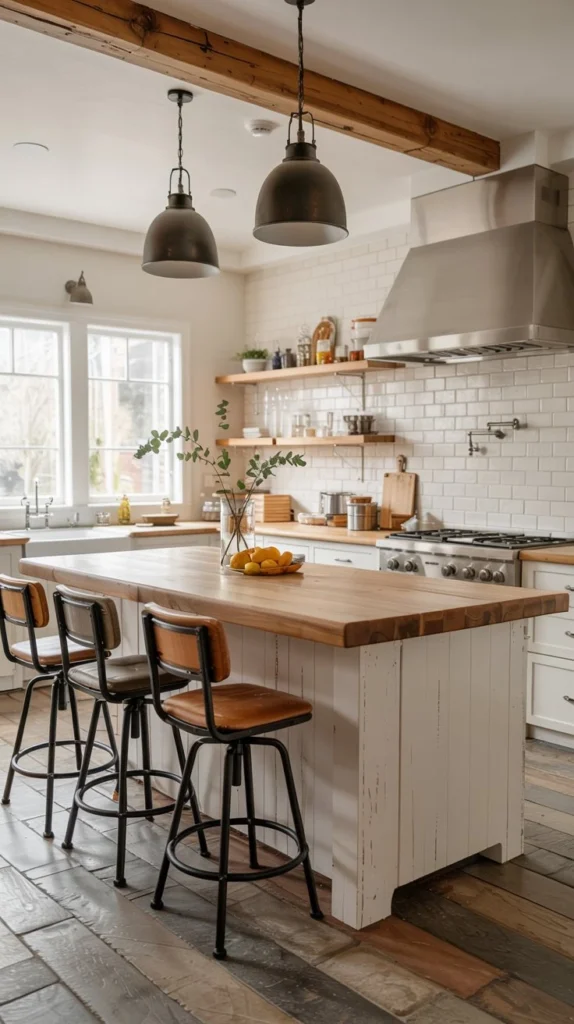
In a rustic kitchen and living room combo, your island becomes more than a prep surface—it’s the social heart of your home. A substantial wooden island with seating creates a natural gathering spot that bridges kitchen activities and living room relaxation.
Choose butcher block countertops, reclaimed wood bases, or a combination of both for maximum rustic impact. Add comfortable stools with backs (your guests will thank you) in materials like weathered metal, leather, or woven rattan that complement your overall aesthetic.
The island provides valuable storage underneath while offering counter space for cooking, a casual dining surface for quick meals, and a perch for friends to chat with you while you cook. It’s multifunctional furniture at its finest.
Caution: Ensure you have at least 42 inches of clearance on all working sides of your island for comfortable movement, especially if you’re placing it between your kitchen and living areas.
8. Vintage-Inspired Lighting That Sets the Mood
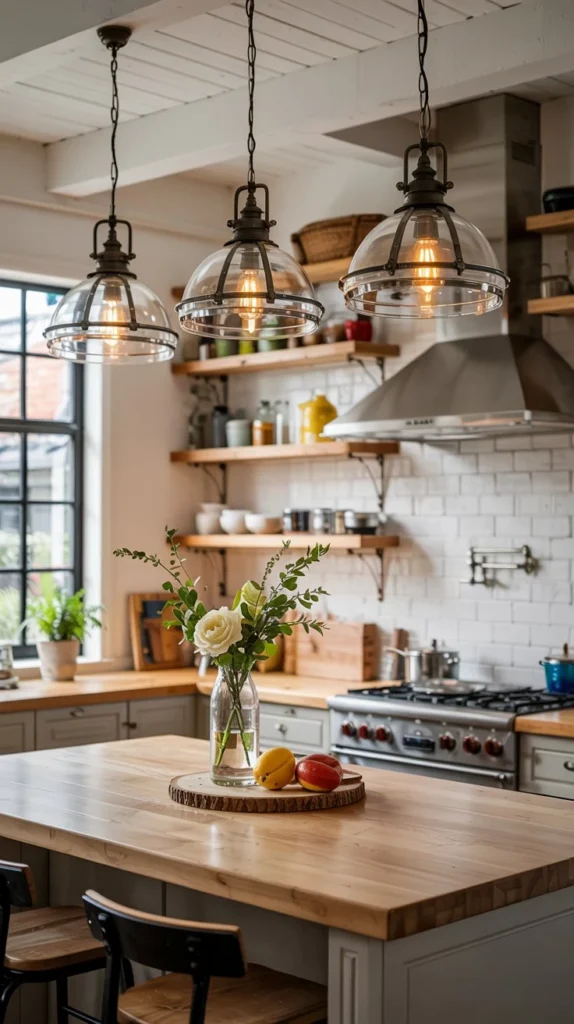
Lighting makes or breaks the atmosphere in any space, but it’s especially crucial in open-concept designs where one fixture needs to serve multiple purposes. Industrial pendant lights, mason jar chandeliers, and wrought iron fixtures all bring rustic charm while providing essential illumination.
Layer your lighting with a combination of task lights over work surfaces, ambient overhead fixtures, and accent lamps in the living area. Dimmer switches are non-negotiable—they let you shift from bright cooking light to soft evening ambiance with a simple adjustment.
Consider the scale carefully in combined spaces. Oversized statement pendants over your island can handle the visual weight of a large room, while smaller fixtures might get lost in the open expanse.
Pro tip: Choose warm LED bulbs (2700K-3000K) rather than cool white to enhance the cozy, inviting feel essential to rustic design—the color temperature makes an enormous difference in how welcoming your space feels.
9. Comfortable, Oversized Furniture That Encourages Lingering
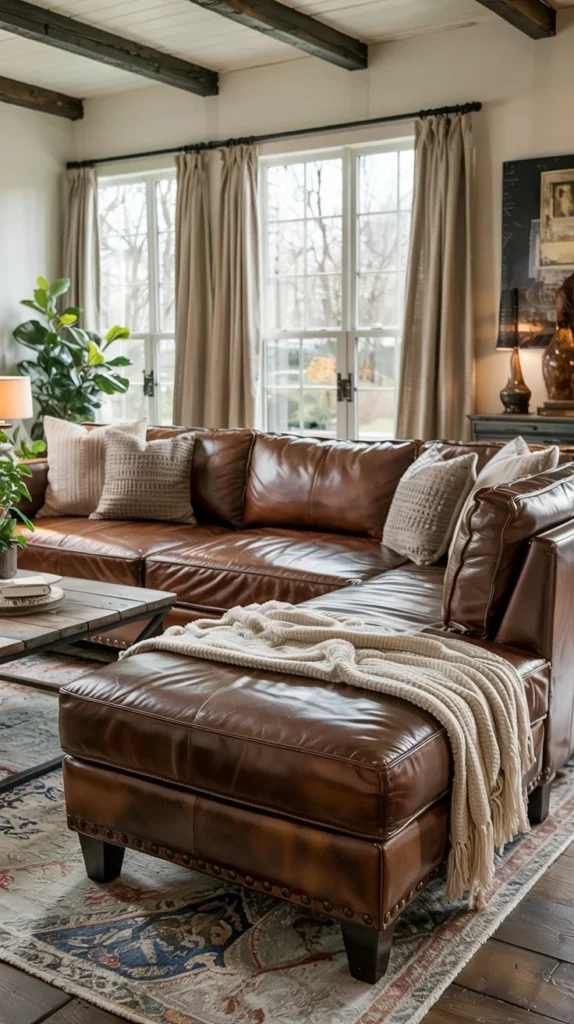
Your living room furniture sets the tone for how people will use and experience your rustic kitchen and living room combo. Deep, comfortable seating in natural materials like leather, linen, or cotton invites everyone to settle in and stay awhile.
Look for sofas and chairs with substantial frames, visible wood details, and sink-in cushions that balance style with serious comfort. A distressed leather sectional ages beautifully, while a neutral linen sofa offers versatility for switching up accent colors with pillows and throws.
Arrange furniture to face both the kitchen and a focal point like a fireplace or window, creating conversation areas that keep everyone connected regardless of whether they’re cooking or relaxing. Avoid pushing all furniture against walls—floating pieces create more intimate, intentional spaces.
Pro tip: Choose furniture with removable, washable covers if possible, especially in homes with kids or pets, since open-concept layouts mean cooking splatters and life’s messes travel farther.
10. Natural Textures Layered Throughout
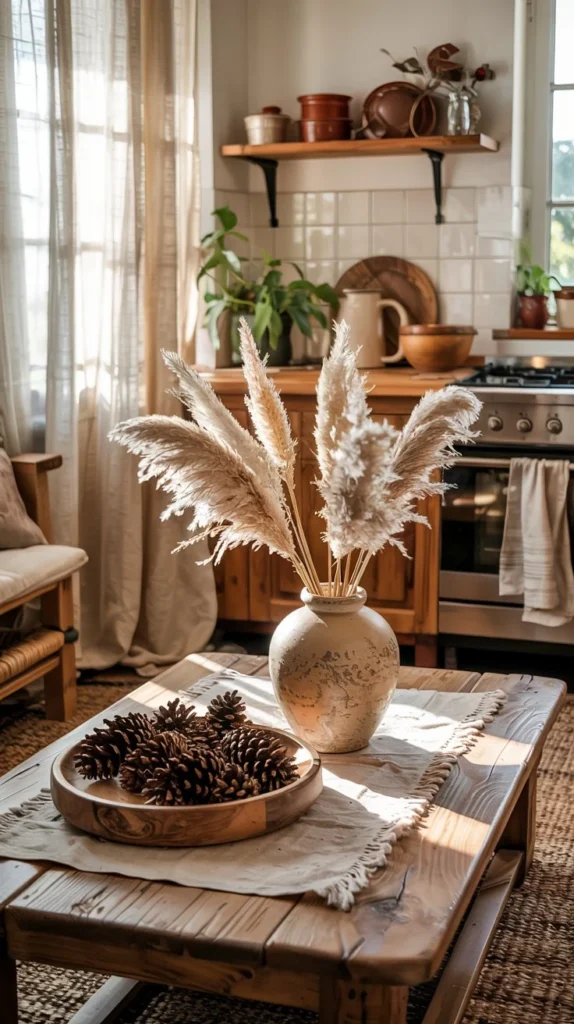
The difference between a rustic space that feels authentically collected and one that feels decorated from a single shopping trip lies in the layering of varied natural textures. Combine smooth and rough, soft and structured, old and new throughout your rustic kitchen and living room combo.
In the kitchen, mix wood cutting boards with stone countertops, metal hardware with ceramic dishes, and woven baskets with glass storage containers. In the living area, layer a jute rug under a softer sheepskin, drape chunky knit throws over leather furniture, and mix velvet pillows with linen ones.
These textural contrasts create visual interest and depth that photographs beautifully while feeling genuinely comfortable to live in daily. Each texture also absorbs and reflects light differently, adding subtle dimension that makes your space feel more expensive and thoughtfully designed.
Pro tip: If you’re on a budget, invest in one or two high-quality textural pieces (like a genuine leather chair or handwoven rug) and fill in around them with more affordable items—the quality pieces elevate everything else.
Creating Your Perfect Rustic Haven
Designing a rustic kitchen and living room combo isn’t about following rigid rules or recreating someone else’s Pinterest board exactly. It’s about creating a warm, functional space that welcomes you home every single day and makes ordinary moments feel special.
Start with one or two elements that speak to you—maybe it’s finally installing those open shelves you’ve been dreaming about, or finding the perfect reclaimed wood piece at your local salvage yard. Build from there gradually, letting your space evolve naturally rather than forcing everything to come together overnight.
Remember that the most beautiful rustic spaces tell a story. They mix inherited pieces with flea market finds, combine DIY projects with investment furniture, and aren’t afraid to show a little wear and imperfection. That’s not just okay—it’s the entire point.
Your home should feel like a retreat from the world outside, and a thoughtfully designed rustic kitchen and living room combo delivers exactly that. Whether you’re cooking Sunday breakfast, hosting friends for game night, or simply curling up with a book on a rainy afternoon, you’ll be doing it all in a space that feels genuinely, deeply yours.
What rustic element will you add to your space first?