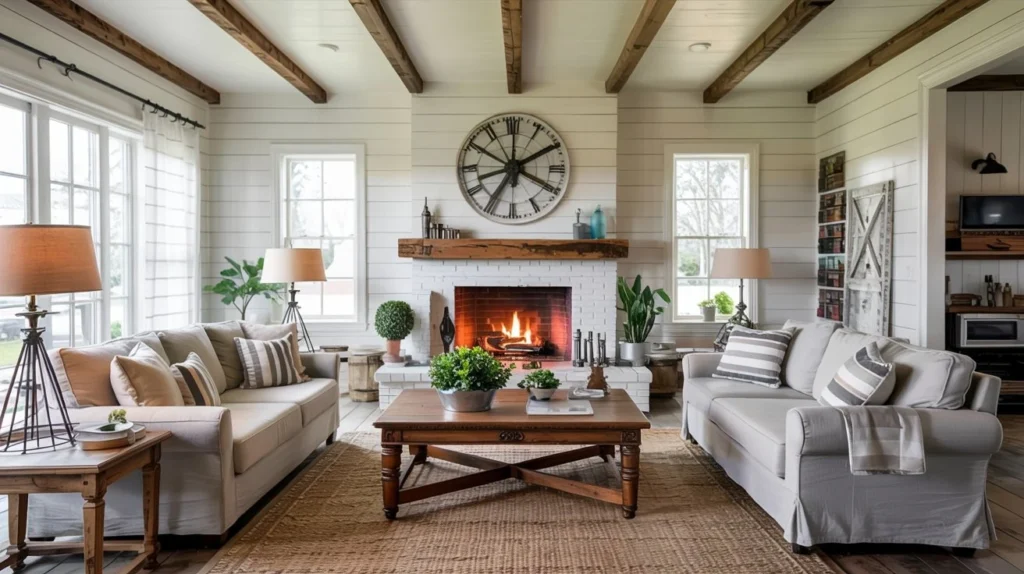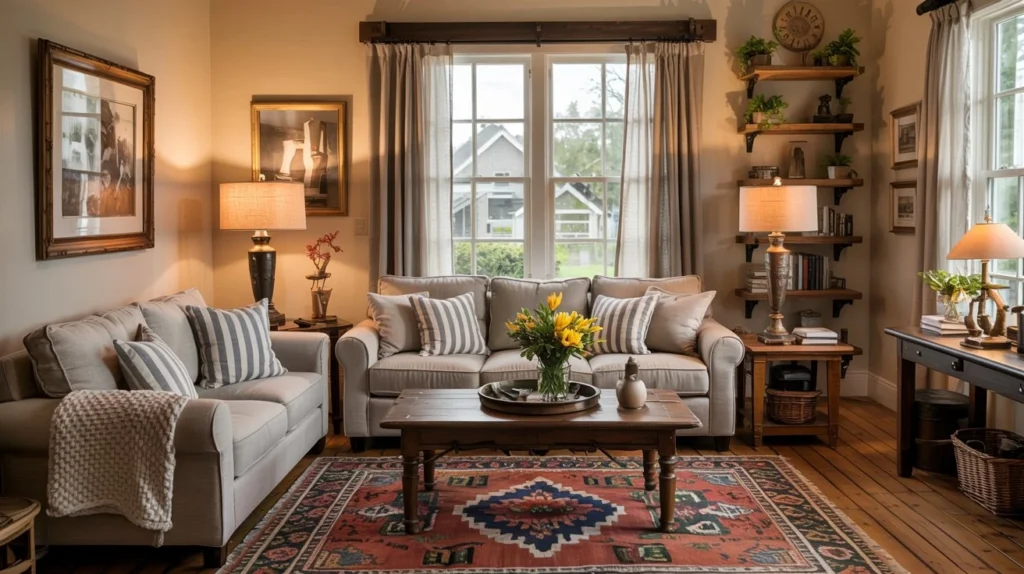
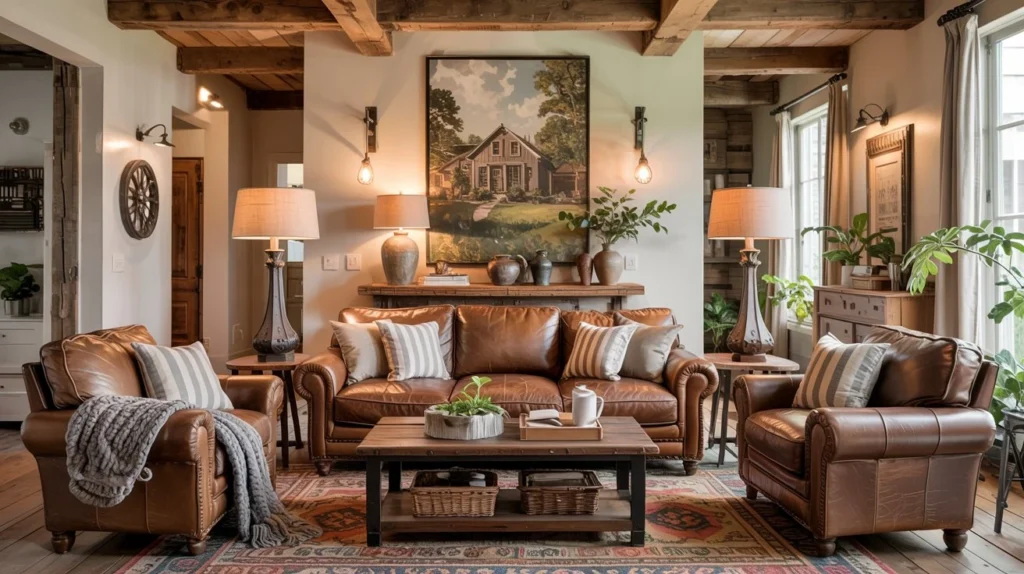
There’s something undeniably magical about walking into a farmhouse-style living room. Maybe it’s the worn leather sofa that looks like it’s been loved for generations, or the reclaimed wood beams overhead that tell stories of simpler times. Perhaps it’s the chunky knit throw casually draped over an overstuffed chair, inviting you to curl up with a good book and a cup of coffee. Whatever it is, farmhouse living rooms have captured our hearts—and our Pinterest boards—for good reason.
The beauty of farmhouse decor is that it works anywhere. Whether you’re decorating a cozy apartment in Brooklyn, a rental house in Austin, or a condo in Seattle, these timeless ideas bring warmth and character to any space. The farmhouse aesthetic celebrates imperfection, embraces natural materials, and creates rooms that actually feel lived-in rather than styled for a magazine. Ready to bring that cozy, countryside charm into your home? Let’s dive into these farmhouse living room ideas that’ll have you rethinking everything from your coffee table to your gallery wall.
1. Shiplap Accent Walls That Steal the Show
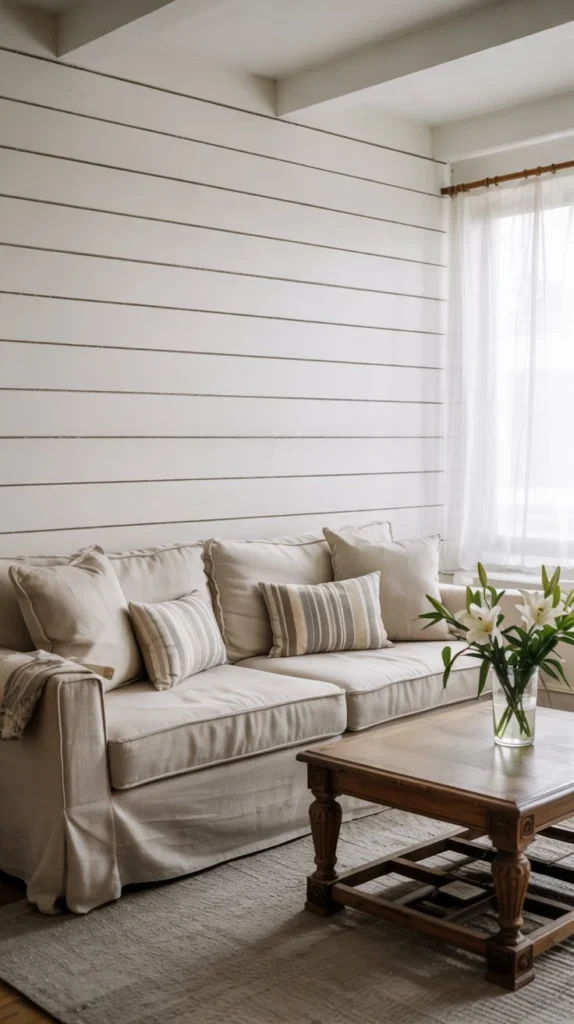
Transform a plain wall into a farmhouse focal point with shiplap paneling. This horizontal wood plank treatment adds instant texture and architectural interest without overwhelming your space. Paint it crisp white for that classic Joanna Gaines look, or leave it natural for a more rustic vibe.
Shiplap works beautifully behind your sofa or as a fireplace surround. The horizontal lines create visual width, making smaller living rooms feel more spacious. You can install real wood planks if you own your home, or opt for peel-and-stick shiplap wallpaper that’s perfect for renters.
Pro tip: Start with just one accent wall rather than wrapping your entire room. Too much shiplap can feel overwhelming in compact spaces. For apartments, always check your lease before installing anything permanent.
2. Oversized Sliding Barn Doors
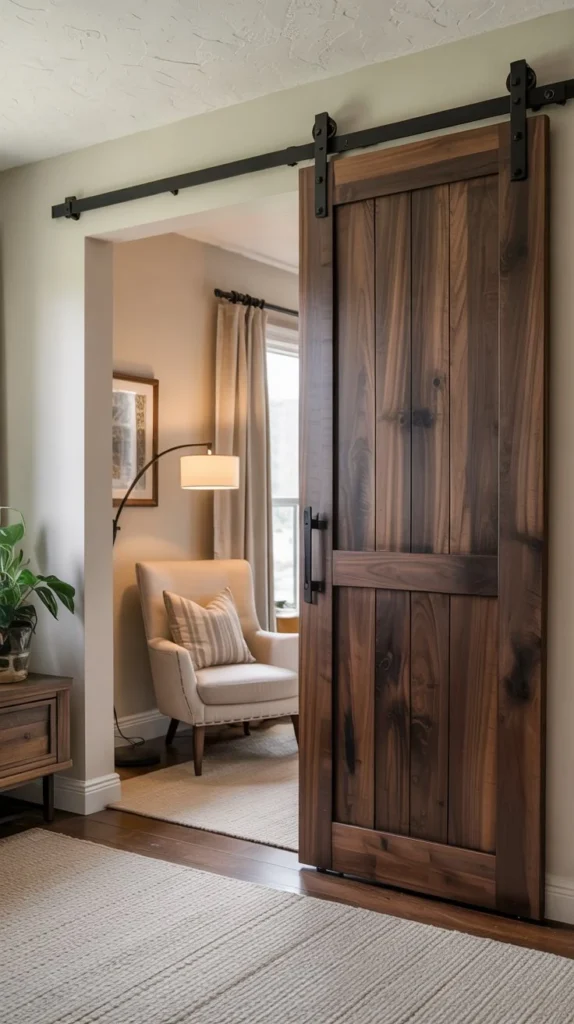
Barn doors aren’t just for actual barns anymore. These rustic sliding doors add major farmhouse charm while solving practical problems. Use them to separate your living area from a home office, hide a TV when not in use, or create a statement piece on an empty wall.
The hardware itself becomes part of the decor—think matte black metal tracks and chunky rollers. You can find barn door kits at most home improvement stores, and many come ready to install. Choose reclaimed wood for authentic character, or paint a new door in a soft sage or barn red for a pop of color.
Caution: Measure your wall space carefully. Barn doors need clearance to slide open, so they won’t work in every layout. Make sure you have at least twice the door width available for the door to slide completely open.
3. Chunky Knit Throws Everywhere
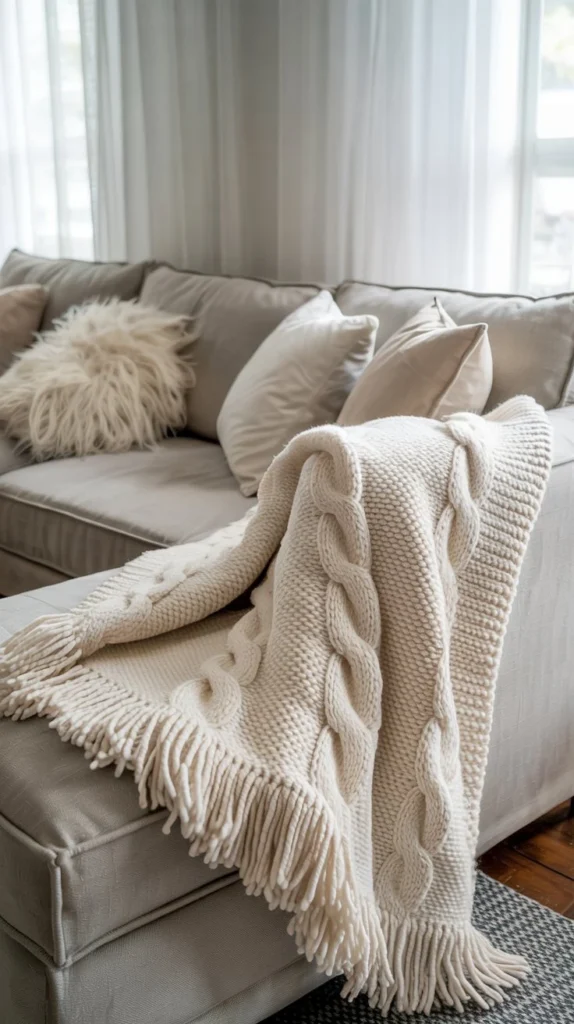
Nothing says “stay awhile” like a beautifully draped chunky knit blanket. These oversized throws in cream, oatmeal, or soft gray add instant coziness to any seating area. Toss one over your sofa arm, drape it across an ottoman, or fold it at the foot of your daybed.
The thick, hand-knitted texture creates visual interest and tactile warmth. They’re also incredibly functional—perfect for those evenings when you’re binge-watching your favorite show. Layer different textures by pairing your chunky knit with smoother linen or cotton pillows.
Pro tip: Store extra throws in a large woven basket beside your sofa. This keeps them accessible while adding another layer of farmhouse texture to your room. Rotate seasonal colors—warmer tones for fall and winter, lighter neutrals for spring and summer.
4. Reclaimed Wood Coffee Tables with History
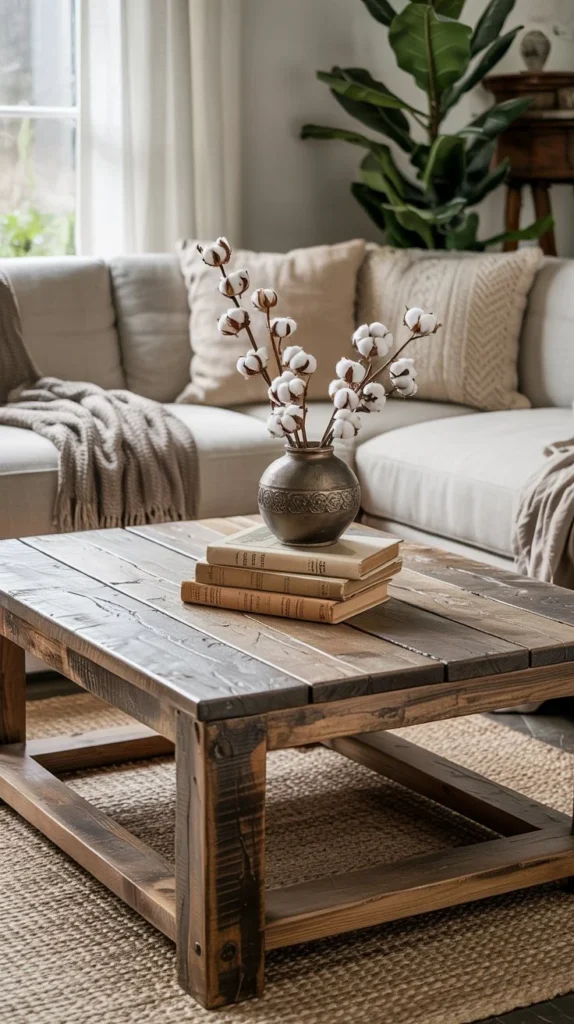
A reclaimed wood coffee table serves as the heart of your farmhouse living room. Look for pieces made from old barn wood, salvaged factory floors, or repurposed pallets. Each scratch, knot, and imperfection tells a story and adds character you simply can’t replicate with new furniture.
These tables ground your space with their substantial presence and natural warmth. Pair them with lighter furniture to create balance, or embrace the rustic look completely with all-wood pieces. Many reclaimed wood tables feature lower shelves perfect for storing books, baskets, or decorative trays.
Pro tip: Seal reclaimed wood properly to protect against water rings and stains. Apply a clear matte finish that preserves the weathered look while making the surface practical for everyday use.
5. Vintage-Inspired Farmhouse Lighting Fixtures
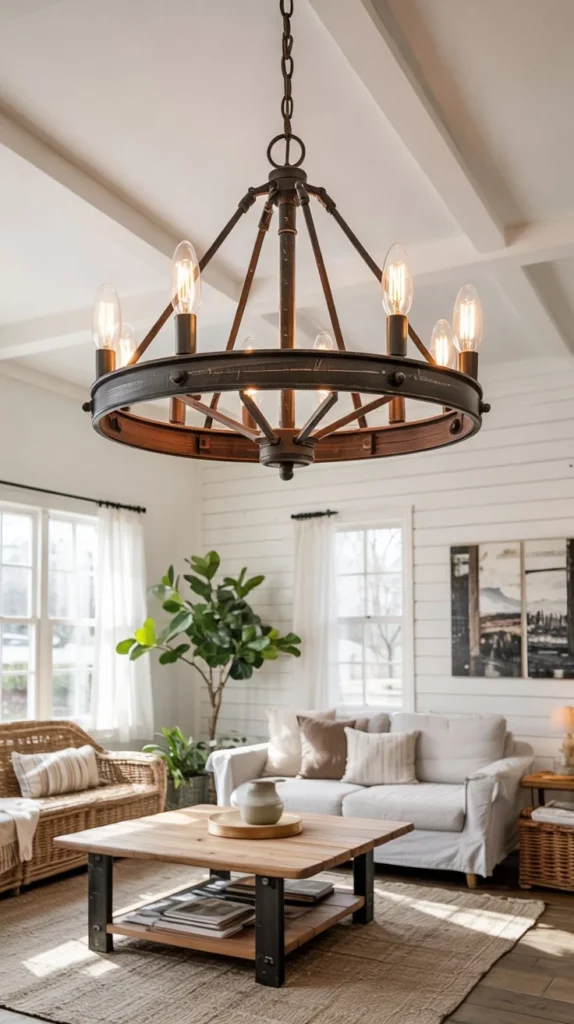
Swap out builder-grade light fixtures for vintage-style pieces that make a statement. Think wrought iron chandeliers, metal cage pendants, or glass-and-wood combinations. These fixtures combine industrial and rustic elements that perfectly capture the farmhouse aesthetic.
A statement chandelier over your seating area creates an unexpected focal point and adds vertical interest. For apartments with limited electrical work allowed, look for plug-in pendant lights or rewire old lanterns into table lamps. Mixing metal finishes—like oil-rubbed bronze with aged brass—adds depth.
Caution: Consider your ceiling height before choosing oversized fixtures. In rooms with standard eight-foot ceilings, opt for flush-mount or semi-flush options to avoid head bumps.
6. Gallery Walls Full of Character
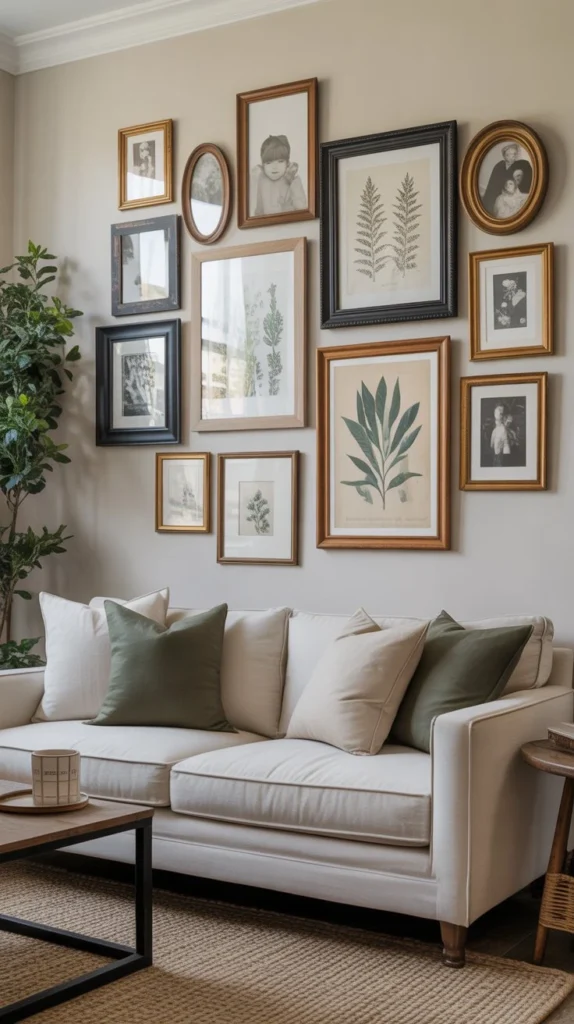
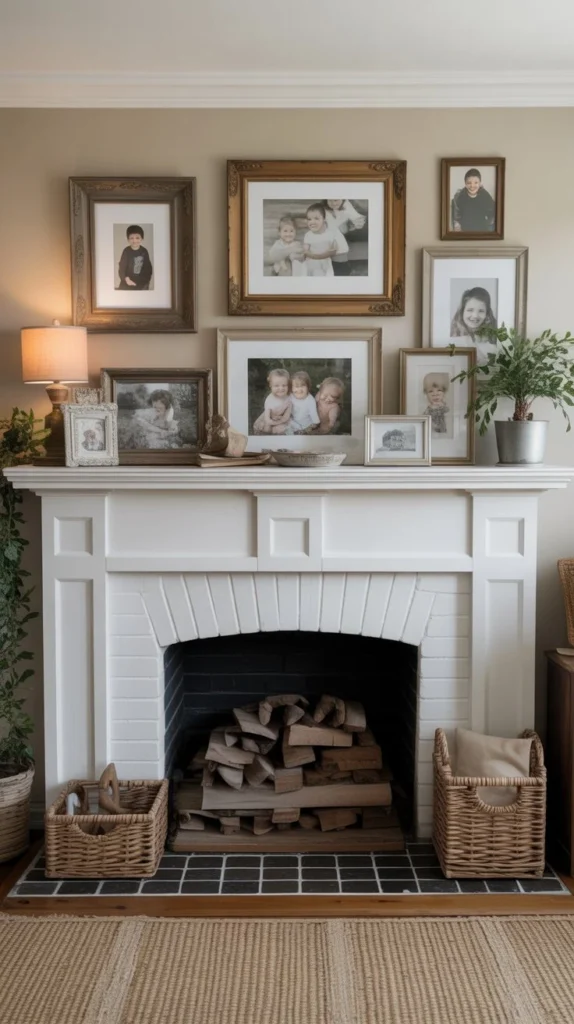
Create a personalized gallery wall using vintage frames, family photos, and meaningful artwork. The farmhouse approach to gallery walls feels collected over time rather than perfectly coordinated. Mix frame styles and sizes, but stick to a cohesive color palette—think black, white, natural wood, and weathered metals.
Include unexpected elements like vintage windows, small mirrors, or antique signs alongside your photos. This eclectic approach adds personality and makes your living room feel uniquely yours. Start by laying out your arrangement on the floor before hammering any nails.
Pro tip: Use command strips or picture hanging strips in rentals to avoid wall damage. Space frames 2-3 inches apart for a collected look that doesn’t feel cluttered. If you’re nervous about commitment, start with a smaller wall before tackling a large space.
7. Cozy Window Seats Built for Daydreaming
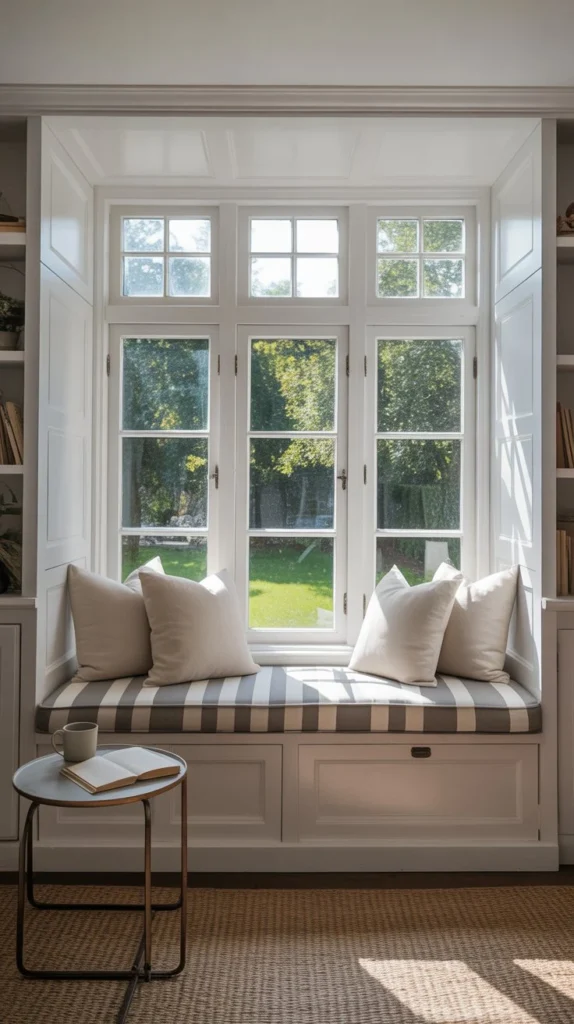
Transform an awkward window nook into the coziest spot in your home with a built-in window seat. Add a cushioned bench, pile on the pillows, and suddenly you have the perfect reading corner. This farmhouse living room idea works especially well in older homes with deep windowsills.
For renters or those without built-in options, create a similar effect by placing a storage bench beneath a window. Add a thick cushion on top and surround it with pillows in neutral tones and farmhouse patterns like ticking stripes or grain sack prints.
Pro tip: Choose indoor-outdoor fabric for your cushions. It’s more durable and easier to clean than traditional upholstery, which matters when this becomes everyone’s favorite spot. Build in storage underneath for blankets, books, or board games.
8. Neutral Colour Palettes That Breathe
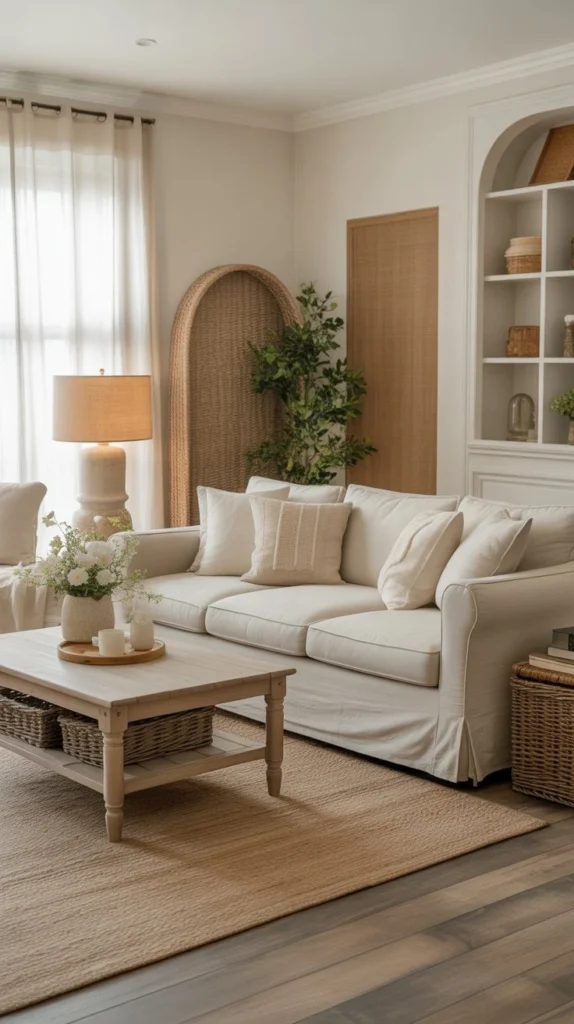
Embrace the calming power of neutral colors throughout your farmhouse living room. Think creamy whites, warm beiges, soft grays, and natural wood tones. This palette creates a serene backdrop that lets your textures and furniture shine.
Don’t worry—neutral doesn’t mean boring. Layer different shades of white and cream to add depth. Introduce warmth through natural materials like jute, linen, and wood. The occasional black accent, like iron hardware or a dark-framed mirror, provides contrast and keeps things interesting.
Pro tip: Test paint samples on your walls and observe them at different times of day. Natural light changes how colors appear, and what looks perfect at noon might feel cold at dusk. Choose warmer neutrals like Alabaster or Swiss Coffee over stark whites for a cozier feel.
9. Vintage Finds from Flea Markets
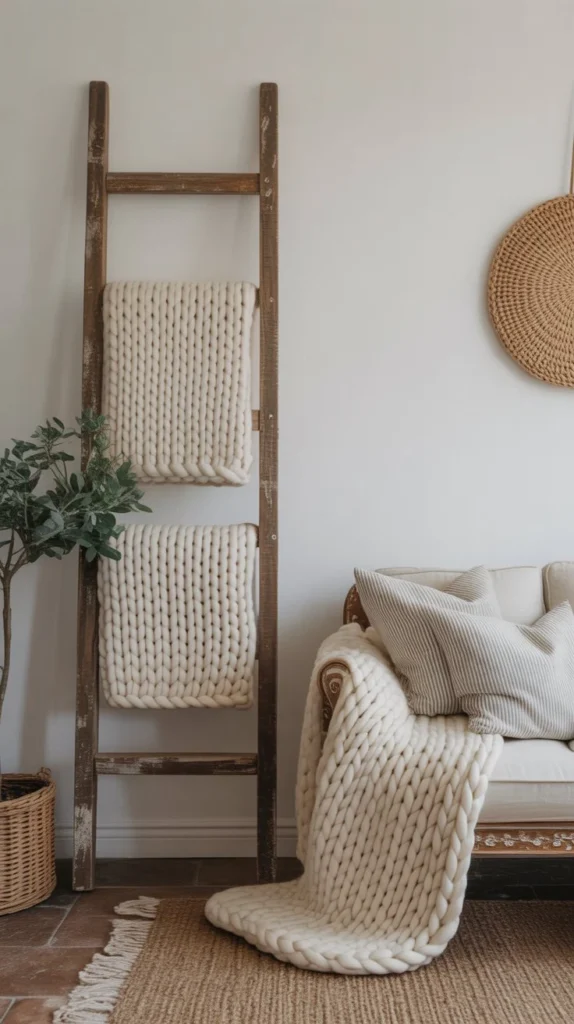
Hunt for unique treasures at flea markets, antique shops, and estate sales. These one-of-a-kind pieces add soul to your farmhouse living room that mass-produced furniture simply cannot match. Look for items like old crates, vintage ladders, antique crocks, or weathered signs.
Incorporate your finds thoughtfully—an old ladder becomes a blanket display, vintage crates stack into a side table, and antique windows hang as wall art. The imperfections and patina on these pieces contribute to the lived-in, collected-over-time feeling that defines farmhouse style.
Caution: Clean and inspect vintage items thoroughly before bringing them home. Check for stability and make any necessary repairs. Some old pieces may need gentle restoration to be functional while preserving their character.
10. Exposed Wooden Beams Overhead
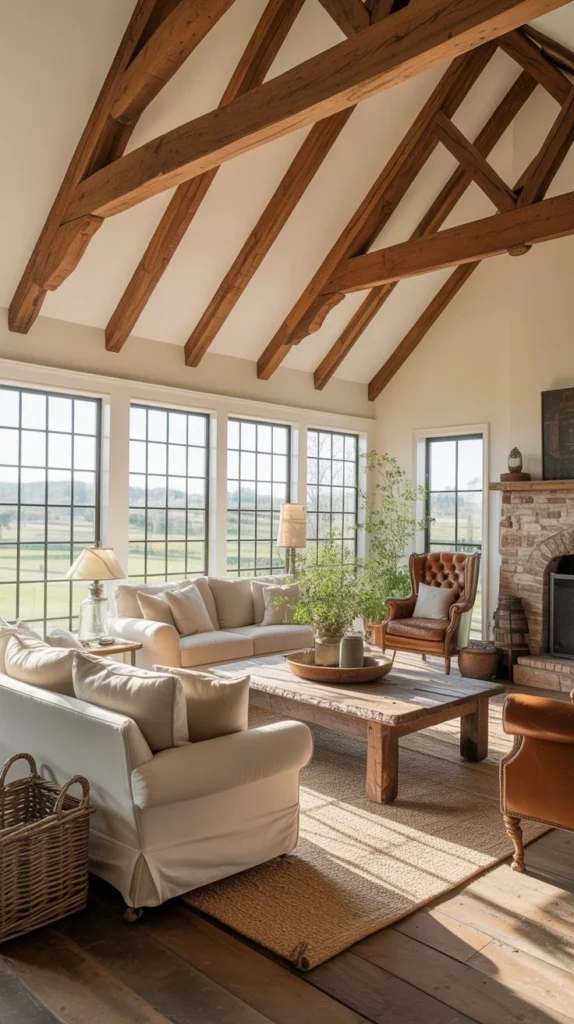
If you’re lucky enough to have exposed ceiling beams or the ability to add them, embrace this classic farmhouse architectural element. Natural wood beams add warmth and visual interest to your ceiling—a space often overlooked in decorating.
For those without structural beams, faux wood beams made from lightweight materials offer a similar effect without the construction project. They install relatively easily and create the same rustic charm. Stain them dark for drama or leave them light for an airy feel.
Pro tip: In rooms with lower ceilings, paint beams the same color as your ceiling to add texture without making the space feel shorter. In rooms with high ceilings, dark contrasting beams create coziness and bring the eye level down.
11. Plush Area Rugs That Define Your Space
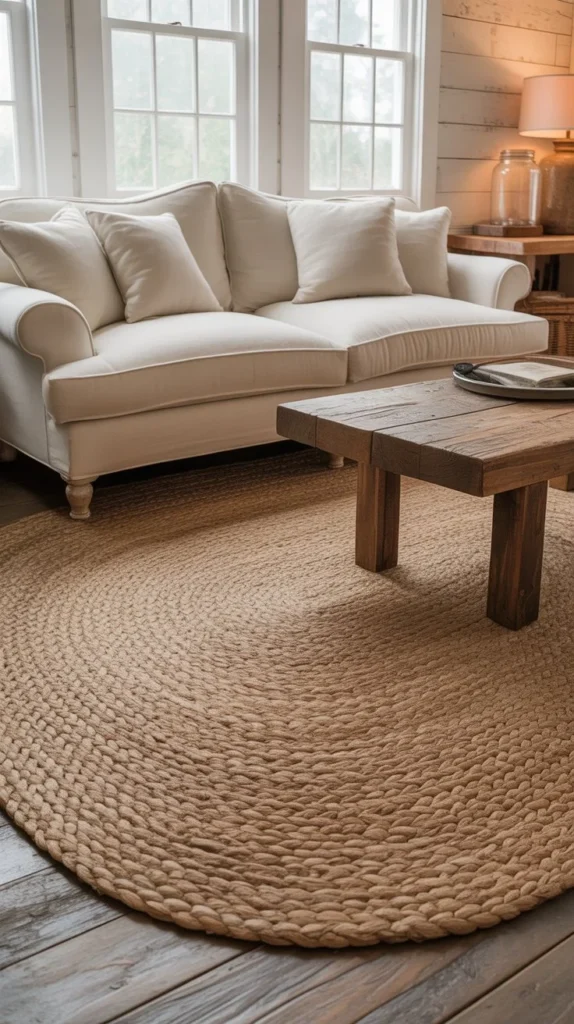
Layer texture underfoot with a large jute, sisal, or wool area rug. Natural fiber rugs ground your farmhouse living room and define your seating area, especially in open floor plans. They also soften hard flooring and add warmth both visually and literally.
Choose a rug large enough that your furniture can sit partially or fully on it—this creates cohesion. For smaller spaces, make sure at least the front legs of your sofa and chairs rest on the rug. Layer a smaller vintage or patterned rug over a larger neutral jute rug for added dimension.
Pro tip: Use rug pads underneath to prevent slipping and extend your rug’s life. In high-traffic living rooms, choose darker natural fibers or patterns that hide wear better than light-colored options.
12. Fresh Greenery and Farmhouse Florals
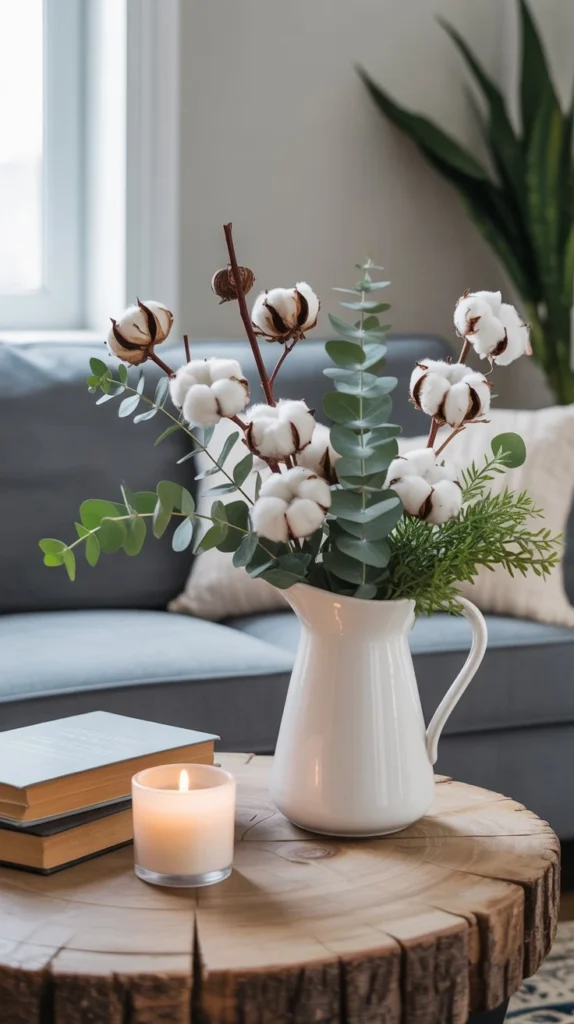
Bring life into your living room with fresh greenery and simple floral arrangements. Eucalyptus stems in a vintage pitcher, cotton stems in a ceramic vase, or a small potted fiddle leaf fig all add organic beauty. Fresh flowers don’t have to be expensive—grocery store blooms in mason jars look perfectly charming.
Choose vessels that complement your farmhouse aesthetic: galvanized metal buckets, white ceramic crocks, clear glass bottles, or wooden boxes. Keep arrangements loose and natural rather than overly structured. Even faux greenery works if you choose high-quality options.
Pro tip: Rotate seasonal greenery to keep your space fresh. Spring tulips, summer sunflowers, fall branches with colorful leaves, and winter evergreen all bring the outdoors in. Keep a few go-to artificial stems for when fresh isn’t practical.
13. Comfortable Slipcovered Furniture
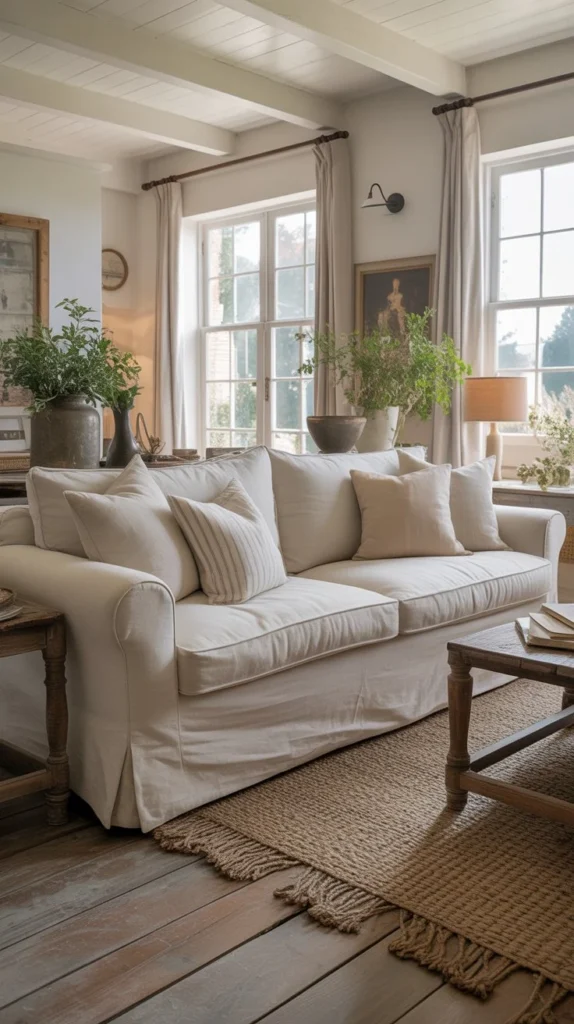
Invest in slipcovered sofas and chairs that combine style with practicality. Washable slipcovers in white, cream, or natural linen epitomize farmhouse style while being incredibly functional for real life. They create that relaxed, “please sit down” vibe that makes living rooms actually livable.
Slipcovers hide sins—from kids’ spills to pet hair—and can be removed and laundered when needed. They also let you change your look seasonally or whenever you’re ready for a refresh. The slightly rumpled, lived-in look of linen slipcovers adds to the casual farmhouse charm.
Caution: Pre-shrink slipcovers before first use by washing in hot water and drying. This prevents them from becoming too tight after the first wash. Budget for at least two sets if you have young children or pets—having a backup while one is washing is worth it.
14. Open Shelving for Stylish Storage
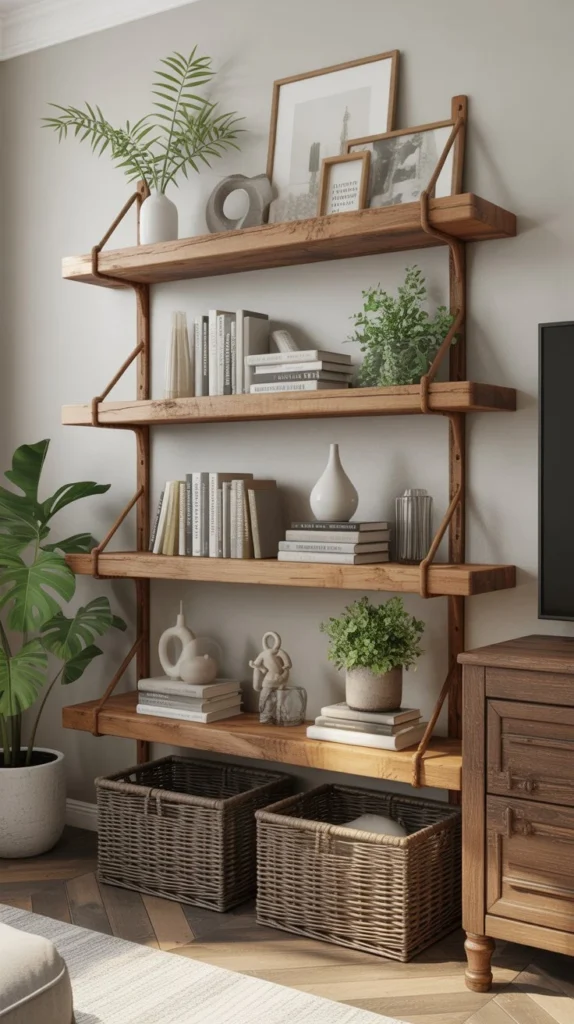
Replace closed cabinets with open shelving to display books, decorative objects, and everyday items. Floating shelves made from reclaimed wood or simple brackets with thick wooden planks create farmhouse-perfect storage that’s also decorative.
Style your shelves with a mix of functional and beautiful items: favorite books, vintage finds, framed photos, plants, and pretty storage baskets. Follow the rule of thirds—group items in odd numbers for visual appeal. Leave some breathing room; overcrowded shelves lose their impact.
Pro tip: Arrange items by varying height and depth to create visual interest. Place taller items on one end, medium items in the middle, and shorter pieces on the other end. Layer items by placing some against the wall and pulling others forward.
15. Brick or Stone Fireplace Accents
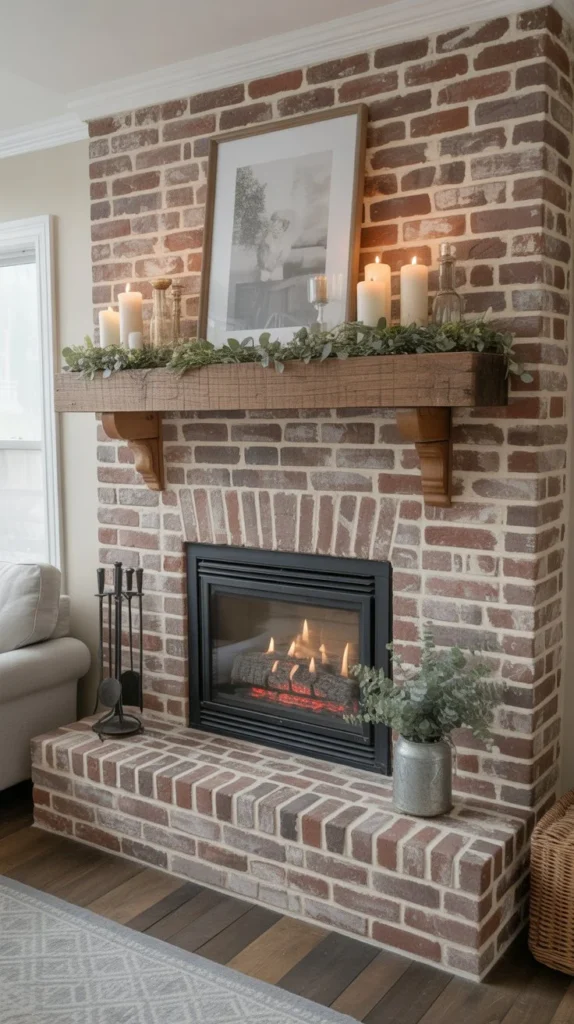
If you have an existing brick or stone fireplace, celebrate it instead of covering it up. These natural materials add incredible texture and become stunning focal points. For painted brick, consider a whitewash technique that lets the texture show through while brightening the space.
No fireplace? Create a faux mantel using reclaimed wood and decorate it like you would a real one. This gives you a natural focal point for hanging art, displaying seasonal decor, and anchoring your seating arrangement. Add candles inside a faux fireplace opening for ambiance.
Caution: Be careful when painting brick—it’s difficult to reverse. A whitewash or German schmear technique preserves more of the original character than solid paint. Test on a small section first to ensure you like the effect.
16. Vintage Trunks as Coffee Tables
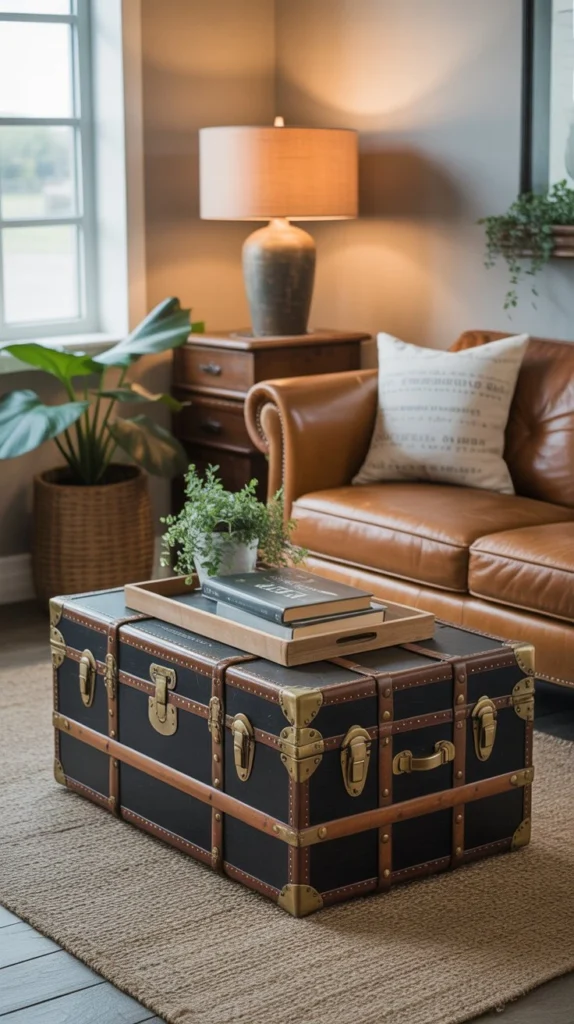
Repurpose an old steamer trunk or vintage chest as a unique coffee table with built-in storage. These pieces add character while providing a place to stash blankets, games, or off-season decor. Stack two trunks of different sizes for added height and interest.
Look for trunks at estate sales, antique markets, or online marketplaces. The worn leather, metal hardware, and travel stickers tell stories and become conversation starters. They work especially well in smaller living rooms where every piece needs to multitask.
Pro tip: Add casters to the bottom of heavy trunks to make them easier to move when you need to access the storage inside. Place a tray on top to create a stable surface for drinks and prevent items from sliding off the rounded lid.
17. Farmhouse-Style Wainscoting
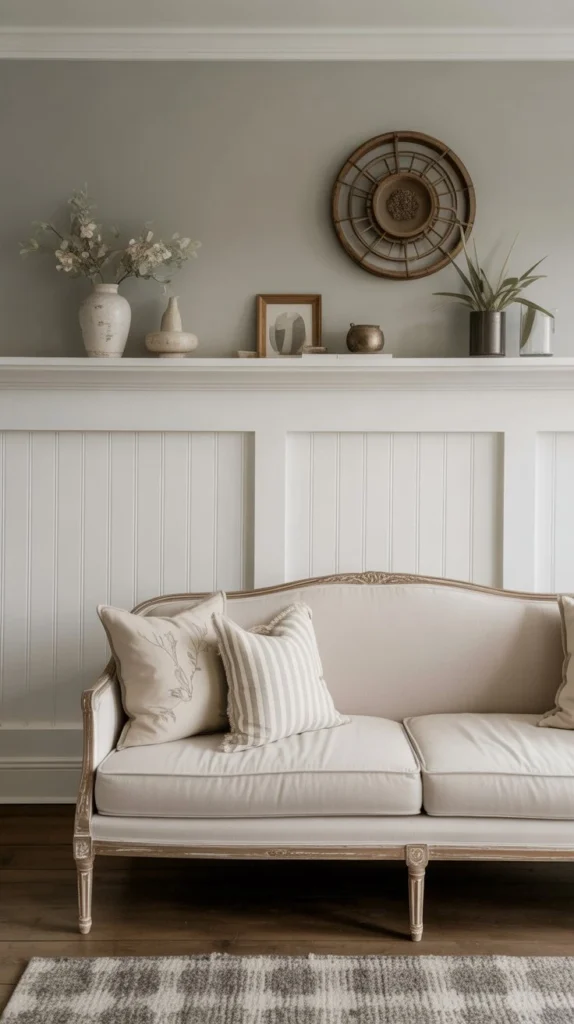
Add architectural interest and protection to your walls with wainscoting. This wall treatment—typically covering the lower third of your wall—brings traditional farmhouse charm to any living room. Paint it white or cream for classic appeal, or match it to your wall color for subtle texture.
Board-and-batten wainscoting is particularly farmhouse-friendly and relatively DIY-friendly for those who own their homes. For renters, paintable textured wallpaper or peel-and-stick beadboard can create a similar effect without permanent installation.
Pro tip: Traditionally, wainscoting sits at about one-third of your wall height, but in rooms with very high ceilings, you can go higher. Install a decorative shelf along the top ledge for displaying small plants, books, or seasonal decor.
18. Cozy Corner Reading Nooks
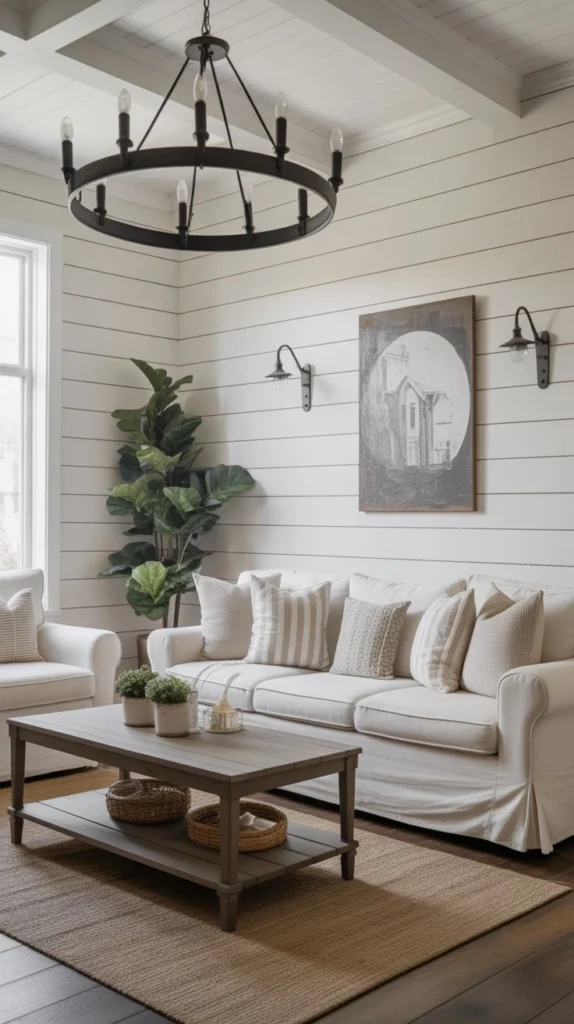
Incorporate metal elements to balance the warmth of wood and fabric. Black metal accents—in light fixtures, picture frames, hardware, or decorative objects—add a touch of industrial edge that keeps farmhouse style from feeling too sweet. Galvanized metal buckets, zinc planters, and iron candlesticks all work beautifully.
These metal touches create visual contrast and depth. They also connect to farmhouse history—think of old farm tools, metal milk cans, and industrial fixtures repurposed from factories. Mix metals freely; farmhouse style isn’t about perfection or matching.
Caution: Don’t overdo it. A few well-placed metal accents make an impact, but too many can make your space feel cold or industrial. Aim for metal elements on about 10-15% of your visible items for balance.
19. Oversized Wall Clocks as Art
Make a statement with a large vintage-inspired wall clock. These functional pieces of art add character while serving a practical purpose. Look for oversized clocks with Roman numerals, distressed finishes, or farmhouse details like metal frames and aged faces.
Position your clock prominently—over a console table, above a doorway, or as the centerpiece of a gallery wall. The round shape provides visual contrast to rectangular furniture and breaks up straight lines. Choose a size that feels substantial; in this case, bigger is often better.
Pro tip: For renters who can’t put nails in walls, lean a large clock on a mantel or shelf. You can also use heavy-duty damage-free hanging strips rated for the clock’s weight. Just ensure it’s level and secure.
20. Farmhouse Patterns Done Right
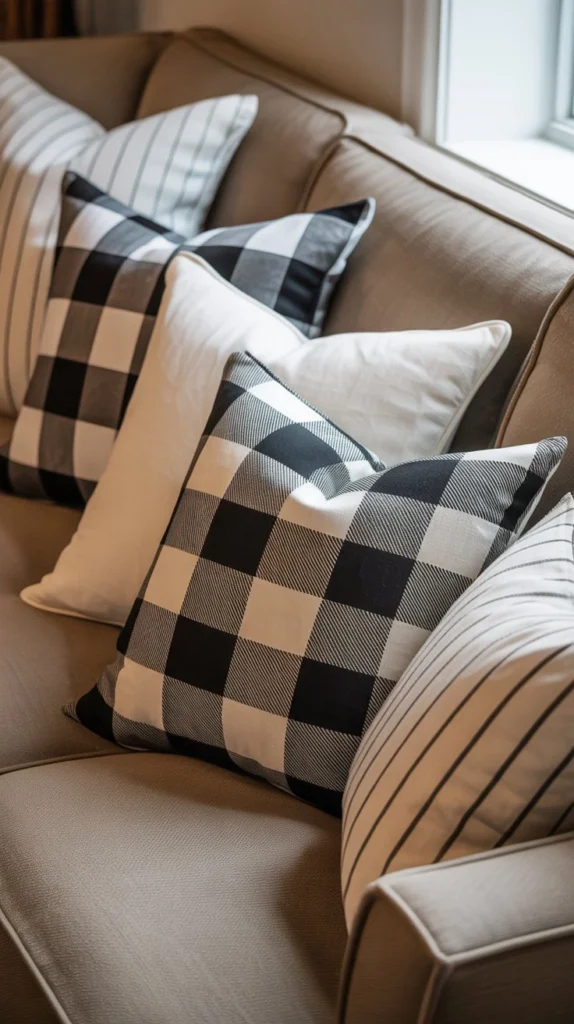
Introduce classic farmhouse patterns through pillows, throws, and window treatments. Think buffalo check, ticking stripes, gingham, and grain sack prints. These timeless patterns add visual interest without overwhelming your neutral palette.
Mix patterns thoughtfully by varying the scale—pair large buffalo check with smaller ticking stripes. Stick to a cohesive color story, typically blacks, whites, grays, and natural tones. Use patterned items as accents rather than the main attraction.
Pro tip: Change out pillow covers seasonally to refresh your look without buying new pillows. Keep neutral solid inserts and swap covers for different patterns and colors throughout the year. This budget-friendly approach keeps your living room feeling current.
21. Natural Wood Accents Everywhere
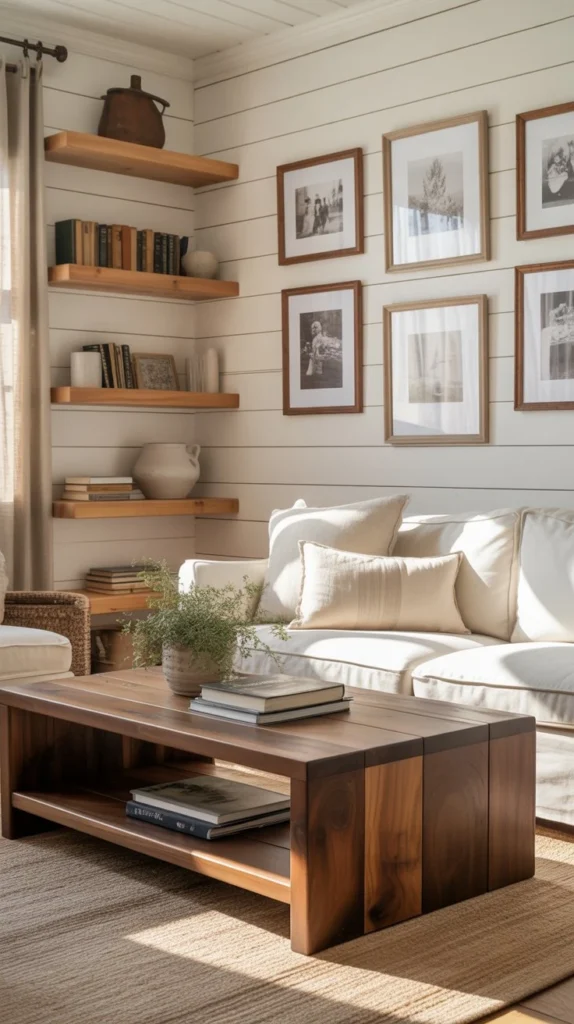
Incorporate wood in various finishes and forms throughout your living room. Mix dark walnut with light pine, smooth finished pieces with rough-hewn beams, and modern clean lines with vintage carved details. This variety adds warmth and prevents the space from feeling too matchy.
Wooden picture frames, shelving, furniture, accessories, and architectural elements all contribute to the layered farmhouse look. The different wood tones create depth and interest while maintaining the natural, organic feeling central to this style.
Caution: Too much wood in similar tones can overwhelm. Balance darker woods with lighter painted pieces, and use plenty of white and cream to give your eyes places to rest.
CONCLUSION
Bringing It All Together
Creating your dream farmhouse living room isn’t about following rigid rules or achieving magazine perfection. It’s about building a space that welcomes you home after a long day, where friends linger over conversation, and where life’s best moments naturally unfold. Whether you’re starting with a blank slate or working with what you have, these farmhouse living room ideas give you a roadmap to creating warmth, character, and comfort.
Remember, the most beautiful farmhouse spaces are the ones that feel authentic to you. Mix high and low, old and new, perfect and imperfect. Embrace the beauty of natural materials, the coziness of layered textures, and the charm of pieces with history. Your living room should tell your story, not someone else’s.
Start small if the whole project feels overwhelming. Add a chunky knit throw this week, hunt for a vintage treasure next month, or simply rearrange what you already have with fresh eyes. The farmhouse aesthetic is forgiving and flexible—there’s no single right way to achieve it. What matters most is creating a living room where you actually want to live, surrounded by things that make you happy and a space that truly feels like home.